PS3 Frankenstein PHAT PS3: CECHA with 40nm RSX

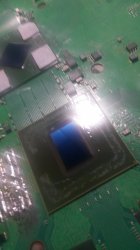
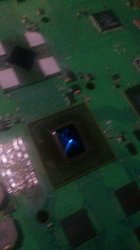
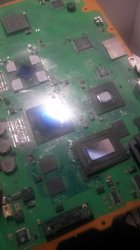
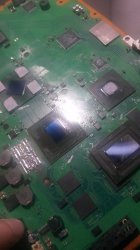
Why is so much Silicon Color variation?? Is just choice of Epoxy color ?? Ummmmmm Why I never See like Nvidias GPUs with blue or other colors or Even Amd GPUs with an other color other than Silver or maybe black, Did You Guys Realise that Rare Black Written Cells Ihs Only Use Silver Silicon Cell Die??? Also Slim use Silver with a Little blue Tone and my Ss boards have the most Crazy CEll die which is Yellow and Purple.
 

Attachments

  • 20220803_200031.jpg
    20220803_200031.jpg
    705.6 KB · Views: 133
  • 20220803_195638.jpg
    20220803_195638.jpg
    793.9 KB · Views: 89
  • 20220803_195950.jpg
    20220803_195950.jpg
    667.3 KB · Views: 71
  • 20220803_200021.jpg
    20220803_200021.jpg
    734.7 KB · Views: 71
  • images (1).jpeg
    images (1).jpeg
    69.5 KB · Views: 83
  • 69167_67_guerrilla-dev-ps3s-cell-cpu-far-faster-todays-intel-cpus.jpg
    69167_67_guerrilla-dev-ps3s-cell-cpu-far-faster-todays-intel-cpus.jpg
    34.5 KB · Views: 105
Last edited:
Ummmmmm Great Analisys, I did Not thought about the external thickness But also I still right in the point that this plastic Pieces does Not Touch the Cell Self Pcb, so theres 0 Pressure Directly on Cell Pcb, also theres no pressure at all if the Plastic rare Piece is the same height as the 4 spacers.
 
My last comment just disapear, so I just said that that plastic will not touch the Cell Pcb then cause has no enough length, so no pressure on Cell Pcb also the rare plastic Piece is the same height as the spacers then really theres no pressure I think, at least theres no pressure on Cell Pcb cause the Plastic cant Even touch Cell Pcb.
 
Ummmmmm Great Analisys, I did Not thought about the external thickness But also I still right in the point that this plastic Pieces does Not Touch the Cell Self Pcb, so theres 0 Pressure Directly on Cell Pcb, also theres no pressure at all if the Plastic rare Piece is the same height as the 4 spacers.
Well, thats right, the squared plastic piece doesnt touches CELL, because is not designed to push CELL

Lets calculate roughly the distance in between the bottom of CELL substrate (fiberglass) and the surface of the squared metal piece, the total distance is the sum of:
- the height of the 4 plastic bumps (it seems to be 1mm)
- the thickness of the motherboard (around 1.5mm)
- the diameter of the BGA balls (i dont remember right now, but this is variable because the balls get deformed)

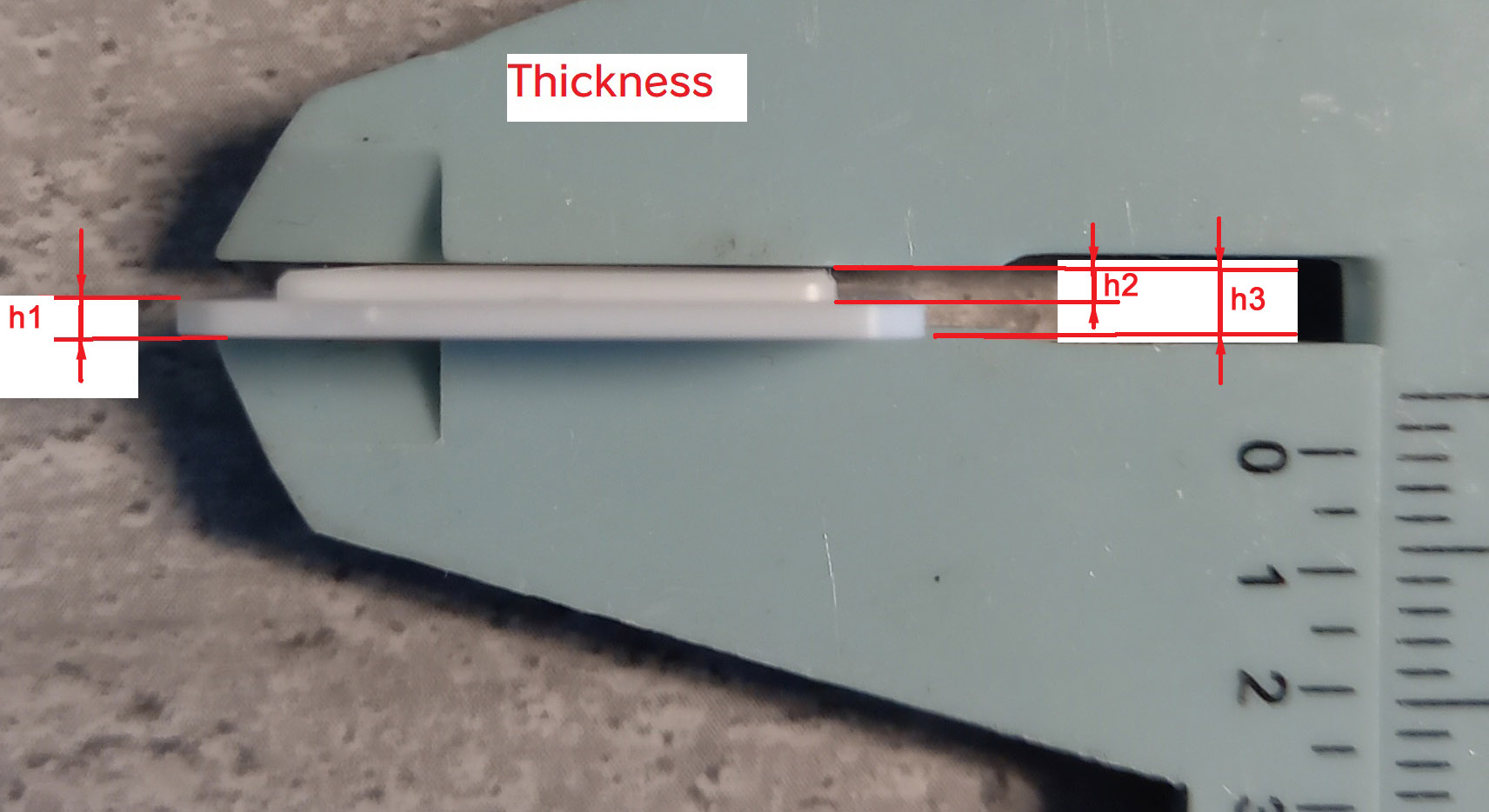
So in total is something around 4mm... but the height of the squared plastic piece is around 2mm... and only 1mm is going to "enter" in the motherboard hole (it doesnt even crosses the motherboard completly)
Let me use this image to show it
20220715-125545-copy.jpg


The only critical height is h1, it should match with the height of the 4 plastic bumps. The big metal shields that covers the motherboard like a sandwich are designed taking in consideration this height so we should not change the value h1 at all

But h2 doesnt have any importance, we could reduce it to 0.5mm... because the only purpose of that "inner squared walls" is to keep the plastic piece in his position, very well aligned with the center of the hole... in other words... we dont want the plastic piece to move laterally so it needs to have something that "enters" in the hole touching his borders

Actually... if some of you want to make this with a 3D printer you can reduce the amount of material by replacing that "inner squared walls" by 4 pillars touching inside the hole corners... this should be enought to keep it in his position
Personally... i would stick it with silicone anyway... because i consider is a big risk if the plastic piece moves outside the hole. You know... maybe you are disasembling/asembling the console to replace thermal paste and the piece moves, but you dont realize and start screwing the bolts of the clamps to max pressure so the plastic piece is transfering most of the pressure to a tiny SMD resistor... well... you can imagine the result, something ugly for sure
 
Last edited:
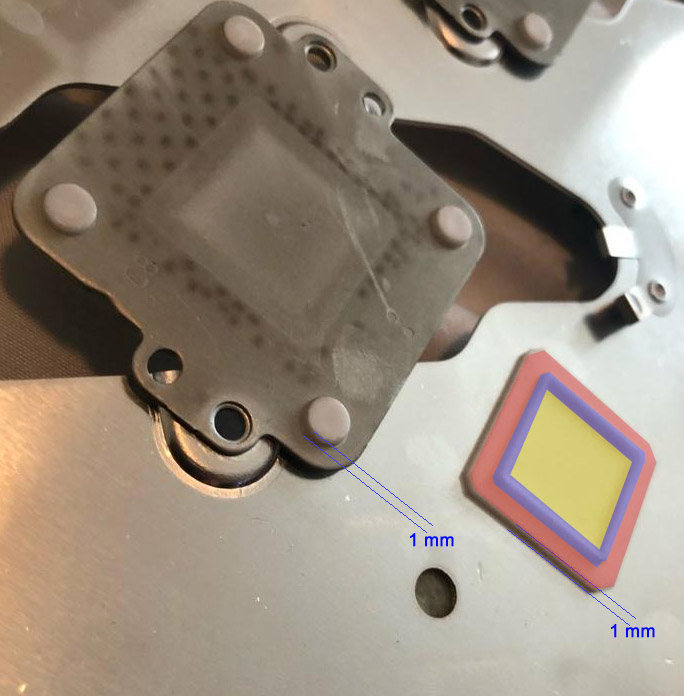
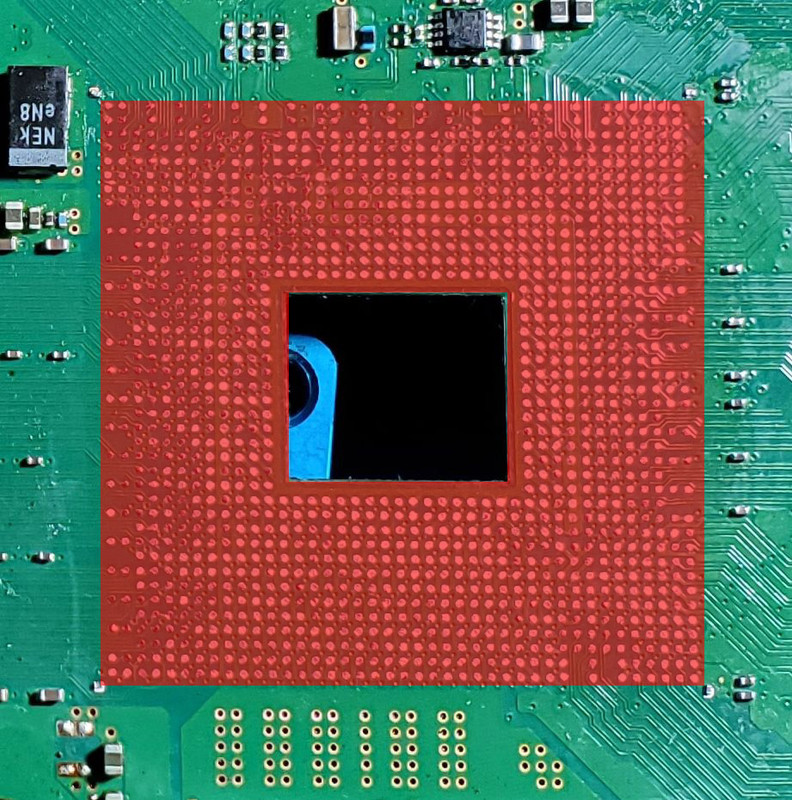
Im still thinking in this and i figured a different way to represent it, by analizing the structure of the squared plastic piece by his function, so i added colors to it
-RED border - this is the only "active" area, his function is to transfer the pressure to the borders of the motherboard hole
-BLUE walls - his only function is to keep the squared plastic piece well aligned with the hole
-YELLOW center - this is pointless
areas.jpg


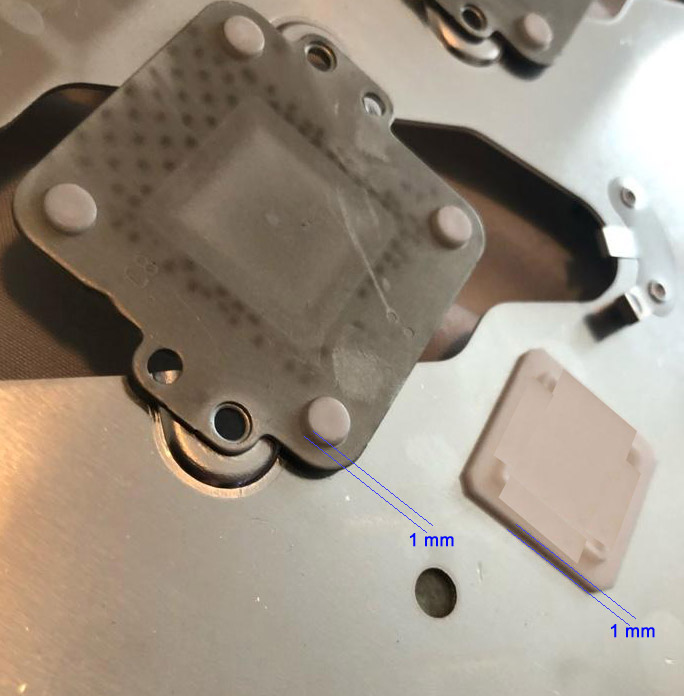
For the matter of 3D printing... we dont need the blue walls all around... is enought to have 4 "pillars" at the corners, this way
columns.jpg


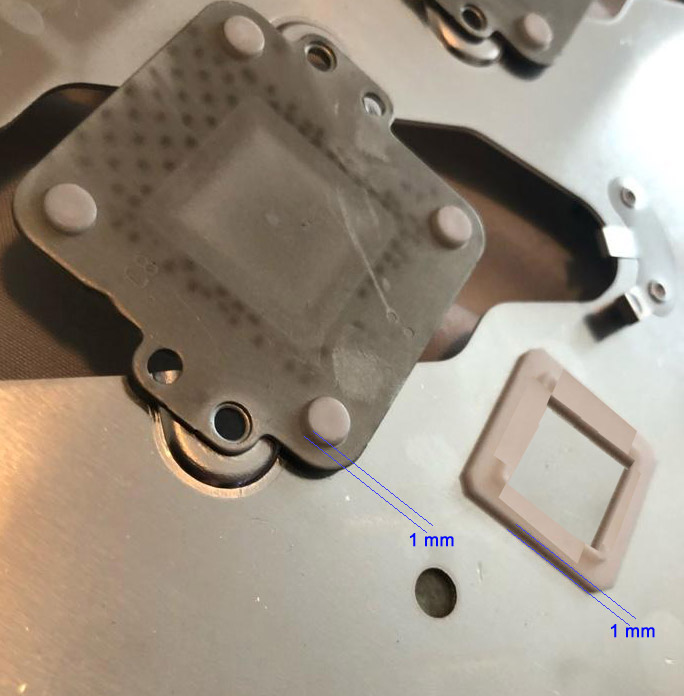
And we can also reduce the material this way... by removinig the yellow area at the center
hole.jpg


This reductions of materials im suggesting are not going to weaken the plastic piece, because as mentioned before the only "active" area is the red border, and is going to be submitted only to compression forces so our custom piece is not going to break :)
 
Last edited:
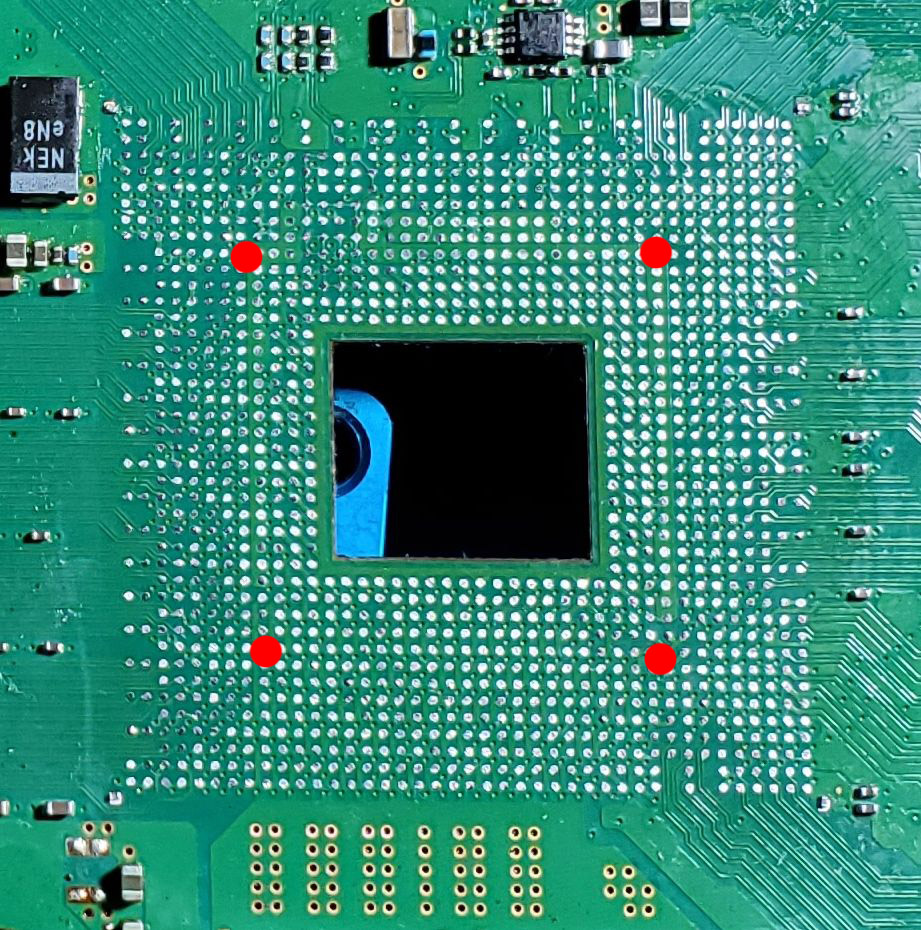
I have a photo over here handy to see how it looks at the other side
The 4 factory plastic bumps are concentrating 100% of the pressure on this small dots
DIA-001-reballing2-copy1.jpg


But idealistically... is a lot better to spread the pressure all around the BGA solders evenly
DIA-001-reballing2-copy2.jpg


The withe squared plastic piece made by sony prevents a bit the deformations at the inner borders of the "hole" but doesnt solves the problem completly
I've been working on that very problem.
20220617_122450.jpg
20220617_121922.jpg
 
I've been working on that very problem.
View attachment 38158 View attachment 38159
Nice to see we agree on the theory :encouragement:

There is something needed for your next prototype, i guess you thought in it but needs to be mentioned. If we are going to extend the borders of the plastic piece we need to extend also the metal piece that pushes it

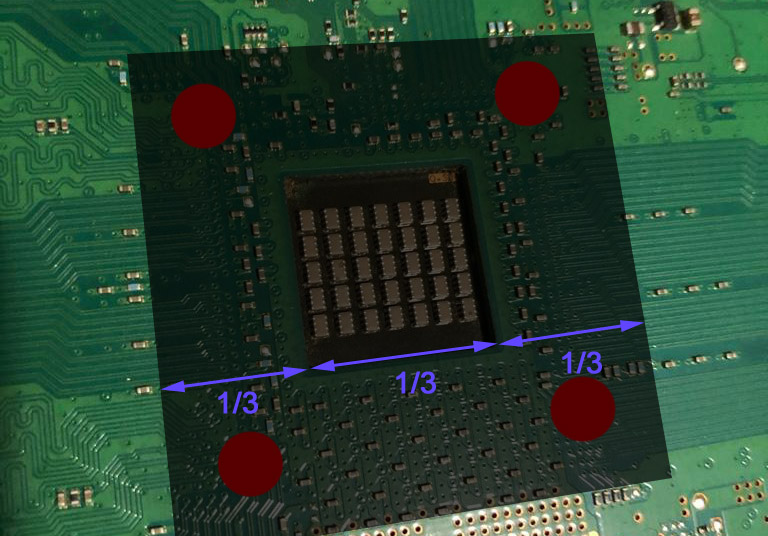
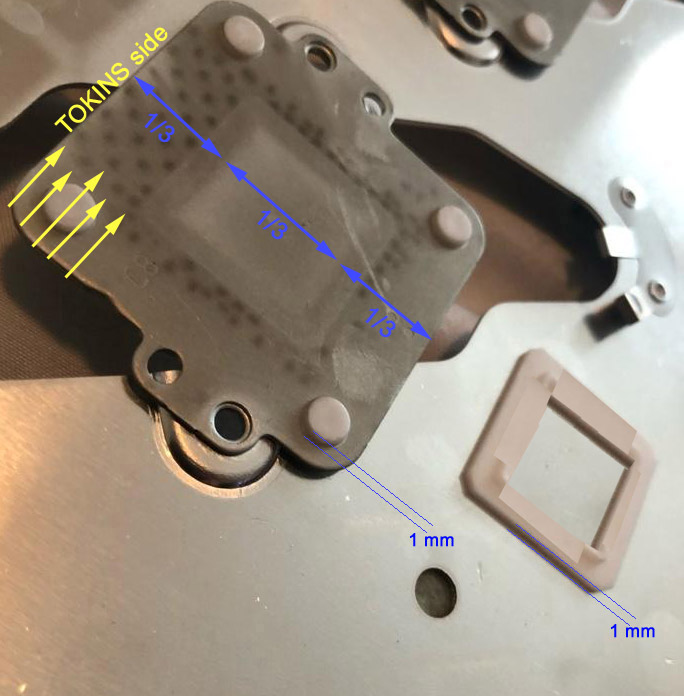
Rough calculations... the "hole" takes a third part of the CELL BGA array, in other words, the CELL width is = 3 * hole width
DIA-001-reballing2-copy2.jpg


If the plastic piece is going to cover all the BGA array, then the metal piece needs to be this big (and the plastic piece too)
prgt-SOh-copy3-copy.jpg


Otherway the plastic "outside" of the metal piece is going to be bent back, so that parts of the plastic structure bent back are not going to transfer any pressure
The "channels" you made on the plastic piece borders (to avoid the components) are increasing this effect. Without a big metal piece pushing 100% of the surface of your plastic piece is going to bend along that "channels"
 
Nice to see we agree on the theory :encouragement:

There is something needed for your next prototype, i guess you thought in it but needs to be mentioned. If we are going to extend the borders of the plastic piece we need to extend also the metal piece that pushes it

Rough calculations... the "hole" takes a third part of the CELL BGA array, in other words, the CELL width is = 3 * hole width
DIA-001-reballing2-copy2.jpg


If the plastic piece is going to cover all the BGA array, then the metal piece needs to be this big (and the plastic piece too)
prgt-SOh-copy3-copy.jpg


Otherway the plastic "outside" of the metal piece is going to be bent back, so that parts of the plastic structure bent back are not going to transfer any pressure
The "channels" you made on the plastic piece borders (to avoid the components) are increasing this effect. Without a big metal piece pushing 100% of the surface of your plastic piece is going to bend along that "channels"
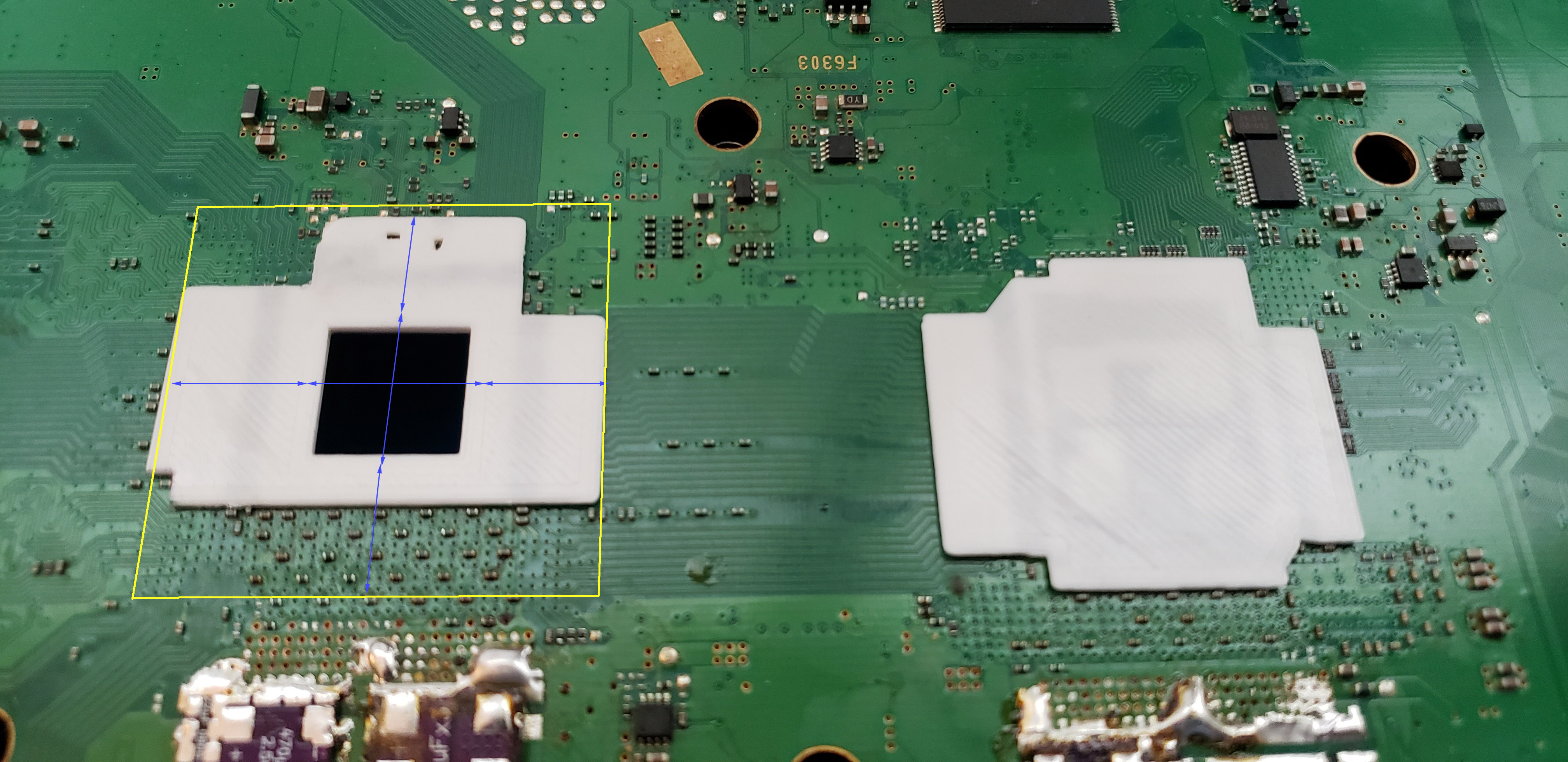
No, I modeled the RF shield, MB, Cell, and RSX in 3D and overlayed the schematics to get the tolerances right. That's how I avoulded the MLCCs. When I printed them I was more than a bit suprised they fit on the first try!

The plastic doesn't extend beyond the RF shield's backplate. I extended the brace to touch the MB anywhere there was 0.5mm of clearance between components to do so. COK-001 only ATM. I need to pull up the schematic of the COK-002 and SEM-001 to do the same. I can just copy the COK-001 MB layer and overlay those schematics instead. Then make new models for each to make a custom brace for each model.

I was even thinking of doing the same for the topside of the RSX interposer, that would get sandwiched between the IHS. The idea being that EVERYTHING would be braced. From RF shield baclplate to HS, there wiould be as little gaps between bracing as possable. And all with the proper tolerances and flatness to prevent uneven ares or flexing.

The endgame being, to minimize the effects of the 90nm defect. Which requires flexing and heat to be exploited.

Step 1 is to reduce heat that softens the Low Tg underfill (Tg = 70C). So webMAN dynamic fan curve at 68C should do.

Step 2 is to further reduce warping stresses by bracing everything. A perfect little sandwich that keeps everything locked together, imobilized.
 
No, I modeled the RF shield, MB, Cell, and RSX in 3D and overlayed the schematics to get the tolerances right. That's how I avoulded the MLCCs. When I printed them I was more than a bit suprised they fit on the first try!
Awesome, thats lot of 3D design work, im used to design and build things (sometimes with my own hands) and i know very well the sane state of mind is to consider every attempt as a "prototype". Because even if you dedicate lot of time in the design stages and your first built prototype is fully functional eventually you will feel the need to do "prototype v2"... and so on :D

My approach (without a 3D printer) would be to build the plastic piece without the MLCC details, and then use a drill to create the "holes" for the MLCCs manually, you know, the MLCC are little rectangles and a drill is going to create a circle, but thats fine because the amount of removed material (the differences in between a rectangle and a circle) would be small. In your photo with that long "channels" you are removing more material

The plastic doesn't extend beyond the RF shield's backplate. I extended the brace to touch the MB anywhere there was 0.5mm of clearance between components to do so. COK-001 only ATM. I need to pull up the schematic of the COK-002 and SEM-001 to do the same. I can just copy the COK-001 MB layer and overlay those schematics instead. Then make new models for each to make a custom brace for each model.
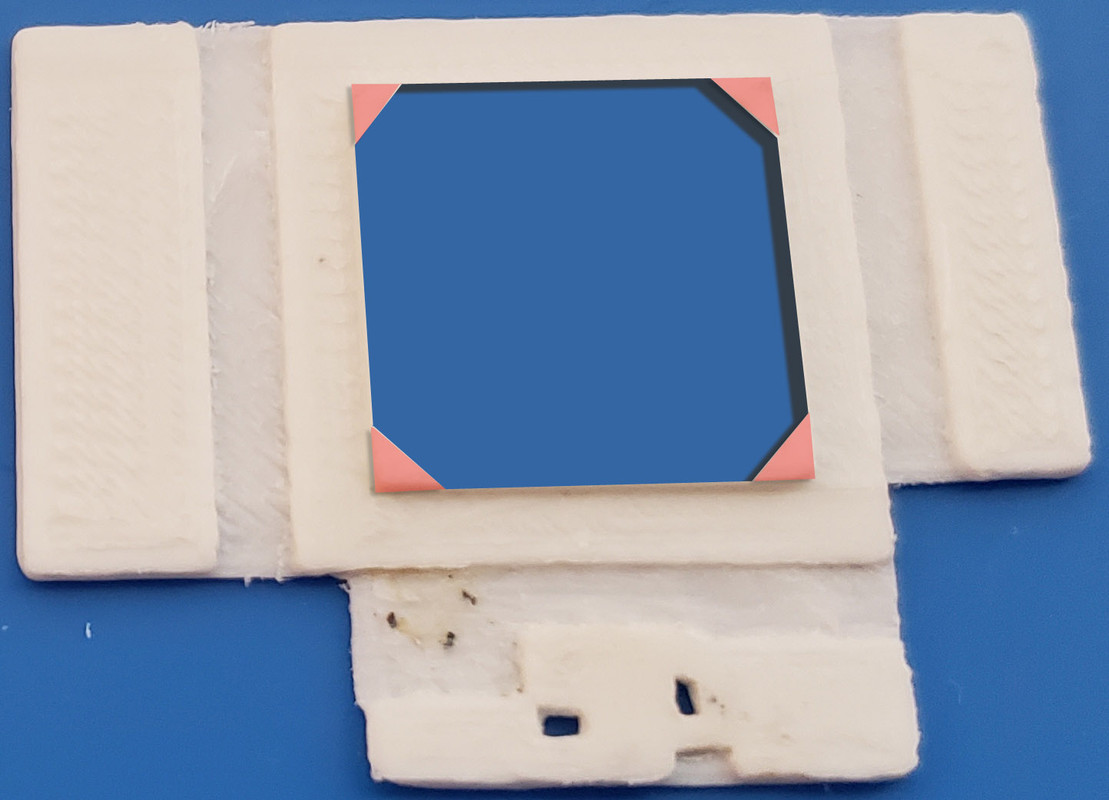
All this time i been doing rought calculations because i dont have the parts, and im repurposing some of the photos posted here by others (some of them are from a DIA-001), so im not completly sure about the meassures but today i tryed to "transfer" the dimmensions of the metal square to your plastic piece and doesnt looks bad, is a bit like this, right ? (the metal is represented by the yellow square)
transfer.jpg


For curiosity sake... im repurposing this photo (again) using the rule of 1/3... and marked the "rows" of MLCs of the tokin side for comparison purposes. Note how i aligned the yellow square of the previous photo with the "fifth row" of MLCCs of the tokin side :D
Btw, that brown marks in the photo indicates there is a lot of heat in them and are really close to the metal, i think it could be a good idea to use thermal silicone all along
5-rows-to-tokins-copy.jpg


Btw, this plastic piece can be used in all PS3 models, but the design depends at least of 4 groups because the size of the motherboard "hole" depends of the CELL generation (90nm, 65nm, 45nmv1, 45nmv2)... and additionally the location of the MLCCs could vary by motherboard model

I was even thinking of doing the same for the topside of the RSX interposer, that would get sandwiched between the IHS. The idea being that EVERYTHING would be braced. From RF shield baclplate to HS, there wiould be as little gaps between bracing as possable. And all with the proper tolerances and flatness to prevent uneven ares or flexing.

The endgame being, to minimize the effects of the 90nm defect. Which requires flexing and heat to be exploited.

Step 1 is to reduce heat that softens the Low Tg underfill (Tg = 70C). So webMAN dynamic fan curve at 68C should do.

Step 2 is to further reduce warping stresses by bracing everything. A perfect little sandwich that keeps everything locked together, imobilized.
But this involves adding plastic in between the bottom surface of the heatsink and the motherboard surface, right ?... if thats the idea i have to tell honestly that i dont like it because is going to reduce the pressure, unless is calculated with huge preccision of decimals of milimeters

If your plastic piece is 0.1mm smaller then is pointless (because there is no pressure transfered to your piece), but if is 0.1mm bigger then is going to take some of the pressure that originally was applyed to the BGA (so you are reducing the pressure on the BGA)


-----------------
Bonus
Im using your photo to show the reduction of material i mentioned before, you know... im removing a lot of the "vertical walls" (only intended to align the plastic piece with the motherboard), and instead of them im only keeping 4 little triangles at the hole corners, i think thats enought (and is also the minimal way to do it)
20220617-121922-copy.jpg


Is not only a matter of reducing the amount of material, but also to "open" the hole as most as posible because it seems there is a lot of heat in that area, and is better to remove the plastic to allow the heat to be transfered to the metal square (and indirectly to the whole metal shield)

In the official plastic piece made by sony there is not a hole, but we agree in doing it because is a hot spot :encouragement:
Actually i noticed in your photo you are experimenting with a thermal pad inside the hole, yeah, i like it
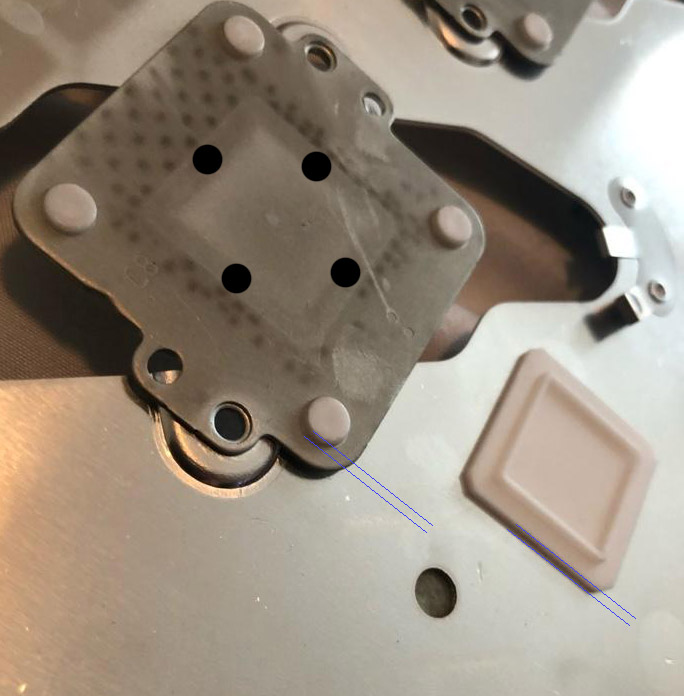
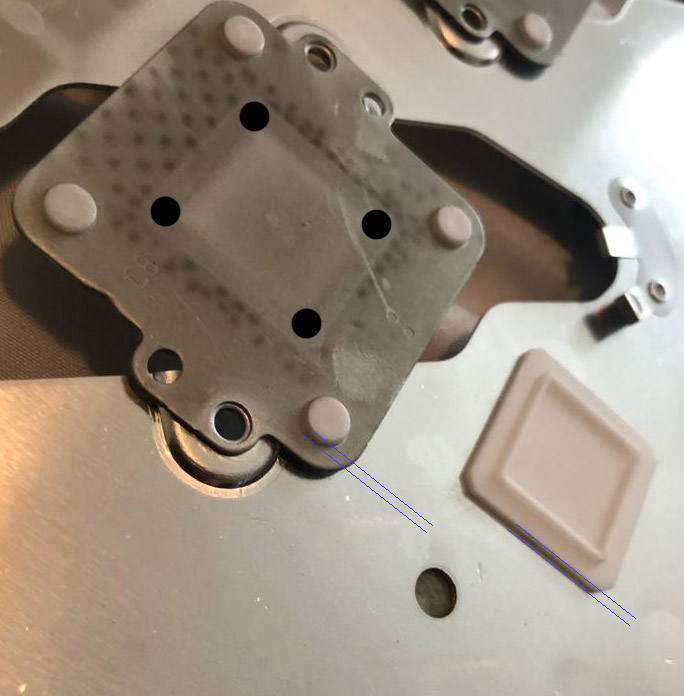
Another way to improve that would be to drill 4 holes in the metal squared piece (the holes needs to be simmetrical, so there are only 2 ways to do it)
@ElGris was asking my oppinion about this idea some weeks ago, but he was suggesting to use a fan or some air duct to force the air to pass under CELL
Well... the point is... the holes in the metal im suggesting are not inteded to create an airflow below CELL BGA balls because the air always contains particles of dust, and that particles are going to end sticked to the BGA balls, and this could be a big mistake
My idea of the holes in the metal squared piece is mostly because this way the hottest air can "escape" from that prison easilly... you know... it should happen naturally but cant be considered an airflow

-----------------
Merged posts

Another way to improve that would be to drill 4 holes in the metal squared piece (the holes needs to be simmetrical, so there are only 2 ways to do it)
Just to be clear... i mean this:
gap-copy.jpg

Or this:
gap-copy2.jpg


The black circles represents holes that needs to be drilled into the squared metal piece. Basically, are going to weaken the rigidity of the metal, but allows the hottest air to move away

 
Last edited:
Awesome, thats lot of 3D design work, im used to design and build things (sometimes with my own hands) and i know very well the sane state of mind is to consider every attempt as a "prototype". Because even if you dedicate lot of time in the design stages and your first built prototype is fully functional eventually you will feel the need to do "prototype v2"... and so on :D

My approach (without a 3D printer) would be to build the plastic piece without the MLCC details, and then use a drill to create the "holes" for the MLCCs manually, you know, the MLCC are little rectangles and a drill is going to create a circle, but thats fine because the amount of removed material (the differences in between a rectangle and a circle) would be small. In your photo with that long "channels" you are removing more material


All this time i been doing rought calculations because i dont have the parts, and im repurposing some of the photos posted here by others (some of them are from a DIA-001), so im not completly sure about the meassures but today i tryed to "transfer" the dimmensions of the metal square to your plastic piece and doesnt looks bad, is a bit like this, right ? (the metal is represented by the yellow square)
transfer.jpg


For curiosity sake... im repurposing this photo (again) using the rule of 1/3... and marked the "rows" of MLCs of the tokin side for comparison purposes. Note how i aligned the yellow square of the previous photo with the "fifth row" of MLCCs of the tokin side :D
Btw, that brown marks in the photo indicates there is a lot of heat in them and are really close to the metal, i think it could be a good idea to use thermal silicone all along
5-rows-to-tokins-copy.jpg


Btw, this plastic piece can be used in all PS3 models, but the design depends at least of 4 groups because the size of the motherboard "hole" depends of the CELL generation (90nm, 65nm, 45nmv1, 45nmv2)... and additionally the location of the MLCCs could vary by motherboard model


But this involves adding plastic in between the bottom surface of the heatsink and the motherboard surface, right ?... if thats the idea i have to tell honestly that i dont like it because is going to reduce the pressure, unless is calculated with huge preccision of decimals of milimeters

If your plastic piece is 0.1mm smaller then is pointless (because there is no pressure transfered to your piece), but if is 0.1mm bigger then is going to take some of the pressure that originally was applyed to the BGA (so you are reducing the pressure on the BGA)


-----------------
Bonus
Im using your photo to show the reduction of material i mentioned before, you know... im removing a lot of the "vertical walls" (only intended to align the plastic piece with the motherboard), and instead of them im only keeping 4 little triangles at the hole corners, i think thats enought (and is also the minimal way to do it)
20220617-121922-copy.jpg


Is not only a matter of reducing the amount of material, but also to "open" the hole as most as posible because it seems there is a lot of heat in that area, and is better to remove the plastic to allow the heat to be transfered to the metal square (and indirectly to the whole metal shield)

In the official plastic piece made by sony there is not a hole, but we agree in doing it because is a hot spot :encouragement:
Actually i noticed in your photo you are experimenting with a thermal pad inside the hole, yeah, i like it
Another way to improve that would be to drill 4 holes in the metal squared piece (the holes needs to be simmetrical, so there are only 2 ways to do it)
@ElGris was asking my oppinion about this idea some weeks ago, but he was suggesting to use a fan or some air duct to force the air to pass under CELL
Well... the point is... the holes in the metal im suggesting are not inteded to create an airflow below CELL BGA balls because the air always contains particles of dust, and that particles are going to end sticked to the BGA balls, and this could be a big mistake
My idea of the holes in the metal squared piece is mostly because this way the hottest air can "escape" from that prison easilly... you know... it should happen naturally but cant be considered an airflow

-----------------
Merged posts


Just to be clear... i mean this:
gap-copy.jpg

Or this:
gap-copy2.jpg


The black circles represents holes that needs to be drilled into the squared metal piece. Basically, are going to weaken the rigidity of the metal, but allows the hottest air to move away

Something to think about is whether we even want to reduce temps under the CPU. There is the possability of creating a larger temperature differential between the die and the interposer beneath it, increasing the warping stress and thus having an undesirable reduction in reliability.

I'm not convinced it's a bad idea to cool the chip from beneath, but I can see why it might be.

About the interposer stiffener, yes tolerance will be important. I was thinking of making it smaller and using silicone to fill the gap between them. Or just sanding it down slowly until it measures perfectly to fit. BTW, I had to do the same with the MB braces too. To be sure they were 1mm and would still allow the 4 standoffs to contact the MB. My 3D printer leaves a textured finish that's 0.25mm too big and needs sanded down. Which isn't hard to do, checking with a caliper until it's right.
 
Something to think about is whether we even want to reduce temps under the CPU. There is the possability of creating a larger temperature differential between the die and the interposer beneath it, increasing the warping stress and thus having an undesirable reduction in reliability.

I'm not convinced it's a bad idea to cool the chip from beneath, but I can see why it might be.
I dont have any solid argument to support it but i think in general improving the cooling at the bottom center is not going to cause any harm, my only argument is that we are not touching CELL so we are not creating a thermal barrier in between 2 materials (DIE and substrate)... it happens indirectly so that thermal difference is going to be smoothed a lot

Btw, for curiosity sake... the CELL have a "ring" of GND pads aligned with the DIE border. I never thought in it before but i realized is designed to transfer heat to the motherboard, thats why the border of the motherboard hole is so hot
I bet the internal circuits inside CELL are using this GND pads to trace them close to the hot spots of every circuit... you know the DIE have his own hotspots that depends of how are designed the internal circuits, by adding some GND lines next to them and connecting them directly to that "pads cooling ring" they are moving the heat outside of the DIE hotspots very fast

CELL-pads-V16-GND-and-1-0v.jpg

You know... is made on purpose to transfer heat to the motherboard as soon as posible (in other words, the most closer to the center posible), it also help a bit to mantain the structral dimmensions of the BGA gap (in other words, the distance in beteen the CELL susbstrate bottom surface, and the motherboard suface)

----------
Btw... to be fair... the other idea i mentioned about making 4 holes in the squared metal piece is mostly a brainstorming, because im not sure how it would work... in my mind that holes are working as "chimeys" that allows the hottest air to move away... but this is the kind of thing that needs to be checked in a laboratory with IR cameras, lot of thermal sensors, many tests, and blah blah blah

When i was discussing this with @ElGris i had another idea about adding a heatpipe touching the squared metal piece, im not sure how to do it and even if there is space availale to do it, but the concept is very straightforward, what i want is to cool down the squared metal piece (not CELL)... so it should reduce CELL temperature indirectly

About the interposer stiffener, yes tolerance will be important. I was thinking of making it smaller and using silicone to fill the gap between them. Or just sanding it down slowly until it measures perfectly to fit. BTW, I had to do the same with the MB braces too. To be sure they were 1mm and would still allow the 4 standoffs to contact the MB. My 3D printer leaves a textured finish that's 0.25mm too big and needs sanded down. Which isn't hard to do, checking with a caliper until it's right.
I was not tryingto be pessimistic, but in real worl that kind of adjustmenets are almost imposible to achieve, mostly because one of the distances (the BGA gap) is variable
I mean... you can make as many meassures you want, in the most accurate way posible... but at the time of doing the reballing you dont have any control of the BGA gap... you know when the BGA balls melts they generates that gap in a natural way (is like the CELL is "floating" on top of liquid BGA balls)

The only way to have control of that gap is if you add the 4 "dummy" components at the corners (that works as pillars)... and also you need to "push down" the CELL before the BGA balls solidifyes (to force it to touch the pillars at the corners)

All and all... yeah your idea of building the (top side) interposer stiffener with a distance smaller than required and filling the gap with (solid) silicone is fine, worths a try :)
Maybe is not going to help much into the task of ballancing pressure, but for sure is going to work as a stopper for the eventual wrapping, or the reduction of the BGA gap caused by overheats
 
Last edited:
I was not tryingto be pessimistic, but in real worl that kind of adjustmenets are almost imposible to achieve, mostly because one of the distances (the BGA gap) is variable
I mean... you can make as many meassures you want, in the most accurate way posible... but at the time of doing the reballing you dont have any control of the BGA gap... you know when the BGA balls melts they generates that gap in a natural way (is like the CELL is "floating" on top of liquid BGA balls)

The only way to have control of that gap is if you add the 4 "dummy" components at the corners (that works as pillars)... and also you need to "push down" the CELL before the BGA balls solidifyes (to force it to touch the pillars at the corners.

I don't get what you are talking about with the BGA gap. That's not particularly useful. There might be a small difference between using the spacers or not using them. Or using 0.55mm balls instead of the 0.6mm balls. But the difference is going to be minute, like 0.2mm tops. The HS will have no trouble bolting on if the gap is lightly smaller, for example.

As far as bracing the BGA itself, the only conceivable thing we could do there is to add underfill. There are thermally conductive underfills designed for BGAs. I found one a little while back and though that was an interesting novelty. A pretty extreme mod if anyone actually wanted to try it.

But I was mainly talking about the space between the IHS and Interposer (often called substrate). Making a brace there also. That's in addition to the brace between the MB and RF shield's back plate that SONY used (or one we design to be better).

About the idea for a heat pipe. I don't see any conceivable method for doing one. The leaf springs prevent you from placing them on the backside of the back plate. Which leaves the side facing the MB, and it only has 1mm of clearance where there are no SMD's. One conceivable alternative is to have a custom back plate made from copper, machined to fit and then replace the backplate on the RF shield. Problem with that idea is that copper's conductive and it'd be hard to prevent shorting. You could maybe lay a thin layer of thermal pads down to insulate the SMDs, but even then I'd be a bit worried. The thing is, the back plate is only 1mm thick itself. So again, not enough room for a heatpipe even if the backplate were the heatpipe. You'd have to get exotic with ultra thin vapor chambers or something...
ultra-thin-vapor-chamber-murata-coolermaster.png


And at that point I think the gains are not worth the expense and added complexity.
 
I don't get what you are talking about with the BGA gap. That's not particularly useful. There might be a small difference between using the spacers or not using them. Or using 0.55mm balls instead of the 0.6mm balls. But the difference is going to be minute, like 0.2mm tops. The HS will have no trouble bolting on if the gap is lightly smaller, for example.
The problem is we are playing around with adjustments of decimals of milimeters, lets say we have a lot of expensive equipment and meassure everything with lasers using an accuracy of 2 decimals... we meassure that BGA gap of your test motherboard and gives 2.35 mm, ok...
I bet if we do that same meassurement in a different motherboard (same model, but different unit) the BGA gap is going to be different, thats why i said is variable
Lets say... the only components that prevents this gap to vary (squeezing the BGA balls) are the 4 "dummy" components at the corners, so a custom stiffener is going to be dependant of the height of that 4 "dummy" components

As far as bracing the BGA itself, the only conceivable thing we could do there is to add underfill. There are thermally conductive underfills designed for BGAs. I found one a little while back and though that was an interesting novelty. A pretty extreme mod if anyone actually wanted to try it.

But I was mainly talking about the space between the IHS and Interposer (often called substrate). Making a brace there also. That's in addition to the brace between the MB and RF shield's back plate that SONY used (or one we design to be better).
Ok, it seems we was talking about different mods, you are back to the idea you was suggesting some weeks ago about adding something in the space between the IHS and Interposer
And i thought your plan was to add something different in between the heatsink bottom durface (a.k.a. top of the IHS) and the motherboard surface... you know this covers some more layers of the sandwich so is needed to consider the BGA gap and that 4 "dummy" pillars, is more tricky :)

About the idea for a heat pipe. I don't see any conceivable method for doing one. The leaf springs prevent you from placing them on the backside of the back plate. Which leaves the side facing the MB, and it only has 1mm of clearance where there are no SMD's. One conceivable alternative is to have a custom back plate made from copper, machined to fit and then replace the backplate on the RF shield. Problem with that idea is that copper's conductive and it'd be hard to prevent shorting. You could maybe lay a thin layer of thermal pads down to insulate the SMDs, but even then I'd be a bit worried. The thing is, the back plate is only 1mm thick itself. So again, not enough room for a heatpipe even if the backplate were the heatpipe. You'd have to get exotic with ultra thin vapor chambers or something...
ultra-thin-vapor-chamber-murata-coolermaster.png


And at that point I think the gains are not worth the expense and added complexity.
In theory is just a matter of adding more metal, with the goal of extending the metal surfaces in contact with the air... in other words we could add "fins" or a thick (and peeled) copper wire, dunno was just ideas to move the heat away :D
 
I am strong proponent of not modifying the complex cooling systems in modern, high heat consoles. You'll end up with the butterfly effect. I even tell my customers not to use external cooling devices. They can interfere with the way the airflow was meticulously designed to pass through the system.

Changing the amount of / method that pressure is distributed / applied to the chip / board would also fall under that category for me. That's just my opinion, though. I do not believe myself capable of "correcting" the design of a full team of engineers in the appropriate fields that did a billion hours of modeling and simulations.

Most importantly, though, we will NEVER be able to properly document enough long term results here to prove anything was better or worse. We simply cannot provide a controlled testing environment, there are too many variables to account for when analyzing the results on consoles in different parts of the world that have had different histories.

When I repair any modern system, I aim to return it to the original state it came from out of the factory. The exception is reballing with lead, as lead-free was a design constraint, not a decision.

I think the only reliability tree we should be barking up is better fan tables that can keep the lower power chips even cooler, and using better components and materials in the existing cooling system (thermal compounds, thermal pads, fully rebuilt fans, and METICULOUS cleaning when refurbishing).

Just my two cents.
 
Last edited:
I didn't follow all the comments but isn't the best way to assure a long life for the both chips to make the less pressure possible? I mean, I never did that "pressure mod" because is clearly giving a BIG kick in the ass to the cell's die, deforming its pcb/bgas nature, or soldering state. I even saw a guy literally "removing" the die from the substrate by putting a really thick rubber below of it. It died in a second.

Well, the other nicest mods you're talking about are always welcome, yet somebody needs to do the tests. I was thinking that adding a good thermal pad below the cell, doing contact with the piece of metal that's "attached" to the metal shield would be transfering indirectly heat from the proper metal shield to the cell, both are bloody hot, thanks to the OG psu that's above the cell. Anybody put their thumb over a clamp during processing stress?

So adding this nice thermal pad would be really useful in the case you add, somehow, a copper pipe making contact with that pad, and at the same time let enough space to let the ihs'/clamps do theire job. There's no need to make enormous pressure on both processors, just use good TIM. That pipe could be attached to a little piece of aluminum as heatsink. Well, an enginner could figure it out, no? :D

I normally don't use glue to re-attached the heatspreaders, and temps are not worst just because I didn't glue them. You can see that even without having those micrometers that the OG glue/silicone use, temps aren't a problem, and all the job is made by the TIM, a soft TIM. In this case you are exchanging pressure for softness. And bgas are happier with that, aren't they?

BTW, I commented to @sandungas the bga air cooling stuff, but using small tubes is complicated (the in-air flow also), and even you have the dust problem, but who wouldn't want fresher bgas?
 
The purpose of these braces is not to add pressure. They provide stiffening support to areas under the PCB that are supposed to be braced, but aren't. It's not changing the design principals or adding pressure to the processor sandwich. Eveything will have the same tolerances, not bent in either direction. It just prevents the board from warping a little bit better.

I've been looking at FCBGA packages and how they have been inplemented over the years. Almost all new Processors that are soldered to the board have glue in the corners (where BGA stress is greatest). I have confirmed from my own experiance, and @vyktormvmpay25 agrees, that the corners of the chip are where the most BGA failures occur. FBVDDQ, VDDIO, VDDR, and VDDA voltages enter into these corners of the chip. FBVDDQ causes a GLOD. VDDIO causes 3034/2120, VDDA causes 3013/2120, and VDDR causes 3034/4xxx. In general (and these are off the top of my head, I'd have to double check, so don't take it as gospel).

Point is that it's clear the BGA does experiance more thermal stress than is desirable and fails in the corners and edges. That's where stress on the balls is greatest. By bracing the entire area we can reduce this stress.

Modern methods include gluing the edges of the chip, using a window stiffener on the interposer that goes around the parimeter of the chip, which allows direct die contact of the heatsink without an IHS. That more efficiently moves heat away from the die in the direction you want it. Less heat transfers back through the interposer and MB where it increases warping stresses. You also see backplates with far better bracing behind the MB's processor. This isn't just to acomodate heavier heatsinks, it stiffens the MB where it needs it.

I have been thinking about using a reworkable BGA underfill to place in the corners of the RSX. The custom braces should help (they can't hurt), gluing the IHS back on because it's the RSXs stiffener, and using high quality thermal paste. Beyond that, custom fan tables, cleaning, keeping the console out of cabinets and dust free are all you can do.

From what I understand of the defect, this should be enough to actually make the 90nm RSX reliable. If we are correct about the namics underfill haveing a Tg of 70C, then keeping it under that temp should prevent the defect from being exploited. The underfill will perform as expected and provide mechanical support to the bumps. Then it's just the BGA to worry about. And thats where these additional mods come in.
 
I think the main problem here is the BGAs temps, those are the ones that you need to have under control, because why they're failing so bad? Even more on corners where it should be fresher than in the rest of the array? I can think of a mobo deformation during normal conditions, heavy deformation due the high temperature the CELL/PSU generate and both feedsback eachother, so the mobo bents and the bga damaged occurs on corners. Gluing the corners could be a solution, but this will only increased the temperatures on those few balls, cracking them anyways. I've seen this issue in cell phones where most of the main ICs are now glued with silicone or resin, that do nothing to prevent a BGA issue and complicating the rework after.

I've seen decens of old Cisco modems with damaged BGAs due the rediculous high temperatures they get during normal conditions, not having good proper cooling, of course.

IMO, not that you have to listen what I say :D is that the less pressure you could add to a processor, the less it will deform, I guess.

If you have sandwich, and one side of the bread is chocolate, and the other one is a piece of metal, and chocolate expands ALWAYS during heat, and the metal won't let the sandwich rise, what's gonna happen?

Leaving those caps in the corners it seems it doesn't work, at all, because most of the processors, gpus, SB, APUs, etc on laptops are failing anyways. I don't know, this sh%& is too complicated :D
 
Back
Top