PS3 Help with GLOD, can hear sound but no display

What ? Did i hear correct? Keeping the headspreader while implementing the reflow procedure..... i think this wouldn't be a good idea all the heat will be transferred to the ram chips on corners and the die itself, which both we don't want. We gonna damage all the ram chips and maybe the rsx itsef from the die's heat. What i think is to first delid the rsx and reflow only the empty side and the 3 capacitors included sides which you can call them the corners and avoid to heat the ram chips, that should do the trick and of course first all the bga legs should be oiled with enogh flux.
Hi that is how Ive done previously with successful results.. Now I'm not saying it's the best way to do this and if you know better way you should do it, but Ive never exploded any ram chips this way but I do use a proper infrared reflow oven not a hot air device - goodluck and let us know your results
 
I have one thread about reball ps3 as not much shared about. I always desolder rsx with headspreader and run different profiles for different boards. Ram " popcorn " is most likely not right profile on preheat stage or wrong reading of TC (thermocouple).
My factory TC Jovi RE8500 is showing 215 real temperature is 235. There are deviations from internal copper ground inside boards.
Pretty much sure everyone with a rework station with 2000 w on bottom and 400 w on top heating ir can perform any ps3 reball.
Just need to understand his tool.
First tested Frankenstein modchip was done successfully with built in house rework station. I was confident his RSX was good checking his resistance values. On 90nm rsx is a different story, well they are old and becoming sensitive to heat so I suggest leaving headspreader on top while reflow, also if you attempt to desolder.
I do reball without at 185 which is really 205 always. I did well my homework and I know when to desolder or not those. If you ever see any 90nm rsx with low resistance under 2.3 ohms and errors in uart log 3034 44xx,this is not sure only bga contact.
 
Hi that is how Ive done previously with successful results.. Now I'm not saying it's the best way to do this and if you know better way you should do it, but Ive never exploded any ram chips this way but I do use a proper infrared reflow oven not a hot air device - goodluck and let us know your results
Hi, hope you are fine. As you stated that you have done this procedure on an oven and not any heat station, that is the main reason, In an oven all the board including rsx bga are heated up without the need of seperating the spreader, but according to my opinion with heat station gun, we must delid and just heat the visible sides where those small ram chips are not installed, i will report back my results when ever i found time to perform what i jave aimed.
 
I have one thread about reball ps3 as not much shared about. I always desolder rsx with headspreader and run different profiles for different boards. Ram " popcorn " is most likely not right profile on preheat stage or wrong reading of TC (thermocouple).
My factory TC Jovi RE8500 is showing 215 real temperature is 235. There are deviations from internal copper ground inside boards.
Pretty much sure everyone with a rework station with 2000 w on bottom and 400 w on top heating ir can perform any ps3 reball.
Just need to understand his tool.
First tested Frankenstein modchip was done successfully with built in house rework station. I was confident his RSX was good checking his resistance values. On 90nm rsx is a different story, well they are old and becoming sensitive to heat so I suggest leaving headspreader on top while reflow, also if you attempt to desolder.
I do reball without at 185 which is really 205 always. I did well my homework and I know when to desolder or not those. If you ever see any 90nm rsx with low resistance under 2.3 ohms and errors in uart log 3034 44xx,this is not sure only bga contact.
You are talking on a very high professional level mate, i am not that much of an expert and dont have those tools to do the way you are explaining, i will report back my results when i have done it with my own idea.
 
Thanks for your reply, i am sure i am not using that much force to couple it with cpu side bending but just rsx can feel it. Okay will not use the coin trick anymore, but can you give me or explain what do you mean by or how can i perform the ice cream wood trick or any other non-conductive material trick ? where should place it ? under bending clip or under the plate between the spreader and the big mainboard plate ?
I don't own a gas oven in my country, so no luck with it.
I understand how to apply the flux with temperature and rotate the board vertically in order to make every leg oily with this flux. also can you tell me how much heat with what timing should be applied in order to re-solder those broken legs ?
I mean a gas oven like the ones used on kitchens that heats the air inside them by burning the gas (with fire), is something common, there are many kinds of this ovens but some doesnt displays the exact temperature
The best thing would be if you use one of that ovens with a LCD display... this way you can pre-heat the motherboard for 1 hour arond 100ºC (protected with the aluminium foil to dont melt the plastic connectors, etc...)
After that is when you should add the flux... and use a hot air gun to increase temperature around RSX up to 200ºC or so for 5 minutes as much

The bending of the clamps should be made this way
1) remove the clamp
2) place the clamp horizontally on top of a flat surface like an inverted V
3) meassure the distance in between the tip of the V and the flat surface (lets say that distance is 1cm from factory)
4) take note about that distance incase you need to revert it later to the original bending... you can use a permanent marker to paint it
5) take the clamp with your hands and bend it a bit more
6) place the clamp again on top of the flat surface and meassure the distance (lets say is 1.5cm)
7) done

I sugest to dont increase the bending too much, is not intuitive because the pressure generated by the clamp is a lot... start increasing the bending just a few milimeters and assemble it to get the "feeling" in your hands with the screwdriver

Otherway... if you want to add some piece (of rubber or plastic) is better to place it in between the metal shield and the motherboard because from factory the metal shield have a piece of plastic in that position but only touches the motherboard in 4 "dots" at its corners, thats a bad design because is concentrating the force in that 4 "dots"... but your custom piece of plastic could have a much better contact with the motherboard to spread the forces in a bigger surface
But you dont need this trick to increae pressure... this is handy for people that didnt made a delid... or when the metal clamps lost its bending
 
Here is a example of what I did with old sterilizator from dental surgery.
After reball cleaning flux under bga ic's, then dry 2 or 4 hours at 100 (120 will be reaching from time to time by thermal saturation and level of humidity)
Before was analog mechanical display, then took controller from ir6000 rework station as I don't use it.
3737b1656f1b0ad0d43d1a3958ad6907.jpg
 
I mean a gas oven like the ones used on kitchens that heats the air inside them by burning the gas (with fire), is something common, there are many kinds of this ovens but some doesnt displays the exact temperature
The best thing would be if you use one of that ovens with a LCD display... this way you can pre-heat the motherboard for 1 hour arond 100ºC (protected with the aluminium foil to dont melt the plastic connectors, etc...)
After that is when you should add the flux... and use a hot air gun to increase temperature around RSX up to 200ºC or so for 5 minutes as much

The bending of the clamps should be made this way
1) remove the clamp
2) place the clamp horizontally on top of a flat surface like an inverted V
3) meassure the distance in between the tip of the V and the flat surface (lets say that distance is 1cm from factory)
4) take note about that distance incase you need to revert it later to the original bending... you can use a permanent marker to paint it
5) take the clamp with your hands and bend it a bit more
6) place the clamp again on top of the flat surface and meassure the distance (lets say is 1.5cm)
7) done

I sugest to dont increase the bending too much, is not intuitive because the pressure generated by the clamp is a lot... start increasing the bending just a few milimeters and assemble it to get the "feeling" in your hands with the screwdriver

Otherway... if you want to add some piece (of rubber or plastic) is better to place it in between the metal shield and the motherboard because from factory the metal shield have a piece of plastic in that position but only touches the motherboard in 4 "dots" at its corners, thats a bad design because is concentrating the force in that 4 "dots"... but your custom piece of plastic could have a much better contact with the motherboard to spread the forces in a bigger surface
But you dont need this trick to increae pressure... this is handy for people that didnt made a delid... or when the metal clamps lost its bending
Thanks for the reply, we don't own that kind of oven's which also display the temperature in our country, the only way for me is to delid, use flux and heat it. I will report back when i was done with it, but before that i liked your sentence and trick doing between that metal shield and motherboard to increase the pressure area, i will first try that and see what results i get. Would i be able to receive display like by hand force or not, This would be something interesting and to increase my experience in this specific field. I have done the clamps bending trick before with no luck.
 
Here is a example of what I did with old sterilizator from dental surgery.
After reball cleaning flux under bga ic's, then dry 2 or 4 hours at 100 (120 will be reaching from time to time by thermal saturation and level of humidity)
Before was analog mechanical display, then took controller from ir6000 rework station as I don't use it.
3737b1656f1b0ad0d43d1a3958ad6907.jpg
Thats a perfect one i think.
 
...i liked your sentence and trick doing between that metal shield and motherboard to increase the pressure area, i will first try that and see what results i get. Would i be able to receive display like by hand force or not, This would be something interesting and to increase my experience in this specific field. I have done the clamps bending trick before with no luck.
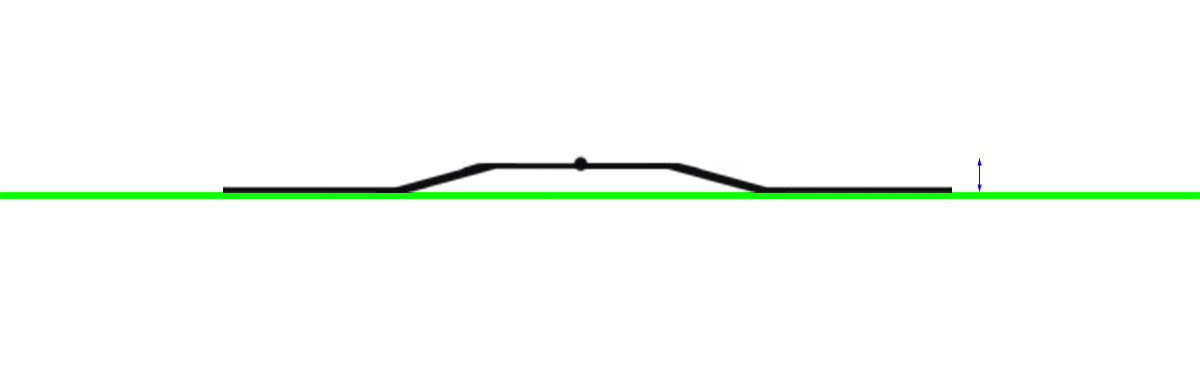
I made a drawing to show you what i meant, is easy to do, and is safe as far we dont abuse of it

The "spring" effect i mentioned happens because the clamp is like an V (is not flat), when we assemble the heatsink with the bolts thighten we are flattening the clamp, but the clamp is flexible and is trying to recover his V shape.. so is like the clamp is "pushing" at its center

To meassure that bending is needed to place the clamp on top of a flat surface (on top of a table)... represented with a green line in this image
Note the clamp have an small "bump" at the center, all the force is concentrated in that small point... so we need to meassure the location of that point using the table surface as a reference

If you place it like this you need to meassure at the center
Untitled-1-copy1.jpg


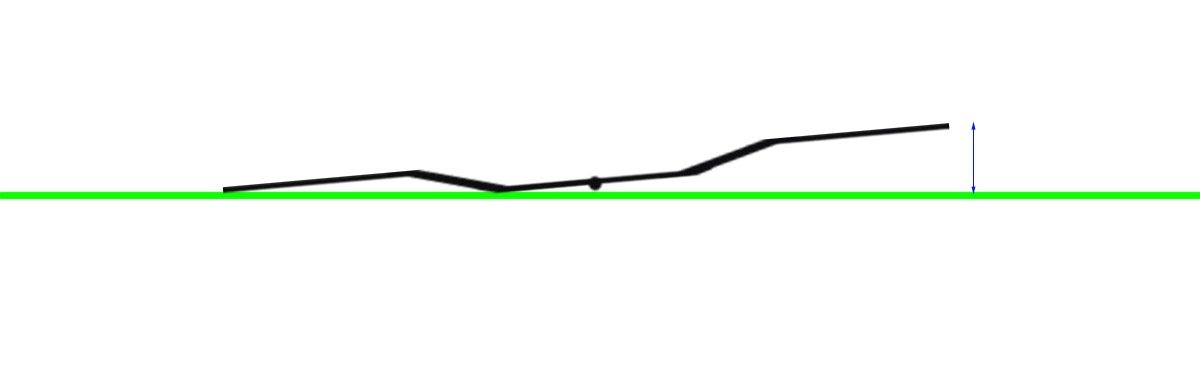
And the other way to meassure it is this way, inverted, pushing one of the sides of the clamp down... and messuring the height at the other side. This is easyer to do, and is more accurate because the distance is bigger
Untitled-1-copy2.jpg


Also, note both clamps are simmetrical (left to right sides of the clamp) and identical... so you can take both clamps and place one on top of the other to compare the bendings and to adjust them equally

*And remember... before doing any custom bending the best thing you can do is to meassure the original bending from factory, and take note about it somewhere... just incase you decide to do other corrections to the custom bendings back and forth
If you repeat the same process many times without taking any note there is going to be a point where you are not sure if you are abusing of that bending too much
My suggestion is to just increase the bending a few milimeters

 
I made a drawing to show you what i meant, is easy to do, and is safe as far we dont abuse of it

The "spring" effect i mentioned happens because the clamp is like an V (is not flat), when we assemble the heatsink with the bolts thighten we are flattening the clamp, but the clamp is flexible and is trying to recover his V shape.. so is like the clamp is "pushing" at its center

To meassure that bending is needed to place the clamp on top of a flat surface (on top of a table)... represented with a green line in this image
Note the clamp have an small "bump" at the center, all the force is concentrated in that small point... so we need to meassure the location of that point using the table surface as a reference

If you place it like this you need to meassure at the center
Untitled-1-copy1.jpg


And the other way to meassure it is this way, inverted, pushing one of the sides of the clamp down... and messuring the height at the other side. This is easyer to do, and is more accurate because the distance is bigger
Untitled-1-copy2.jpg


Also, note both clamps are simmetrical (left to right sides of the clamp) and identical... so you can take both clamps and place one on top of the other to compare the bendings and to adjust them equally

*And remember... before doing any custom bending the best thing you can do is to meassure the original bending from factory, and take note about it somewhere... just incase you decide to do other corrections to the custom bendings back and forth
If you repeat the same process many times without taking any note there is going to be a point where you are not sure if you are abusing of that bending too much
My suggestion is to just increase the bending a few milimeters
I tried to use a bike tire's tube, which is made up of rubber and placed it between the metal shield and motherboard, tightened the clamps and still GLOD, no display. Intresting part is that after removing that rubber and forcing by hand downside, now i don't get display like before, I think that rubber has created more space between that colder solder joints, i may just receive display back when i do a successful reflow, please give me some tips in order to be successful with the reflow procedure as a last resource. Bending the clamps didn't helped. And yeah thank you so much for clarification of bedning the clamps and those wonderful pictures
 
The rubber from a tire is a good material, and the position where you placed it (in between metal shield and the motherboard) is fine
For curiosity sake... note the contact in between the metal shield and the motherboard is made with 4 little plastic "bumps" located at the corners of a metalic square
When you add the rubber pad you are spreading the forces into a bigger surface (an square with a size similar than the IHS area), thats a good effect

For the reflow i cant give you much hints, the main problem is you are going to do it without having a precise control of the temperatures... so depends a bit of how much "out of control" goes that temperatures, but i dont know any easy way to meassure temperatures over 100ºC


Edit:
I dont think the rubber pad and the clamps bending was the direct responsibles of the PS3 not booting now
This kind of BGA problems usually goes for worst the most time you use the PS3 because there are "microsparks" in the broken BGA that damages the materials, everytime you was botting the PS3 the problem was increasing, it was a matter of time
 
Last edited:

Similar threads

Back
Top