PS3 (Research/Experimental) - NEC/TOKIN Capacitors Replacement - YLOD

i did the top 4 NECs the underside of the CPU/GPU side and that worked fine, i have one more B01 i got recently that was artifacting so i will try later probs, my original B01 from last summer is toasted solder bridged on the GPU but i will try my other B01 and report asap!

also that PS3 was on 2.60 and wasn't artifacting it was just extremely laggy and locking up on the XMB, i updated it to 4.86 and thats when it started to artifact

Great news, i'm looking forward to hearing more of your NEC results. I too ordered some to play around with (will aim to report results here), because if all else fails i was aiming to do a reflow anyway. So i am willing to try with many / any combinations before that :D

P.S. Price-wise, i found the NECs were about $10 for 10 capacitors. Some sellers were really expensive like double that! Anyway, if new NECs really do the trick then that price is going to go up (alot) :wink: ....sssshhhh let's keep it a secret, lol.

EDIT: @Revak3115 ...were the new NECs a pain to solder? How did you get them to make contact in the middle where the (earth/negative) Vias are? Cause aren't the original NECs stuck down with glue there, so they make contact?
 
Last edited:
@inazuma-akai well good work bro, at least you tried all the combinations, thanks for the photos.

Can i ask - so the same Ps3 you've been working on, where you tried all these combinations using electrolytic capacitors, the one in the photos, is the same one you then heated with a heat gun, and then it worked?

...if yes, can i ask:- Where did you heat up? What (approx) temperature? For how long?

Also, when you say the Ps3 works, did it boot up as normal, or did it fail soon after?

Yes, I was heating the same console that soldered the capacitors to.
I delete the capacitors before heating because I was afraid they would explode.

It's hard to determine the temperature. Maybe 200C. I warmed up about 5 minutes in total. Around RSX and CPU. I heated the capacitors the most on both sides of the board. Of course, at the beginning I heated the whole plate so that it would not break.
After heating, the console started up normally and is still running. I need to test it on GT6 and TLOU. I know I shouldn't heat because it's not a solution. But after a long fight with soldering a combination of capacitors, I wanted to throw the console out the window. I had to be sure the capacitor was the problem.

I just came up with an idea ... What if I solder additional electrolytic capacitors after heating? Will the console still work? I have to check it out next week.
 
Great news, i'm looking forward to hearing more of your NEC results. I too ordered some to play around with (will aim to report results here), because if all else fails i was aiming to do a reflow anyway. So i am willing to try with many / any combinations before that :D

P.S. Price-wise, i found the NECs were about $10 for 10 capacitors. Some sellers were really expensive like double that! Anyway, if new NECs really do the trick then that price is going to go up (alot) :wink: ....sssshhhh let's keep it a secret, lol.

EDIT: @Revak3115 ...were the new NECs a pain to solder? How did you get them to make contact in the middle where the (earth/negative) Vias are? Cause aren't the original NECs stuck down with glue there, so they make contact?
the original NECs are not glued? i just heat up the old NECs and they come right off then keep the heat on the area so solder stays melted. then put no ones on. easy
 
i did the top 4 NECs the underside of the CPU/GPU side and that worked fine, i have one more B01 i got recently that was artifacting so i will try later probs, my original B01 from last summer is toasted solder bridged on the GPU but i will try my other B01 and report asap!

also that PS3 was on 2.60 and wasn't artifacting it was just extremely laggy and locking up on the XMB, i updated it to 4.86 and thats when it started to artifact

So replacing the NECs stopped the artifacts?
I have one CECHB01 that only enters recovery menu with artifacts and it freezes a lot, on firmware 4.50.
Could you describe your artifacts or better if you have pictures just to compare with mine, because it may mean that I could fix it easily as I already have replacement capacitors.
 
the original NECs are not glued? i just heat up the old NECs and they come right off then keep the heat on the area so solder stays melted. then put no ones on. easy

I mean originally the middle section of the NEC is glued-down to the Vias, however the ends of the NEC is soldered to the contact strips.

The under-side of the NEC has a large contact area in the middle to touch the Vias on the board there. They used some type of glue to make sure it's always in contact, because it's stuck down to the board, but it's not soldered there.

I see you soldered that middle part of the NEC to the Vias, which is the same, it makes contact either way, i was just saying what i had noticed when dismantling all my NECs.
 
Last edited:
So replacing the NECs stopped the artifacts?
I have one CECHB01 that only enters recovery menu with artifacts and it freezes a lot, on firmware 4.50.
Could you describe your artifacts or better if you have pictures just to compare with mine, because it may mean that I could fix it easily as I already have replacement capacitors.
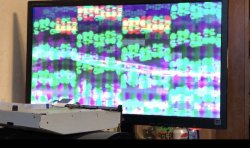
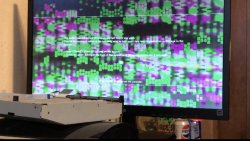
So after i did all the NECs on my CECHB01 it gave severe artifacts and until it broke from my own mess ups it would work if it wasn't moved etc it had bad artifacts -July 2019-Mar2020 system


I haven't tried yet on my other B01 but here's the artifacts it does after updating to 4.86 now it doesn't boot it has GLOD i will add my replacement NECs tonight probably.
The other ps3 that works after NECs replacement had slight artifacts and YLOD issues
All these systems had the longer YLOD prior to my fixes
That one system i said earlier still works perfectly fine atm
Heres the example
 

Attachments

  • 51C801CA-558B-4CCC-87E4-D2AD8A578ABE.jpeg
    51C801CA-558B-4CCC-87E4-D2AD8A578ABE.jpeg
    746.3 KB · Views: 101
  • D1D0DA8A-475C-4A66-8C92-8017C9D4C8AD.jpeg
    D1D0DA8A-475C-4A66-8C92-8017C9D4C8AD.jpeg
    780.8 KB · Views: 106
So after i did all the NECs on my CECHB01 it gave severe artifacts and until it broke from my own mess ups it would work if it wasn't moved etc it had bad artifacts -July 2019-Mar2020 system


I haven't tried yet on my other B01 but here's the artifacts it does after updating to 4.86 now it doesn't boot it has GLOD i will add my replacement NECs tonight probably.
The other ps3 that works after NECs replacement had slight artifacts and YLOD issues
All these systems had the longer YLOD prior to my fixes
That one system i said earlier still works perfectly fine atm
Heres the example

Thanks! My artifacts are completely different from yours, and most of the time it GLODs, so I guess I'll check the BGA solder. My unit still has the factory seal so I may be the first one to destroy fix it.
 
Hiya, you might want the low-height (1.8mm) Panasonic ones, they fit nice under the metal sheilds.
(470uF - 2.5V)
https://www.mouser.co.uk/ProductDetail/Panasonic/2R5TPE470M9?qs=/ha2pyFadui2QGsKpvcg6orrXF53s0AeGvzo04E6jM9yambsnJ/xRg==

Alot of people in this thread went with those capacitors, but there are other types, like the AVX ones (yellow), but they are higher and can touch the metal sheilds, also they don't come in 2.5V - they start at 6.3V. There are a few other types also that people used. Different brands, etc.

If you go for branded ones, it can be expensive, and you might want to try with some Chinese clones first, and if you find the capacitors solve your Ps3's issue, then you could always invest in the proper branded capacitors, from the authorized sellers like:- Mouser, Newark, Farnell, Digi-Key, after.

Or before all of that, you could even try a quick & cheap test first with electrolytic capacitor(s) like esc0rtd3w shows 1 page or so ago, with 2 wires (+) and (-) going to a combination of 2x 2200uF - 6.3V (or can do the same with 1x 4700uF - 6.3V). Brands like Rubycon, Nichicon, Panasonic, etc, are good ones.

i want the best fit one who can make my ps3 work perfectly without any issues no matter if they expensive

those are photos for the motherboard in my ps3

1
2
 
Last edited:
Monthly login!


saw 3 scratches on the substrate

If you're in the USA, I'll fix the scratches for $30 shipped. Free o-scoping of the caps while I'm at it!

Maybe I somehow cracked solder balls under the CELL or RSX while I was putting pressure on the board while removing the old capacitors?

I wouldn't beat yourself up, it was almost certainly already there. From what I see after I lift the chips, I'm starting to believe every fat model RSX has cracks already formed. Even the perfectly working ones that pass stress testing. It's all a house of cards held up by the pressure from the heatsinks.

electrolytics

The problem with those electrolytics is that squeept showed they have a very noisy pattern when compared to the nec or tantulums, but hey if it works then let that be the Guinea pig to see how it holds up over time.

My tests showed electrolytics not even working. I'm also surprised they didn't go up in smoke from not being low ESR. I'd be very interested to get my hands on that console to poke around a little.

Maybe I can bug you to try a quick little experiment? Pull the bundle of caps out so you can access them without disturbing anything else in the slightest. Boot it up, check that it's working normally, shut it down. Now disconnect the caps you added (at the far end so you never touch the motherboard at all) and try again. Then hook them back up and try again. Did it only not work with the caps disconnected?

Was my original concern ever answered? https://i.imgur.com/gkCx4GC.png
Yes, that's normal with all of them removed. The chips themselves have a resistance of like 1 ohm from vin to gnd, looks like a short but it's perfectly fine.

I was very angry and I used a heat gun - the console works, so it's a 100% capacitor problem.

Heating the caps, at best, is meaningless. At worst, it means you have a dead chip.
 
I wouldn't beat yourself up, it was almost certainly already there. From what I see after I lift the chips, I'm starting to believe every fat model RSX has cracks already formed. Even the perfectly working ones that pass stress testing. It's all a house of cards held up by the pressure from the heatsinks.

My tests showed electrolytics not even working. I'm also surprised they didn't go up in smoke from not being low ESR. I'd be very interested to get my hands on that console to poke around a little.

@squeet ...can i ask from your experience, is it just the majority of RSX that have cracks on the BGA, what about the CELL? I was wondering in case i try a reflow.

Also, when i tried the same electrolytics (2 x 2200uF) set-up as esc0rtd3w (on the RSX) my Ps3 still gave YLOD. When i measured the (external) electrolytic caps while pressing the I/O button - i got no voltage whatsoever on the caps, not even for a brief moment.
 
Last edited:
i want the best fit one who can make my ps3 work perfectly without any issues no matter if they expensive

those are photos for the motherboard in my ps3

1
2

Hiya, yes for sure, however maybe first it would be good to find out if the caps on your Ps3 are the actual problem. There aren't that many CECH-G (SEM-001) boards that were fixed here by replacing the NECs.

The majority of success stories here, you might notice, tend to be with the boards before your SEM-001 board. So:- COK-001, COK-002. Those BC PS3s draw alot more Watts (380W max), they also have 3 x regulators on the RSX, instead of only 2 x regulators.

So more power runs through that specific area compared to the SEM-001 boards (and following board revisions). Meaning, you could still spend loads of money, change the caps on your SEM-001 board, and the result would be the same = YLOD, the chances are high.

But if you still want to go ahead, depending on where you live in the world, i would suggest the Panasonic, 1.8mm height, 470uF - 2.5V, Size D, Tantalum Capacitors, from this Authorized Seller:- "Newark" (if you live in USA) or same company is called "Farnell" in Europe, etc.

Search for this product number on their websites:- 2R5TPE470M9

The minimum order is about 20 euros to get free shipping, and usually it's next day delivery.
 
Last edited:
Hiya, yes for sure, however maybe first it would be good to find out if the caps on your Ps3 are the actual problem. There aren't that many CECH-G (SEM-001) boards that were fixed here by replacing the NECs.

The majority of success stories here, you might notice, tend to be with the boards before your SEM-001 board. So:- COK-001, COK-002. Those BC PS3s draw alot more Watts (380W max), they also have 3 x regulators on the RSX, instead of only 2 x regulators.

So more power runs through that specific area compared to the SEM-001 boards (and following board revisions). Meaning, you could still spend loads of money, change the caps on your SEM-001 board, and the result would be the same = YLOD, the chances are high.

But if you still want to go ahead, depending on where you live in the world, i would suggest the Panasonic, 1.8mm height, 470uF - 2.5V, Size D, Tantalum Capacitors, from this Authorized Seller:- "Newark" (if you live in USA) or same company is called "Farnell" in Europe, etc.

Search for this product number on their websites:- 2R5TPE470M9

The minimum order is about 20 euros to get free shipping, and usually it's next day delivery.
look yesterday i used a hairdryer on the nec i heat them and after that still ylod immediately does that meaning i should change the nec and i'm living in kuwait but does that my motherboard now is useless?
 
Last edited:
look yesterday i used a hairdryer on the nec i heat them and after that still ylod immediately does that meaning i should change the nec and i'm living in kuwait but does that my motherboard now is useless?

Well, when people did the "hair-dryer" trick, if anything the Ps3 booted o.k after with no YLOD. However, i think those people used a heat gun, not a hair-dryer. Heat-guns are used for stripping wall-paper etc (normally) and some can go upto 600°C.

To see any results using heat, it would need to goto / above 260°C for at least 90 seconds, and preferably with an under-heater (under the board) at about 150°C. Without the under-heater, then it would need to go much higher than 260°C, and a hair-dryer won't do the job.

Meaning... you can't rely on that heat test you did. And if @squeept was here, he would say that "the heat test is meaningless" anyway, and getting an oscilloscope is the only way to know for sure if the NECs are good, or bad.
 
Last edited:
Well, when people did the "hair-dryer" trick, if anything the Ps3 booted o.k after with no YLOD. However, i think those people used a heat gun, not a hair-dryer. Heat-guns are used for stripping wall-paper etc (normally) and some can go upto 600°C.

To see any results using heat, it would need to goto / above 260°C for at least 90 seconds, and preferably with an under-heater at about 150°C. Without the under-heater, then it would need to go much higher than 260°C, and a hair-dryer won't do the job.

Meaning... you can't rely on that heat test you did. And if @squeept was here, he would say that "the heat test is meaningless" anyway, and getting an oscilloscope is the only way to know for sure if the NECs are good, or bad.

how do i know that if the neces are so bad if i use oscilloscope
 
how do i know that if the neces are so bad if i use oscilloscope

From user @squeept
- --- - --- - --- - --- - --- - --- - --- - --- - --- - --- - --- - --- -
Good GPU TOKINS: https://i.imgur.com/zzNXQVs.jpg
Bad GPU TOKINS: https://i.imgur.com/LNit0tL.png
- --- - --- - --- - --- - --- - --- - --- - --- - --- - --- - --- - --- -
Good CPU TOKINS: https://i.imgur.com/vCSGUVB.jpg
Bad CPU TOKINS: https://i.imgur.com/Nl4sfTu.png
- --- - --- - --- - --- - --- - --- - --- - --- - --- - --- - --- - --- -

However, oscilloscopes can be expensive if you don't have one already, so for sure it's not a cheap option to find out this way. I think squeept was recommending some oscilloscopes, but i forget which page that was from. There are probably some cheap clones from China also, but i can't say what the quality will be like.

If you could borrow one, or rent one, then yeah for sure it would be good to test the NECs with an oscilloscope, otherwise not sure.
 
@squeet ...can i ask from your experience, is it just the majority of RSX that have cracks on the BGA, what about the CELL? I was wondering in case i try a reflow

It's so rare for the CELL to have issues that I will only reball it if it responds to pressure after I've already reballed the GPU. I don't remember the last time I did one, the odds just aren't good.
 
Back
Top