PS3 (Research/Experimental) - NEC/TOKIN Capacitors Replacement - YLOD

-Chumdiddy1, good to hear your enthusiasm for achieving boot! I hope to join you soon, mine's been in a box in parts for over a decade, I think it's still on ofw3.40!

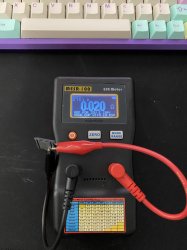
I forgot to mention the pictures and cap and resistance measurements from above are for my CECHH machine...Haven't worked on my launch model yet...

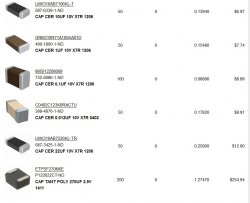
-RIP-Felix, the more I read and research I agree with you about the caps Workz_777 used in his NEC/TOKIN recreations. I think his problem wasn't ultimate capacitance, but ESR. I agree the caps he used must've been a much higher ESR than recommended for using 16 per chip. I only realized this after finally ordering my caps today. I couldn't find any 470uF caps with anywhere near as low as ESR as the 270uF ones you used. I also couldn't find ANY .01uF ceramic caps in the 1206 size and 10v, ended up getting .012uF caps in a much smaller size...Also wanted to ask him about using all 10v ceramic caps in his mix with the 2.5v tantalums. Still hoping he'll chime in soon. As far as the temp of my hakko iron, I'll have to double check...All I know is that I was using a higher temp than I would normally have to use, aka, one for soldering SMC's with ROHS solder. A higher temp. than I like...I ordered my caps from DIGIKEY, and the weird thing was that when filtering down the results for tantalum polymer caps, those Panasonics NEVER showed up under ANY circumstances. I had to search for the specific part number you provided, and there they were. AND, when I did search for them they showed up, but almost triple the cost and much lower availability. I freaked out and started looking at other sites, and when I came back to DIGIKEY, the availability was back up, the price was back down...WTF?? I had an OH $HIT moment of demand exploding for these...SO I ordered enough ceramics and tantalums to experiment with...but at a cost obviously. You gotta pay to play, right??
 

Attachments

  • DKorder.jpg
    DKorder.jpg
    92.3 KB · Views: 107
he also has a page on his site complaining about users on ripoffreport.com saying he kept this consoles and money.

Exactly. What I wrote (and I only wrote part of it) isn't conjecture or rumor on my part. It's actually what customers have said about him with proofs.

So, take it for what it's worth but I IMMEDIATELY removed him from any consideration back when I debated getting my PS3 reballed. I found too many cases of not just poor reviews but provable claims of people being ripped-off.
 
-Chumdiddy1, good to hear your enthusiasm for achieving boot! I hope to join you soon, mine's been in a box in parts for over a decade, I think it's still on ofw3.40!

I forgot to mention the pictures and cap and resistance measurements from above are for my CECHH machine...Haven't worked on my launch model yet...

-RIP-Felix, the more I read and research I agree with you about the caps Workz_777 used in his NEC/TOKIN recreations. I think his problem wasn't ultimate capacitance, but ESR. I agree the caps he used must've been a much higher ESR than recommended for using 16 per chip. I only realized this after finally ordering my caps today. I couldn't find any 470uF caps with anywhere near as low as ESR as the 270uF ones you used. I also couldn't find ANY .01uF ceramic caps in the 1206 size and 10v, ended up getting .012uF caps in a much smaller size...Also wanted to ask him about using all 10v ceramic caps in his mix with the 2.5v tantalums. Still hoping he'll chime in soon. As far as the temp of my hakko iron, I'll have to double check...All I know is that I was using a higher temp than I would normally have to use, aka, one for soldering SMC's with ROHS solder. A higher temp. than I like...I ordered my caps from DIGIKEY, and the weird thing was that when filtering down the results for tantalum polymer caps, those Panasonics NEVER showed up under ANY circumstances. I had to search for the specific part number you provided, and there they were. AND, when I did search for them they showed up, but almost triple the cost and much lower availability. I freaked out and started looking at other sites, and when I came back to DIGIKEY, the availability was back up, the price was back down...WTF?? I had an OH $HIT moment of demand exploding for these...SO I ordered enough ceramics and tantalums to experiment with...but at a cost obviously. You gotta pay to play, right??

Thanks a lot and I wish you the same after reading your posts!
Your work so far is much cleaner than mine was so I have little doubt that all will go well if the overall, underlying problem isn't a worst case scenario. I have no doubt you'll be successful!!
 
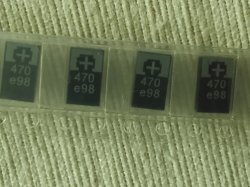
I removed all nec tokens back side on board and soldered 16x 470uF 2.5V to my CECH04.

I have played 2 hours The Last of us and installed software and done other thing maybe 10 hour and works great, no problem at all. This was yellow light of death ps3 fat and now it seems to be fixed.

I exchanged 24 pack of beers to this ps3, 2x ps2 fat and 2x xbox 360 broken and to be fixed.. Btw one ps2 fat works too, i just put both ps2 good parts together and seems to work. :cool2:

tantaalit.jpg
I used these.
 
...-RIP-Felix, the more I read and research I agree with you about the caps Workz_777 used in his NEC/TOKIN recreations. I think his problem wasn't ultimate capacitance, but ESR. I agree the caps he used must've been a much higher ESR than recommended for using 16 per chip. I only realized this after finally ordering my caps today. I couldn't find any 470uF caps with anywhere near as low as ESR as the 270uF ones you used. I also couldn't find ANY .01uF ceramic caps in the 1206 size and 10v, ended up getting .012uF caps in a much smaller size...Also wanted to ask him about using all 10v ceramic caps in his mix with the 2.5v tantalums. Still hoping he'll chime in soon. As far as the temp of my hakko iron, I'll have to double check...All I know is that I was using a higher temp than I would normally have to use, aka, one for soldering SMC's with ROHS solder. A higher temp. than I like...I ordered my caps from DIGIKEY, and the weird thing was that when filtering down the results for tantalum polymer caps, those Panasonics NEVER showed up under ANY circumstances. I had to search for the specific part number you provided, and there they were. AND, when I did search for them they showed up, but almost triple the cost and much lower availability. I freaked out and started looking at other sites, and when I came back to DIGIKEY, the availability was back up, the price was back down...WTF?? I had an OH $HIT moment of demand exploding for these...SO I ordered enough ceramics and tantalums to experiment with...but at a cost obviously. You gotta pay to play, right??
I got 100x from Arrow back in September for $97, now they are $132. That's the electronics industry for you. Tantalum ain't cheap, and the deposits are almost completely controlled by China. The Pandemic isn't helping either.

Adding 100nF caps are pointless. SONY already has an array of 36x of them under the chips. Those MLCCs and the NEC/TOKINs have the decoupling under control. I understand the concept of broadening the Frequency response curve for a lower Impedance over a grater frequency range. This is a fact that NEC/TOKIN were sure to point out when selling their proadilizers. When you do this by using multiple values of capacitors, it can create antiresonance peaks that are counter productive. So I put your cap values into the KEMET simulation and it isn't predicting any, so you should be fine. Frankly, the best replacement for a NEC/TOKIN is a new NEC/TOKIN. Too bad they tend to fail! Using just low ESR Tantalums will not equal the frequency response curve of the the NEC/TOKINs alone (impedance vs frequency plot), hence the in between values. So that's the approach @Workz_777 took. It's based on a solid foundation and probably wont hurt. I'm just not sure it's necessary (but then, I only replaced one of my NEC/TOKINS and the other 3 are doing something). Perhaps the in between values are needed if you remove all the NEC/TOKINs. How many of each is what the sim is useful for.

EDIT:
Here is the NEC/TOKINs frequency response, from the data sheet:

cpKd5Cp.jpg

And here is the KEMET simulation for my caps (closest fit with their products):
cTICdV4.jpg

The NEC/TOKINs are better in the higher frequencies. So if you wanted to use some small value MLCCs, maybe 1nF or 22nF or even pico farads could help bring it down. But you'd have to use a bunch of them in parallel. Not sure how feasible that would be, or if it's even necessary.
 
Last edited:
I apologize in advance, this is going to be a long post:

The TL;DR:

  • Anyone who says this is a 100% fix is wrong.
  • Reballing is not a con.
  • The NEC/TOKINs do fail.
  • Low ESR of Tantalum caps matters.
  • The current across the caps is no joke. More jumpers = safer.
  • Total capacatitanc might mater, but dosen't "appear" to.
  • Learn to properly Delid your CPU, make a tool, and do it before you turn your PS3 on again!!!
  • Jailbreak and install webMAN for tighter fan control.

Really enjoyed reading this. Hopefully someday PS3 #1 can be saved lol. Though I am curious, according to this datasheet:

https://file-databank.netdna-ssl.com/wp-content/uploads/2018/09/NEC-TOKIN-0E907-DATASHEET.pdf

It says the NEC TOKIN capacitor that is rated at 1200 uF can have an ESR of 1.5 mOhms or 2 mOhms. Have we confirmed that the PS3's capacitors are rated at 1.5 mOhms or did you set that as your target purely to be on the safe side?
 
...Oh and also, if you replace the NECs with the tantalums, please don't try to turn on the console untill the + sides have been connected as otherwise the voltage sense on the VRM controller won't see any voltage and it will increase the PWM to the mosfet controller and the voltage will increase until the caps go out in a glorious firework :(
No, that won't happen because the PS3 will instantly YLOD. When my single conductor burned up it created the situation you're talking about. The console was on, the conductor that was bridging the + rails burnt to a crisp and created an open circuit on the + rail. Instantly the console YLOD on me, along with a nice puff of smoke. The tantalums seem fine, no explosion. I replaced with more bridge wires and there was no problem, except for artifacting & freezing (reball issue I suspected), the YLOD was fixed.

If + rails are not connected = YLOD.
If +/GND rails short = YLOD

The YLOD is there to protect you from this kind of danger. It's just doing it's job. Namely, keeping you from burning down your house and suing SONY.
 
No, that won't happen because the PS3 will instantly YLOD. When my single conductor burned up it created the situation you're talking about. The console was on, the conductor that was bridging the + rails burnt to a crisp and created an open circuit on the + rail. Instantly the console YLOD on me, along with a nice puff of smoke. The tantalums seem fine, no explosion. I replaced with more bridge wires and there was no problem, except for artifacting & freezing (reball issue I suspected), the YLOD was fixed.

If + rails are not connected = YLOD.
If +/GND rails short = YLOD

The YLOD is there to protect you from this kind of danger. It's just doing it's job. Namely, keeping you from burning down your house and suing SONY.
Then something else might be also wrong with my console as the caps that I had were rated at 6.5 but I measured voltage above that for a brief period before itt YLOD on meg without the + bridge. Now I am waiting for NEC and tantalum caps and I Will report back when they arrive (a month or so)
 
Then something else might be also wrong with my console as the caps that I had were rated at 6.5 but I measured voltage above that for a brief period before itt YLOD on meg without the + bridge. Now I am waiting for NEC and tantalum caps and I Will report back when they arrive (a month or so)

You weren't able to boot into the PS3 menu to get those voltage readings, right? You mean that during the 1-2s it takes for the PS3 to discover the error and shut down (YLOD) you saw voltage spikes on your...what...multimeter?
 
PS3 #1 - Part 2. The Finale
(...continued from Part 1 here.)
The only thing I had left to try with this Playstation 3 is to try reballing both the CPU and RSX. I had little hope that this would work because a failed reflow attempt prior caused the motherboard to flex to the point where I heard popping. My guess was that was the BGA grid and it's pads were being torn away from the substrate.

For the visually inclined:
The RSX pull went well. Except...
WExYt3o.jpg

I didn't notice this until I was cleaning up later. The chip looks good otherwise.
ihLHzwf.jpg

And so too did the Motherboard:
jU8k2u0.jpg

And that's when everything took a turn for the worse!
2vxmLVm.jpg

5dYfoES.jpg

HgJdxMq.jpg
GCpXdCn.jpg


So my first reball attempt failed quite spectacularly as you can see! This board is no longer with us.

There were a few things that went right.
  1. I adjusted my IR preheater using a K series termocouple on the underside of the motherboard between the RSX and CPU to know when the board got to 150C. The second thermocouple went right next to the chip I was trying to remove on the top side of the board. I covered the rest of the board in aluminum foil to reflect the heat and try to reduce the temperature difference between the topside and bottom side of the board. This worked to keep the board from flexing without the need for the support jig I made, but decided not to use.
  2. The homemade nozzle for my heat gun (made out of aluminum foil and kapton tape) worked well to get the RSX off. A few seconds after the thermocouple said that the temperature reached 240C I was able to pluck the chip with suction alone.
So what went wrong with the CPU is a bit confusing to me. Unlike the RSX, when the CPU got up to 240C it wouldn't budge! I removed the heat gun and added more flux. Tried again, no give. Then I tried more flux and heat again. Nothing! So I decided to let it heat more until it gave way. The thermocouple said it got up to 280C and it was still not budging on that one end. I could partially lift it on the left side, but not on the right side, especially in the corner that delaminated. So I used forceps to gently lift the corner. I began to lift and I thought it was fine, but it was still stuck. The rest of the chip was molten and when I went to lift it the corner delaminated and strands of traces pulled away. It was annihilated!

My best guess is that it wasn't getting enough heat. It was closer to the edge of my preheater, where it might not have been getting even heat from below. That's not exactly where my temperature probe was, so I don't know for sure. The only other thing I can think of is the solder was so oxidized it wouldn't melt. Despite multiple attempts to get the flux into the solder, perhaps this corner didn't "drink" any of it up.

Last thoughts:
If you need a reball, send it to a professional service you can trust. Doing it yourself comes with a learning curve. A curve that will most likely result in the destruction of a few boards until you figure it out. I didn't mind, and was expecting that I'd kill the chips and motherboard in the process. When I set out I was expecting that the $40 YLOD console I bought was most likely not going to survive. My goal was to investigate the Tantalums capacitor fix and refine my soldering ability in the process. The capacitor fix was confirmed and I got one hell of an education in soldering. Nothing is free, so the price of all the tools and one destroyed PS3 was the cost of this education. I had fun and that was the point.

Everything that could be tried, has been tried. PS3 #1 is officially deceased. But it did not die in vane! PS3 #2 is still going strong with it's tantalums thanks to the lessons I learned from PS3 #1's sacrifice.
 
Last edited:
I'd be really interested in how the proadlizers fail - high ESR, low capacity or both? If anyone manages to non-destructively remove a Proadlizer from the board, they might try to measure it with an ESR meter. Sometimes, high ESR might show up even if it's still in circuit, so no desoldering might be required for those, and anyone who happens to own an ESR meter could measure this.

This could also be useful in determining if a PS3 actually failed from bad proadlizer caps instead of something else.
 
I'd be really interested in how the proadlizers fail - high ESR, low capacity or both? If anyone manages to non-destructively remove a Proadlizer from the board, they might try to measure it with an ESR meter. Sometimes, high ESR might show up even if it's still in circuit, so no desoldering might be required for those, and anyone who happens to own an ESR meter could measure this.

This could also be useful in determining if a PS3 actually failed from bad proadlizer caps instead of something else.

@niino Here you go:
nBJp5mF
 
@PanachePanda Thank you! The 2.5V 1200µF Proadlizer is supposed to have an ESR of just 0.005mOhm (yep, that low) (at 100 khz; I assume your meter measures at the same freq since this is pretty much industry standard for specifying ESR), so they do fail high ESR. Capacity measurement would still be interesting as well, though.
 
PS3 #2 - Part 2: Felix Learns About False Positives!
(...continued from part 1 here.)​

...Everything that could be tried, has been tried. PS3 #1 is officially deceased. But it did not die in vane! PS3 #2 is still going strong with it's tantalums thanks to the lessons I learned from PS3 #1's sacrifice.
Just as I said that it YLOD on me! PS3 #2 decided to give me instant karma. After posting I went to start it up and everything was fine like expected. Then I put in a PS2 game, which I had not tried with this system yet and it played fine for about 2 minutes before the YLOD. It won't turn back on.

My guess is that the heat from the hot air I used to install the tantalum capacitors temporarily restored enough capacitance and/or lowered the ESR of the NEC/TOKINS enough for the console to appear stable. After a few weeks of sitting it wore off and now it's back to the YLOD. So it looks like 8x wasn't enough. Time to replace another NEC/TOKIN.

@RIP-Felix What's your rework equipment? And from where and which tantalums are you buying?

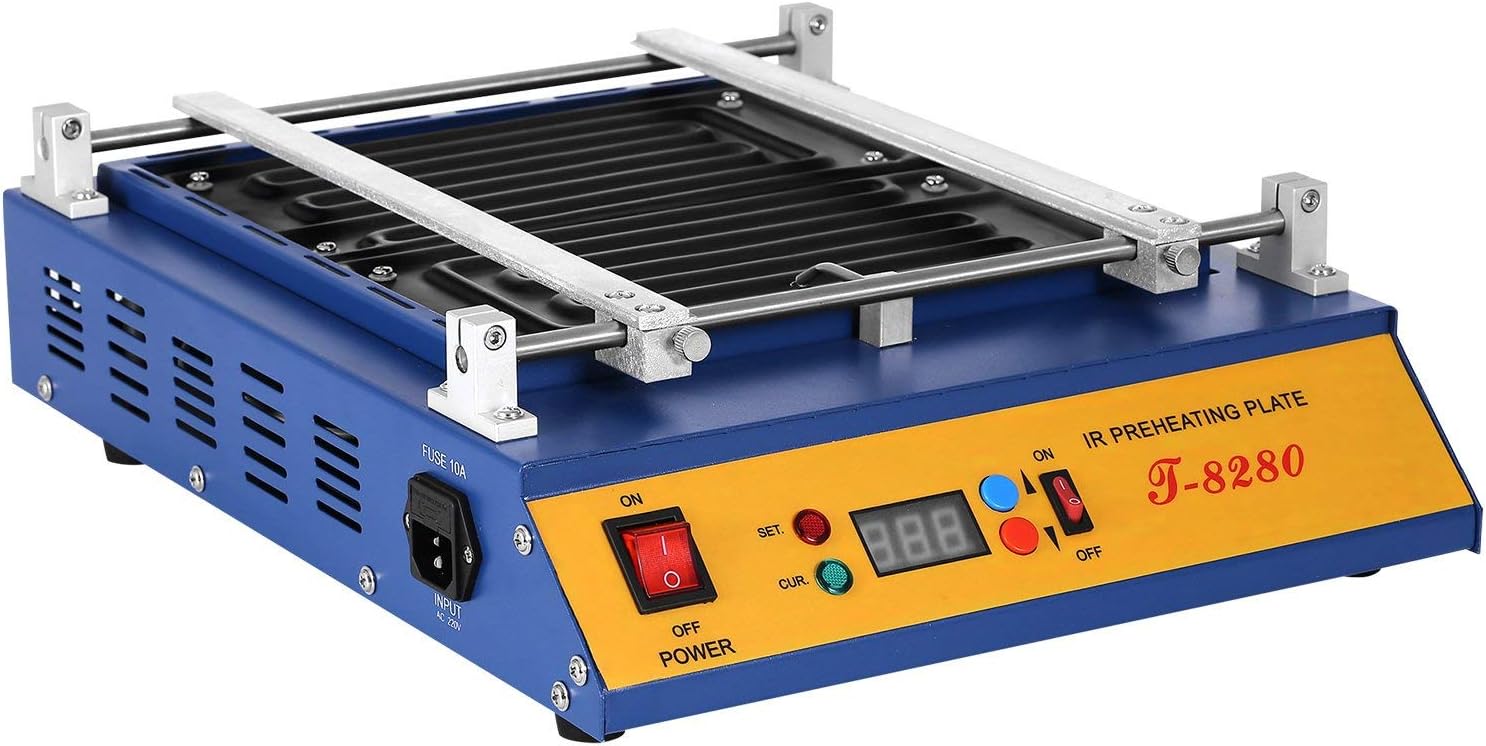
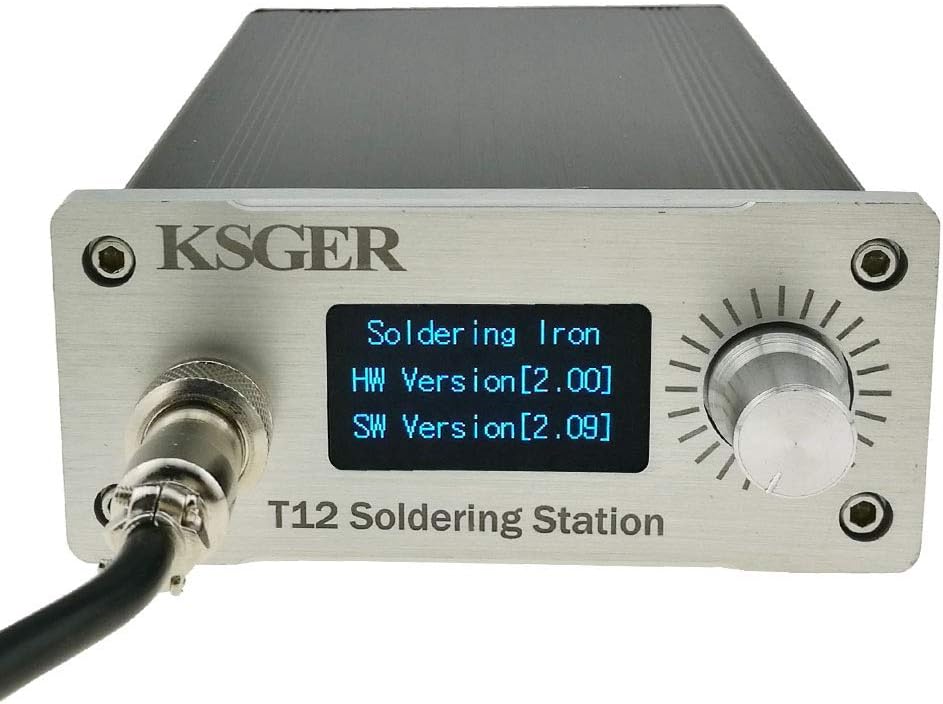
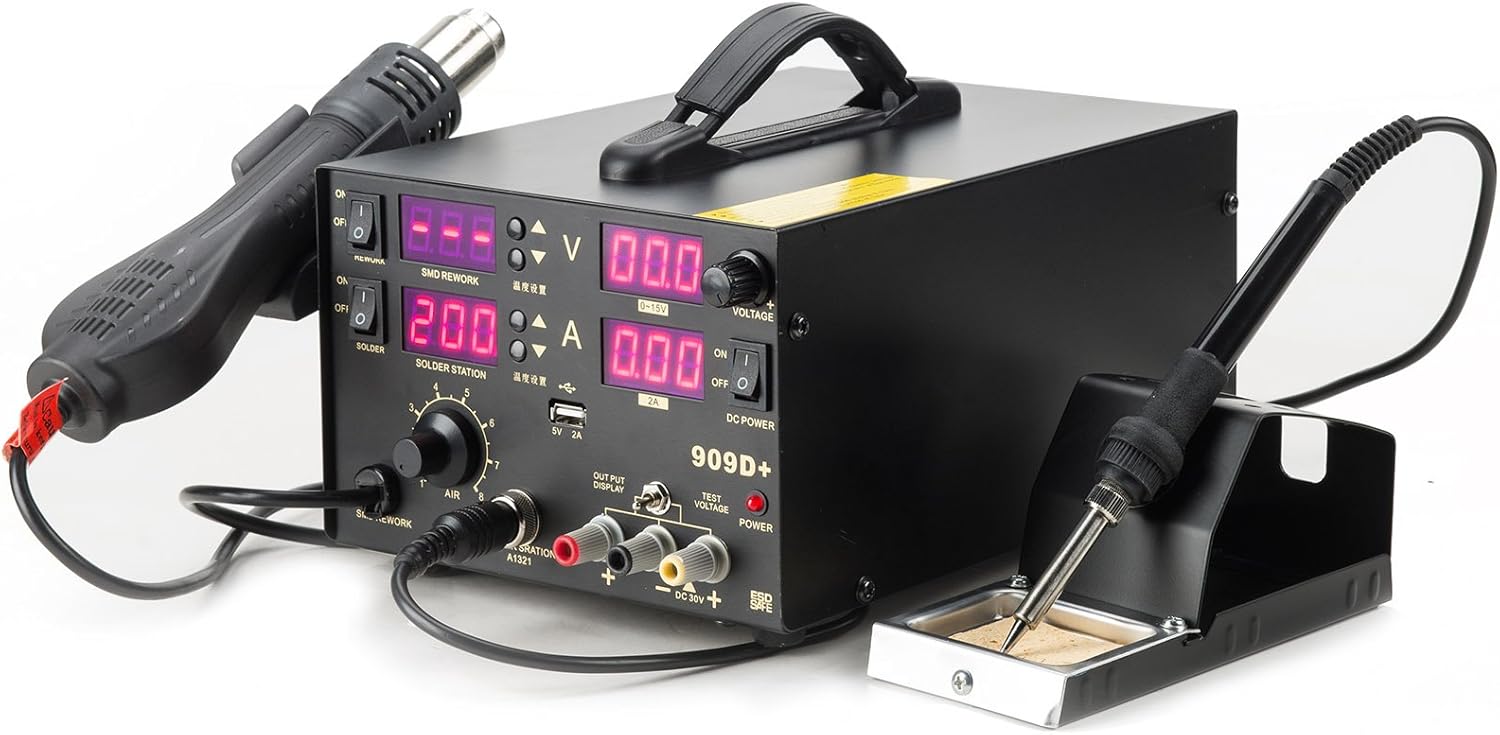
Tantalum Polymer caps are Panasonic ETPSF270M6E from Arrow, Digikey, or Mouser (whoever is cheapest). My gear is cheap and nothing special. I spent maybe $350 total on equipment and probably another $100-200 on tips, solder, and accessories. These come in handy for other projects, so that's how I justify the expense:
71ARQ-eewDL._AC_SL1500_.jpg
71llFFKDI5L._AC_SL1500_.jpg
619cRFlGzyL._AC_SL1000_.jpg
711CUli0T9L._AC_SL1500_.jpg

iu
@niino trying the image again, since I failed to get add the link :(
I have tried this myself, but do not trust the readings. I have the same ESR meter you do BTW. Those are designed only for electrolytic caps and autorange for the V ratings common to them. For accurate ESR readings this low you would need to employ O-scope tricks or a vector network analyzer. I don't know what you hope to learn from inaccurate readings, but I don't think people understand how demanding processors are about the quality of power they need supplied.

You won't get an accurate ESR in circuit and the process of removing them changes it. So what you need to look for is excessive ripple. What's excessive? I haven't found this spec. yet. Perhaps it's available in the technical documentation for the RSX and CELL_BE, but I haven't looked that deep yet. To test the ripple on a +1v supply, one that's sufficiently filtered/decoupled for a processor, you'll need at least a good Oscilloscope and know how. Ripple in the DC-DC switching voltage regulator occurs at the switching frequency and noise occurs into the higher harmonics. A second stage filter is designed to decouple the ripple and reduce the noise to acceptable levels. For super sensitive applications like this (processor) a combination of methods are used. There are 2 LC filters and some resistors to tune it for a specific frequency band, my guess is the switching frequency of the regulator - somewhere between 300KHz and 1MHz. This does seem to be the resonant frequency range of the caps SONY used in the filter.

If someone with a good oscilloscope probes the NEC/TOKIN +/GND rail (using a ground spring) it should be possible to measure the ripple and noise on a working console to establish a baseline. Then we could evaluate the tantalum capacitors effect more scientifically. I want an oscilloscope, I just don't want to spend the doh.

Continued on part 3 here...
 
Last edited:
I would have access to some nice oscilloscopes in university if it wasn't for the pandemic and I also own a fully working CECHL which uses both - 1000µF (RSX) and 1200µF (CPU) - capacities of the Proadlizer used in the PS3. I normally could do some measurements, but as I said... the pandemic is preventing me from doing so.
I honestly have no idea on the way ESR meters work internally, so I'm sorry for asking this question the way I did.
 
No stupid questions, there's only stupid answers! I'm not an engineer, just a hobbyist with enough knowledge to walk strait into common pitfalls. I'm still learning. And if I were so inclined I could take my PS3 into work and use an oscilloscope to measure these values. I just don't want to risk our equipment for something non-essential. I'm reasonably sure I could do it safely, but "I'm sure it's fine" are famous last words!
 
I have tried this myself, but do not trust the readings. I have the same ESR meter you do BTW. Those are designed only for electrolytic caps and autorange for the V ratings common to them. For accurate ESR readings this low you would need to employ O-scope tricks or a vector network analyzer. I don't know what you hope to learn from inaccurate readings, but I don't think people understand how demanding processors are about the quality of power they need supplied.

You won't get an accurate ESR in circuit and the process of removing them changes it. So what you need to look for is excessive ripple. What's excessive? I haven't found this spec. yet. Perhaps it's available in the technical documentation for the RSX and CELL_BE, but I haven't looked that deep yet. To test the ripple on a +1v supply, one that's sufficiently filtered/decoupled for a processor, you'll need at least a good Oscilloscope and know how. Ripple in the DC-DC switching voltage regulator occurs at the switching frequency and noise occurs into the higher harmonics. A second stage filter is designed to decouple the ripple and reduce the noise to acceptable levels. For super sensitive applications like this (processor) a combination of methods are used. There are 2 LC filters and some resistors to tune it for a specific frequency band, my guess is the switching frequency of the regulator - somewhere between 300KHz and 1MHz. This does seem to be the resonant frequency range of the caps SONY used in the filter.

If someone with a good oscilloscope probes the NEC/TOKIN +/GND rail (using a ground spring) it should be possible to measure the ripple and noise on a working console to establish a baseline. Then we could evaluate the tantalum capacitors effect more scientifically. I want an oscilloscope, I just don't want to spend the doh.
Yea I wish I had an Oscilloscope to actually test those NEC/Tokins. The only thing I can note, is I do have 'supposedly new' NEC/TOKINs, fresh from the tape reel, and they do give a different read out than the one I've taken off the board. Still, that meter doesn't give us enough data to come to any real conclusion, other than its different readouts.

For reference I have about 10 fat PS3s in my house at the moment. 6 fully working, others I'm still working/learning on, as I try to build/gather more data on diagnosing different problems. Mostly around these capacitors and the RSX/CELL chips.

Like yourself, this has been a new hobby that I've picked up during these covid times. I come from the software world and have tinkered on and off with the hardware side in the past.
 
Back
Top