PS3 (Research/Experimental) - NEC/TOKIN Capacitors Replacement - YLOD

@squeept I admire your restraint!

@ElGris & @jetblue, these sound like false positives due to mirofracture re-connection (requires a reball/reflow to fix). Minute warping/flexing of the board can cause the console to start working. Wait a few weeks, after the motherboard has a chance to relax and go through a few thermal cycles the original defect may reappear. This may explain @ElGris results. @jetblue keep us apprised of your initial success (don't get excited and sell them too soon). Please try a PS2 games in the BC models and test them every few days to get some thermal cycles in. Mine YLOD in a ps2 title after 2 weeks, it was working fine the previous week in GT6! Also, the SYSCON errors would be beneficial to have if you are willing to do it.
... all im doing is bridging a direct power line to the gpu. this isnt good. bad very bad. i kept reading about successful fixs and they show artifacts and such this tells me its from over power. like when i build a pc and have too little or too much power to the graphics card...so please if you see this disconnect the bridge wire. you will eventually kill your ps3. maybe.
@jetblue I understand your excitement, but your arrangement of caps is electrically identical to the jumper method. There is no difference, besides appearance. The tokins are bulk bypass (decoupling) capacitors, which means they are not supposed to resist current flow into the chips (they're in parallel, not series). Instead, they offer a path to ground for noise at a certain frequency. This noise is generated by the DC-DC switching voltage regulators at a known range of frequencies. The capacitance values and filter circuit were designed around those frequencies. This means you need to match Capacitance and ESR of the tokens or your replacement array will perform worse.
 
worked on the two ps3s that have all the tokins removed. added arrays on top and bottom. the one that turned on last night still
stays on but no hdmi
IMG_20201207_191433.jpg

could be another issue altogether. the other ps3 there is the other all tokin removed unit with no change.
i also press the controller start in that state and it just flashes. btw that tv is a last gen plasma took me a year to fix. they show up from time to time at work.

@ElGris only two ps3s during my experiments have all the tokins removed. 1 works but no display the other still red light. in essence it has the bridge wire but its being filtered by the 470uf caps as it should lowering the voltage to 1.2v wich is whats needed. a naked bridge wire will send over voltage to the ps3. some turn on some dont. might be model specific i dont know. more investigation and testing needs to be done.
im making better arrays with better caps from digikey and will get them as close as possible to the tokins to see if too many ufs is the cause wich i suspect from the cheaper chinese caps. work on the two ps3s with no tokins continues.

@squeept customer recently ordered a saturn with region free bios,clear shell swap,modchip,etc bios chip was still on the work tray. we have oscillios at work but i dont think im there yet with the fix. the fix needs fine tuning and once i get a working formula down then the real testing with oscillos and other techys begin.
 
@RIP-Felix Yeah, I know that these consoles can stop working after a job like this due previous damage on bgas or while it's been fixed, but like I said, both consoles were having delayed YLOD, I'm good detecting this kind of behaviour, and that was what they both were doing. I mentioned the causes of these both failures-> caps in bad state after installation (maybe due working in a place where they shouldn't be, I wanna know if this is true btw). And a NEC on RSX with flux inside in the other console.

I know how consoles with bgas problem behave too, and this isn't the case, as both consoles where running just fine after the NEC fix, I even have running one of these with TLOU while I'm writing this, and it has no problems of bga, never had them. Both are delidded btw.

About your console with YLOD due PS2 emulation, I only can say that running a PS2 game on a BC is quite risky, 'cause you can't monitor the right temps on the E.E, and this isn't a PS2, it's a PS3 with a PS2 inside, there's more temperature around the mobo and why I believe a thermal pad for the IHS isn't enough. Even if you put the fan at 60%, we don't know how cool is the E.E running.
Plus, A LOT of people in forum had and have problem with this, and that's not a surprise anymore, something is happening either with both E.E/GS, some other chip related in that area or even bgas.

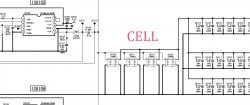
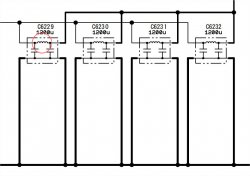
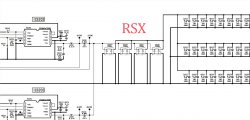
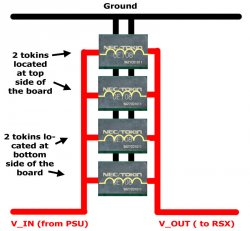
@jetblue Doing that kind of jumper is pretty much the same as we all do, except for the difference in the wire thickness and how is soldered, I took the time to see in the schematics and our beloved jumper is inside the NEC, as we knew, but it's a coil. See the images attached.

Both diagrams are almost identical for RSX and CELL, and NEC's jumpers are coils of unknown value, this coil is the one connecting both +V connections. Notice that in the thinness line we have a 2W resistor, and at the other side, the thicker line, we have those little mlc caps. Now, I'm not sure if these lines are different in thickness only to notice the difference easily or is for something else.

People already mentioned that using thinner wires could provoke a burnt on them, so you will only know by testing the console during hours of heavy gaming.

About your still non working PS3s. Maybe the one that has GLOD it has a damaged RSX, you tried A/V already? Perform a safe mode sequence and see if the CELL is good, if you can't get the correct beeps, then something happens on the bgas of the CELL. Don't connect HDD. It did happen to me once that one of my Hs gave me GLOD due lack of caps, I added a few more and it booted ok. You have to try different things, and the SYSCON method is a good way btw.

P/S: I "borrowed" Sandugas' image for an example, I hope no ban is incoming.
 

Attachments

  • CELL.jpg
    CELL.jpg
    125.3 KB · Views: 127
  • Jumper.jpg
    Jumper.jpg
    68.4 KB · Views: 126
  • RSX.jpg
    RSX.jpg
    133.4 KB · Views: 128
  • Coils.jpg
    Coils.jpg
    138.3 KB · Views: 125
Hi Guys, new to the forum but avid hobbyist when it comes to electronic repair. I have a lot of unknowns that I know most will say "Idk if it will work unless you test," but I would like some insight. So I went ahead and removed all 8 Tokins...I know I know, should have done 1 at a time...during this I nicked a damn ceramic micro capacitor and so I purchased a broken COK-001 board to replace the component since who knows the exact spec for that capacitor. Of course I cleaned-up the area around the missing component and it does look a little meh. Curious your guys thoughts. If the micro capacitor is replaced properly, do you think it would give me any issues?

Also, I am going to use 32 Panasonic Tantalum 330uF/2.5V/7mohm ESR to closely match the original NEC component specs (will bridge all 4 sections). In theory sounds like it should work, anybody use this same exact setup and worked?

Lastly, what's the best jumper wire gauge that would work best?

Thanks everyone for your help!
 

Attachments

  • A8DBA16E-625B-43DE-BF49-ACA7D1148B6C.jpeg
    A8DBA16E-625B-43DE-BF49-ACA7D1148B6C.jpeg
    627 KB · Views: 127
Last edited:
once i get a working formula down then the real testing with oscillos and other techys begin.

That's the thing... all the evidence from real diagnosis shows this is a fairly rare issue. Especially if those are consoles that will be sold, you really should be verifying that it's actually the issue and not a temporary, accidental fix. Let alone the time it will save not replacing them.

PdF4CT8.jpg

I've been doing a lot more Sega these days. Got this beauty on the bench right now. Fixed a few burned up traces from water damage then recapped (these don't need it, either, but the customers want and pay for it). Dialing in the laser now.
 
@Jz456games, I knocked a few of those tiny caps off myself. They are most likely the 0.1uF MLCC capacitors used for high frequency filtering on the CPU or RSX. There are 36x of them in parallel and they work in unison with the tokins in the second stage filter. Loosing a few isn't the end of the world. The console will probably operate normally. Maybe just clean the pad with desoldering braid to remove any remenants of the cap just in case.

worked on the two ps3s that have all the tokins removed. added arrays on top and bottom. the one that turned on last night still stays on but no hdmi...
Try using an AV cable plugged into a CRT, if you have one, or use a RetroTINK2x or something if not. I found this is the default video out after YLOD and multiple power cycles. It's annoying, but normal.

@jetblue and @Jz456games , I did alot of research to determine the ideal capacitors to use. I found that an array of 18x 270uF 6mOhm ESR caps was the closest match for capacitance and ESR to a 4x tokin array. Oscilloscope measurements showed the noise to be lower, but they did not revive my YLOD A model. @squeept and I went back and forth getting these measurements dialed in. To the point we're pretty sure that going significantly above or below 4800uF is a bad idea. That was something I predicted based on the circuit design, as the second stage filter is tuned to the noise frequency it's supposed to filter out. It's as if SONY's engineers knew what they were doing...I know! Shocking isn't it?

Also, if you remove one tokin, you should remove all of them. Their combined ESR is proportional to the number in the array. So if you remove one, the combined ESR is much Higher than before. Mixing non-identical capacitors doesn't calculate ESR the same way, you can't just divide the ESR by the number of caps. That only works if each cap is identical.. So it's best to leave them be, because they're fine (verified with an O-scope), or replace all of them with an array of identical caps whose combined specifications match the Tokin array.

@RIP-Felix Yeah, I know that these consoles can stop working after a job like this due previous damage on bgas or while it's been fixed, but like I said, both consoles were having delayed YLOD, I'm good detecting this kind of behaviour, and that was what they both were doing. I mentioned the causes of these both failures-> caps in bad state after installation (maybe due working in a place where they shouldn't be, I wanna know if this is true btw). And a NEC on RSX with flux inside in the other console.

I know how consoles with bgas problem behave too, and this isn't the case, as both consoles where running just fine after the NEC fix, I even have running one of these with TLOU while I'm writing this, and it has no problems of bga, never had them. Both are delidded btw.
Sorry, I misunderstood you (English). I see that you verified the caps failed afterwards. What were their values (uF, V, and ESR)? How many were in the array?

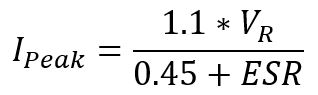
From reading this it's possible a tantalum cap can be damaged from voltage spikes. During testing I noticed an instantaneous voltage spike the moment I flipped the PWR rocker on. If the magnitude from this is high enough it can cause a transient instantaneous current:

Now, differential equations is where I draw the line! I do this stuff for fun, and dif-eq's is not what I had in mind. So I'll use the AVX equation instead:
equation-5-2.jpg

For the cap array I used I_peak = (1.1 x 2.5V) / (0.45 + 0.006 Oms) = 6.03A

Now, that 6 Amps is certainly less than these chips can draw during normal operation, but you have to multiply that I_peak by the number of capacitors in the array, since they share that current equally in parallel. In other words, it would take a peak current of 109.8 Amps for each capacitor to see 6.1 A worth of current across it. In the US, residential circuit breakers will not allow a sustained current above 16A, and it would probably trip long before an instantaneous current of 109.8 amps. But that just how my array calculates.

Now if you leave some tokens and have a few tantalums, that changes the equations for how much surge current the tantalum might be exposed to. Perhaps this results in burning it out. Again, this is why you should either replace bad tokins with new tokens or replace all of them with tantalum. No mixing! These equations are hard enough to figure out when all the caps are the same.

There are other failure examples in that link too, this is just one possibility.

About your console with YLOD due PS2 emulation, I only can say that running a PS2 game on a BC is quite risky, 'cause you can't monitor the right temps on the E.E, and this isn't a PS2, it's a PS3 with a PS2 inside, there's more temperature around the mobo and why I believe a thermal pad for the IHS isn't enough. Even if you put the fan at 60%, we don't know how cool is the E.E running.

Plus, A LOT of people in forum had and have problem with this, and that's not a surprise anymore, something is happening either with both E.E/GS, some other chip related in that area or even bgas.

I mean, yeah. The PS2 chip has a BGA too, but I didn't think it got anywhere near hot enought to worry about. Not like the RSX and all of it's thermal cycles. Still, I doubt that's the cause. I'm still thinking it's the BGA on the RSX, which I haven't attempted to reball yet. Still working up the courage for a second attempt, which I don't have high hopes for going successfully. Practice make perfect, but I've only tried once before.

Both diagrams are almost identical for RSX and CELL, and NEC's jumpers are coils of unknown value...

I think they are just indicating that the Tokins have some internal inductance.

People already mentioned that using thinner wires could provoke a burnt on them, so you will only know by testing the console during hours of heavy gaming.
Yeah I tried a single 22AWG solid core that burnt to a crisp. Using 6 works fine (3 on each side).
eMjhWdy.jpg
9dzAhbc.jpg
37Ts10z.jpg
 
Like I said, I used 22AWG solid core. It burned up with just one wire (see spoiler in my previous post), but then I used 6 jumpers and it works fine (until it YLOD again, but it wasn't because of the jumpers that time). So in my experience I would say, larger than 22AWG.
 
@RIP-Felix
"What were their values (uF, V, and ESR)? How many were in the array?"

I'm attaching a pic with the dead guys, my multimeter is reading this:

963uf
OL (open I believe)
15mf (mili ???)
781uf

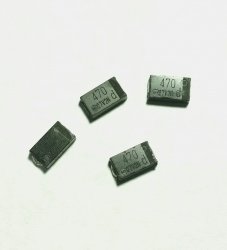
And I dumped too another one that was giving me OL readings. So 5 in total in two Hs. This are original PS3 4xxx tantalums, which are 470uf 2.5v, the brand and ESR are unknown. They were used, but values were ok, in beetween 450uf-550uf. And this isn't the first time this happens to me, I have a C with full of yellow chinese caps, and someday my brother told the console wasn't turning on, I found that one cap was OL, I replaced and is still alive. This isn't something new, but having so much caps out of business is something that I never expected.

If I remember well, in one H, the array was 4x4 tantalums on RSX, and in the other one only 4x2, the other 2 NECs weren't removed. So these consoles are indeed killing these caps? Hmm..

For now I'm running the one of those H with 4x4 tantalums on RSX, and CELL is still untouched. We're gonna see what happens. I also have a 2001 with 4x2 tantalums on RSX (2 NECs still remain), and it's running just fine, so it's pretty weird..

"For the cap array I used I_peak = (1.1 x 2.5V) / (0.45 + 0.006 Oms) = 6.03A

Now, that 6 Amps is certainly less than these chips can draw during normal operation, but you have to multiply that I_peak by the number of capacitors in the array, since they share that current equally in parallel. In other words, it would take a peak current of 109.8 Amps for each capacitor to see 6.1 A worth of current across it. In the US, residential circuit breakers will not allow a sustained current above 16A, and it would probably trip long before an instantaneous current of 109.8 amps. But that just how my array calculates.

Now if you leave some tokens and have a few tantalums, that changes the equations for how much surge current the tantalum might be exposed to. Perhaps this results in burning it out. Again, this is why you should either replace bad tokins with new tokens or replace all of them with tantalum. No mixing! These equations are hard enough to figure out when all the caps are the same."


Mixing NECs with tantalums could be dangerous due the extra low ESR of the NECs? By following that formula, adding NECs will only increase Ipeak, right? It makes sense, I thought the system will be more "stable" with the presense of NECs in the circuit but tests showed me that in both situations you're gonna have problems. So at the end it only depends of how good the mobo can handle it, I guess.

Wierd thing is that until now I didn't have any burnt wire, it's strange since I tested many consoles now, BCs, normal fatties and a slim.
 

Attachments

  • IMG_20201209_124830012~01.jpg
    IMG_20201209_124830012~01.jpg
    197.5 KB · Views: 119
@RIP-Felix
"What were their values (uF, V, and ESR)? How many were in the array?"

I'm attaching a pic with the dead guys, my multimeter is reading this:

963uf
OL (open I believe)
15mf (mili ???)
781uf

And I dumped too another one that was giving me OL readings. So 5 in total in two Hs. This are original PS3 4xxx tantalums, which are 470uf 2.5v, the brand and ESR are unknown. They were used, but values were ok, in beetween 450uf-550uf. And this isn't the first time this happens to me, I have a C with full of yellow chinese caps, and someday my brother told the console wasn't turning on, I found that one cap was OL, I replaced and is still alive. This isn't something new, but having so much caps out of business is something that I never expected.

If I remember well, in one H, the array was 4x4 tantalums on RSX, and in the other one only 4x2, the other 2 NECs weren't removed. So these consoles are indeed killing these caps? Hmm..

For now I'm running the one of those H with 4x4 tantalums on RSX, and CELL is still untouched. We're gonna see what happens. I also have a 2001 with 4x2 tantalums on RSX (2 NECs still remain), and it's running just fine, so it's pretty weird..

"For the cap array I used I_peak = (1.1 x 2.5V) / (0.45 + 0.006 Oms) = 6.03A

Now, that 6 Amps is certainly less than these chips can draw during normal operation, but you have to multiply that I_peak by the number of capacitors in the array, since they share that current equally in parallel. In other words, it would take a peak current of 109.8 Amps for each capacitor to see 6.1 A worth of current across it. In the US, residential circuit breakers will not allow a sustained current above 16A, and it would probably trip long before an instantaneous current of 109.8 amps. But that just how my array calculates.

Now if you leave some tokens and have a few tantalums, that changes the equations for how much surge current the tantalum might be exposed to. Perhaps this results in burning it out. Again, this is why you should either replace bad tokins with new tokens or replace all of them with tantalum. No mixing! These equations are hard enough to figure out when all the caps are the same."


Mixing NECs with tantalums could be dangerous due the extra low ESR of the NECs? By following that formula, adding NECs will only increase Ipeak, right? It makes sense, I thought the system will be more "stable" with the presense of NECs in the circuit but tests showed me that in both situations you're gonna have problems. So at the end it only depends of how good the mobo can handle it, I guess.

Wierd thing is that until now I didn't have any burnt wire, it's strange since I tested many consoles now, BCs, normal fatties and a slim.

The thing I see is that you are dealing with H models, which still have the old RSX. And I wish I was wrong but... these chips are just failing left and right, no matter what. So the chance of you having 2 consoles that only had capacitors failing first... I think is pretty low.
The problem is, that this type of failure is very fiddly. You even say you used hot air to replace tokins and it worked!
This is great, but in my opinion you can not make any conclusions as to what actually happened. At least scientifically.

Did you try powering up the consoles after removing the NECs, but before putting the new tantalums? Its even quite possible that it would have worked just like that. Could you undo and then redo the "fix" to check if it was actually what you thought? (Of course it's not possible) These are just an example.

It may be worth having these things in mind. Otherwise you may find yourself going left and right jumping to conclusions. Syscon diagnosis could help as well. Then again I understand why people don't do it completely. I can't point anyone to that happily. I myself have no clue. It's too obscure and people just want a straightforward fix.

Cheers
 
The EE in a PS2 Slim will run with a completely dust clogged fan and a dried out thermal pad, and it will be happy as can be. I've seen it dozens of times while cleaning everything up after replacing failed lasers.

I work on every video game system, and I only know as much as I need to know about each one in order to know how to fix them. Most of you probably know more about the actual architecture and internal operation of a PS3 than I do. That said, my guess about the PS2 games triggering any issues... all of the PS2 AV is piped through the RSX, and it probably uses a small section of real estate on the RSX die that is otherwise unused in normal operation. The die could be suffering at that interface from pretty severe temperature differences. I know I've reballed at least a few consoles and had everything working perfectly, except PS2 games would have a green or red tint to them, or not boot at all. These consoles would later fail back to YLOD during stress testing with PS3 games and end up scrapped.

I'd love someone that knows more about the actual operation of the PS3 under the hood to chime in here, but I'm also guessing that the EE isn't even initialized/polled/booted/whatever at all until a PS2 game is actually booted. In other words, if I remove the EE from the board entirely, I expect the console to function normally for playing a PS3 game. If so, that all still screams RSX failure to me.

edit: I've got another CECHA01 in the pipeline this week. If she's fixable, I'll test this out by cutting power to the EE.
 
Last edited:
the EE isn't even initialized/polled/booted/whatever at all until a PS2 game is actually booted.
Pretty sure that's the case -- syscon disables most of the ps3 hardware the ps2 doesn't need, then boots the ps2 (that's part of why you have to resync the controller, and why the xmb isn't available in ps2 mode). What I don't know is if the ps2 syscon (I think it's actually called something else) is also on board, or if that's virtualized through the ps3 syscon.
 
@ElGris those are probably Panasonic caps. They like that black and grey 2 tone. Just because they are from an official board doesn't mean you can move them and expect them to work in the new curcuit. First of all, 470uF is too large IMO. Even 330uF are too large. Their ESR is in the best case is something like 6mOhms. You need 16x to match the ESR of a 4x tokin array. If you only replace one then you need 4x for each tokin replaced to decrease the ESR to equal the 1.5mOhms removed. However, the math doesn't work that way and it's going to be different. I don't feel like calculating it for dissimilar caps, because it gets complicated.

Assuming the ESR is fine, you're replacing 1200uF with 1880uF (470x4), or 1320uF(330x4). This changes the combined resonant frequency of the filter, "detuning" it. The more you change it outside it's 4800uF sweet spot the more noise will get through, the harder the caps will work and heat up. The amount of peak current the caps will see involves difficult math(s), it just gets too complicated to deal with. All of this decreases capacitor lifespan. It could go from 20 years to 2 months, who knows.

My advise would be to remove all the caps and remaining tokins, replace with 18x 270uf TaPol 6mOhm ESR caps I linked above, and add plenty of jumpers. That should eliminate all the variables. If your console truly has no BGA defects, then it should work fine until the tantalums give out or the BGA does. I haven't been able to test this cap array out, as my consoles all YLOD on me again (suspect BGA problems) and I'm not about to take the tokins off a working console just to test the new caps. So all this is theoretical. Perhapes the smaller caps I'm using wont last as long as the larger ones that don't fit on the rails. Hard to predict.
 
The thing I see is that you are dealing with H models, which still have the old RSX. And I wish I was wrong but... these chips are just failing left and right, no matter what. So the chance of you having 2 consoles that only had capacitors failing first... I think is pretty low.
The problem is, that this type of failure is very fiddly. You even say you used hot air to replace tokins and it worked!
This is great, but in my opinion you can not make any conclusions as to what actually happened. At least scientifically.

Did you try powering up the consoles after removing the NECs, but before putting the new tantalums? Its even quite possible that it would have worked just like that. Could you undo and then redo the "fix" to check if it was actually what you thought? (Of course it's not possible) These are just an example.

It may be worth having these things in mind. Otherwise you may find yourself going left and right jumping to conclusions. Syscon diagnosis could help as well. Then again I understand why people don't do it completely. I can't point anyone to that happily. I myself have no clue. It's too obscure and people just want a straightforward fix.

Cheers
I always choose (If I want to buy a non-BC) a G or H model, due the RSX size, those are compatible with BC PS3s, as I plan to fix some using a rework machine. I know those RSX could/will fail someday, but at the moment most of them on mine non-BCs are working just fine. I bought many consoles that were already "touched" by other hands, and those have different problems apart of the common story (bgas, NECs, dead RSX, etc). Those consoles are a minory If I had to compare them to the number of consoles that are yloding due NECs, It's like saying I have like 8 consoles with NECs issues and the rest have different problems, a few of those made by other people. I mean, most of the consoles I bought have NEC issues, maybe I were lucky, but my bad luck are the tantalums which are difficult to get where I live.

I go directly to NECs when I have a console with a delayed ylod, but that doesn't mean you won't have another problem, like bgas. You have to try and see what's the console doing. I never had problems in reviving a PS3 with delayed ylod, 'cause I know what's failing and are the NECs for sure, and that could be seen by using the Syscon method too, which I'm too lazy to use it at the moment. I really have little time to try this.

I could make run some non-BC PS3s by removing half of the NECs (the ones in the back), but that is not a solution, as I'm 100% that all the NECs on RSX are almost dead, those are the main problem, and running a PS3 with only half of them, with only lead you to another ylod when trying to play something heavy.

I also never had problems in using my heatgun for removing NECs, it's quite fast, and bgas never got damaged afaik. You need a LOT of heat for some time to melt those.
@ElGris those are probably Panasonic caps. They like that black and grey 2 tone. Just because they are from an official board doesn't mean you can move them and expect them to work in the new curcuit. First of all, 470uF is too large IMO. Even 330uF are too large. Their ESR is in the best case is something like 6mOhms. You need 16x to match the ESR of a 4x tokin array. If you only replace one then you need 4x for each tokin replaced to decrease the ESR to equal the 1.5mOhms removed. However, the math doesn't work that way and it's going to be different. I don't feel like calculating it for dissimilar caps, because it gets complicated.

Assuming the ESR is fine, you're replacing 1200uF with 1880uF (470x4), or 1320uF(330x4). This changes the combined resonant frequency of the filter, "detuning" it. The more you change it outside it's 4800uF sweet spot the more noise will get through, the harder the caps will work and heat up. The amount of peak current the caps will see involves difficult math(s), it just gets too complicated to deal with. All of this decreases capacitor lifespan. It could go from 20 years to 2 months, who knows.

My advise would be to remove all the caps and remaining tokins, replace with 18x 270uf TaPol 6mOhm ESR caps I linked above, and add plenty of jumpers. That should eliminate all the variables. If your console truly has no BGA defects, then it should work fine until the tantalums give out or the BGA does. I haven't been able to test this cap array out, as my consoles all YLOD on me again (suspect BGA problems) and I'm not about to take the tokins off a working console just to test the new caps. So all this is theoretical. Perhapes the smaller caps I'm using wont last as long as the larger ones that don't fit on the rails. Hard to predict.

I know and I understand that putting some tantalums instead of the OG caps isn't the best choice and I shoulnd't be expecting something good and stable from it, but I'm only comparing these two fixes to the ones I made before using chinese caps. I fixed 2 BCs and a G with the yellow caps and all three didn't die after a few tries, that's what takes my attention, and maybe is due these caps were used during years, but at the moment of installation, they were good acording to its capacitance. I don't know, it's rare for me, but I'll keep testing the one I re-revived, the other one it hasn't NECs anymore lol, and I don't want to scrap all of my SS mobos just now. (Or maybe yes? :D )

If I remember well, Workz only succeeded when he tested another type of caps, I don't remember which, and you should see why those consoles are yloding, first of all. If you aren't using the syscon method, then turn on the console and see if the ylod is instant or not. That says a lot, believe me.
 
looky what arrived at work
IMG_20201209_111332.jpg

the laptop that launched a thousand fixes!
i fix all kinds of business electronics at work from tablets to servers and toshiba is as rare as it comes especially now since they stopped there laptop line. this one is doa. i will dissect and see how the cap fix with no bridge wire works on this thing.

no change on those last 3 ps3s,the one that shut off during last of us and the other two with no tokins at all. il stop working on them until the tokins arrive from china. if after that they dont work its probably other issue and il label them for reball. until then i wont start on another 6 ps3s from my closet. meantime i have 4 no power ps4s that need to be fixed before the new year. il post when theres some news
 
looky what arrived at work
IMG_20201209_111332.jpg

the laptop that launched a thousand fixes!
i fix all kinds of business electronics at work from tablets to servers and toshiba is as rare as it comes especially now since they stopped there laptop line. this one is doa. i will dissect and see how the cap fix with no bridge wire works on this thing.

no change on those last 3 ps3s,the one that shut off during last of us and the other two with no tokins at all. il stop working on them until the tokins arrive from china. if after that they dont work its probably other issue and il label them for reball. until then i wont start on another 6 ps3s from my closet. meantime i have 4 no power ps4s that need to be fixed before the new year. il post when theres some news

It's a shame even guys like you aren't benefiting from doing the syscon diagnosis thing. But I can't blame anyone.
15 years have passed and we still have pretty much no clue as to what actually happens with these consoles.

Maybe in a few more years this comment will be out of place. Hopefully.
 
It's a shame even guys like you aren't benefiting from doing the syscon diagnosis thing. But I can't blame anyone.
15 years have passed and we still have pretty much no clue as to what actually happens with these consoles.

Maybe in a few more years this comment will be out of place. Hopefully.
You beat me to the SYSCON request! :encouragement:
 
Hello, first of all i want to thank everybody you for the information about ps3 retarded ylod problem fix, i have read almost every page from the start. I want to share my experience i have fixed my ps3 retarded ylod problems in a sligth different way. I didn't remove nec tokins from motherboard, instead i added an "atomic bomb" consistent in four nec tokins i got cutting an other old ps3 motherboard in parallel with the rsx one near the rsx chip adding a total 1200*4= 4800 so doubling the nominal rsx side capacitance. Results were good with ylod fixed, it seems that the extra capacitance doesn't stress too much the tension generator with the extra current at start up. So everything ok, ylod fixed
 
Hey guys,

So the PS3 (COK-001) booted up but the previous owner removed the HDMI socket. No biggie to replace. Problem is, when I plug AV in and hold the power button to reset output, it never does a second beep. If I hold it long enough, system powers off to standby. So is the missing HDMI socket telling the system it cannot reset? Also, Im trying to test using the original 60gb hdd from my original system (haven't tried it in over 7 yrs). Would a bad hdd cause the system not to display?
 
Back
Top