

RIP-Felix
Senior Member
It's probably easier to start with the wrong way to do it:Since a reball is not an option for me (or most of us), is there a guide that shows the proper reflow procedure? The things you mentioned above like using contact cleaner before and after and nudging the chip are things I've never heard or seen before during a reflow (but makes sense). I really have nothing to lose at this point since the PS3 is just sitting there collecting dust. Thanks
- You want to use AMTEC-NC559 Flux. This is designed with SAC (Lead Free alloy) only! It will not work for lead alloys! The AMTECH flux is to reflow the Lead Free solder or remove the chip only.
- If you are reballing with leaded solder balls, you need a different flux to put the chip back on! I like the KINGBOW BGA flux for that. It came with a cheap BGA reballing kit I bought on ebay. It might be cheap, but it's great flux. However, if you're just doing a reflow, you want the AMTECH flux!
- The MB needs to be thoroughly cleaned before and after the reflow. The area underneath the RSX is especially important to clean, as contamination will get into the BGA and reduce the durability of the reflow!
- Als flux residues can actually be slightly conductive, which reduced resistance between VDD/GND on the BGA. And since thos resistance is alread very small for processors, it can be significant. I've measured 2.4 ohms after a reball, then 3.1 after cleaning the flux off. If your RSX isn't as healthy as mine and is closer to 2, then the flux residue could lower it to 1ish, and that may not be enough separation for it to work!
- Preheating the board as she demonstrates is not going to work. Moisture from humidity in the air has seeped inside. It's trapped microscopic pores between motherboard layers, SMD components, underfill of GPU, CPU, RAM, everywhere. You MUST thorougly dry the motherboard or the steam will force it's way out explosively. This is called popcorning! Ive seen component pop and crack! I've seen streams of bubbling liquid escaping out from the underfill of the the RSX DIE! This can squeeze the solder bumps out!
- The PS3 motherboard needs to be dried at 100C for 2-4 hours before a reflow! NO EXCEPTION!
- A bottom heating element is essential to prevent the motherboard from warping. When you apply heat on one side of the motherboard it bows. In this case the topside expands, and since the bottom side isn't heated, it's cooler and expands less. So the motherboard literally warps! When it cools, it contracts and pulls on the freshly solidified BGA. So even if you achieve a good reflow, the stress of this bowing back can literally rip the BGA pads off the motherboard or break the solder from them! It can delaminate the layers of the board too.
- You need a bottom heater to preheat the entire motherboard and control the cooldown so that both sides heat-up and cool-down together, preventing thermal warping. This will achieve a stress free bond.
- She says to set the heat gun to a certain temperature and to heat for a set period of time. This is a terrible way to estimate temperature. Some boards may flow, some may not! There is no way to know for sure if you even melted the solder. And if you did, there's no way to know if you burned it to a crisp in the process!
- You need temperature probes to help you reach the proper reflowing temperatures to melt SAC lead free alloy (218C). Reflow profiles, like the one pictured below, are designed to have a preheat ramp, reflow, and cooldown period that minimize crystal formation.
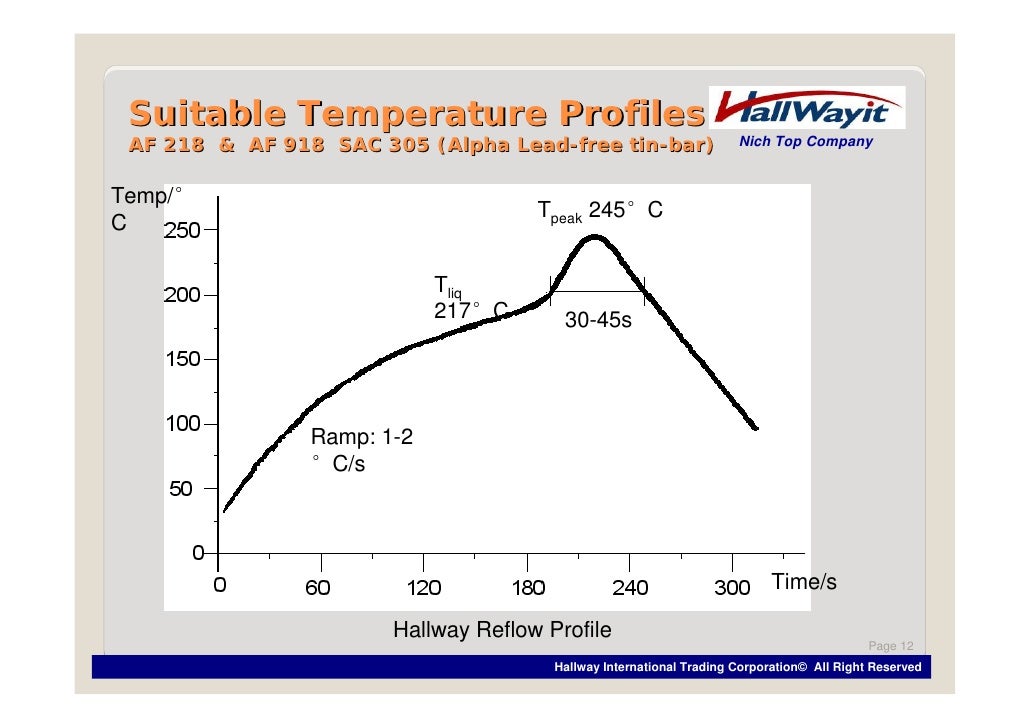
- Profiles control the temperature carefully to achieve a strong joint. The way she did it was THE WORST way you could go about it. Even if it worked, the solder balls that formed will be full of long crystals that make it brittle and prone to cracks! Solder that is shiny has small crystals. If it appears matte, it has long crystals and is hard/brittle. They longer you hold the heat on the solder, the more time they have to grow, and the more time the solder has to oxidize, which further makes it hard/brittle. ESPECIALLY lead Free alowy! IFixIt's method will not last very long before the YLOD will return.
This is the guy/video that inspired my DIY ghetto setup. It's capable with practice...
A reflow is the same procedure, except instead of removing the chip you just begin the cooling cycles after nudging to ensure it has flowed. The setup cost me about $300, but it's not ideal, because I have to manually simulate the reflow profile. I'm currently looking into making my own automated system using an IR6500 top heater, relays, and PID controllers...
However, a complete BGA rework station is probably cheaper overall when I add up all the different pieces. So if you haven't already gone down the path of buying rework equipment, then a dedicated BGA rework station is the easier solution. The reason I've gone this route is that the different pieces in my setup are useful for other electrics projects, besides reballing.
I realize these tools are expensive and that no one wants to spend more on tools than another PS3! This is why reballing services actually aren't asking too high a price at $100-150. The problem is finding one you can trust, if you can find one at all!
So that is the proper way to do it.


