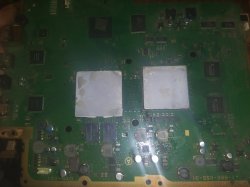
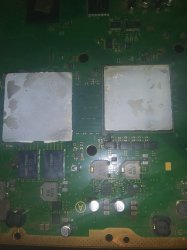
PS3 (Research/Experimental) - NEC/TOKIN Capacitors Replacement - YLOD

Skeptics or not this thread has gained some pretty interesting analysis and theories over its existence. Its not about the "this is the final fix for them all" like some would like to argue. Its about learning and documenting what can be done to extend the life of one of the most unique consoles ever made.
 
Skeptics or not this thread has gained some pretty interesting analysis and theories over its existence. Its not about the "this is the final fix for them all" like some would like to argue. Its about learning and documenting what can be done to extend the life of one of the most unique consoles ever made.

That I could not have said better myself.

Sad thing is, you know how the internet works, and people in general will only take the surface and not come out with the complete synthesis. So the surface should be made clearer someday too.

Then again as the first thing i said... (Whithout kidding) Capacitors CAN be the issue. See L model picture.
It was simply lacking capacitance. Simply Put additional capacitor and it worked. Removed it to test.. YLoD again. Left it there and machine been working some weeks now, GTA V and all.
Things have to be done scientifically in order to reach conclusions. I don't know how frequent this case is I only had one L model.

Now the C models... that's a whole different story.
 
Maximum heat doesn't matter as much as the heat cycles. My pet theory on why the GPUs of various consoles tend to have more BGA defects is that they experience "mini heat cycles". The temperature seems to fluctuate during use more than the CPU, so they can go through tons of smaller heat cycles per session. Just a guess.

Once I get the next bad TOKIN so I can do some more testing, I intend to learn all of that syscon junk to verify a bunch of stuff from the syscon thread. With the help of the people from the "Frankenstein" thread where the guy had a real Sony made CECHA01 with a newer GPU, hopefully we can get it working. Seems pretty straightforward.

I see. Still buggs me that in later models the RSX issue seems to be much less frequent. And being still an RSX it should be having the same rate of heat cycles as the older ones.
Interestingly, I even noticed on L model (w 65nm RSX) the SYSCON fan curve is allowing RSX to reach 80 degrees in normal operation. If this is normal and by design from Sony, it makes me think.
First of all, these RSXs are still working. Even if they are enduring quite worse heat ranges. At least when compared with the slightly older ones. Which brings me to second point. On the old models the SYSCON is actually trying to have the RSX operating quite cooler! Fan will kick in way before RSX reaches 80 C.
So even in hindsight, why did they decide this? Maybe they thought for some reason that the 65nm RSX was not so sensitive as the old 90nm one.
...And they were right, weren't they.

As for the SYSCON diagnosing btw, I wish there was also a way of accessing the error logs on a working console with cfw. In theory I guess it should be possible. Even if after the fact, the logged errors would be useful and no need for silly dongles and bothering to learn to do it. Which is why we have still problems with myths etc. No small part of the problems with this thread is due to false positives after replacing tokins.

And finally, for you being the doubting asshole you really are giving here all the hope. If it is indeed realistically possible to put newer RSX you would really have found the real cure in my opinion. We know it is doable. For now, I think we can all already thank you for the hope.

Cheers
 
I see. Still buggs me that in later models the RSX issue seems to be much less frequent. And being still an RSX it should be having the same rate of heat cycles as the older ones.
Interestingly, I even noticed on L model (w 65nm RSX) the SYSCON fan curve is allowing RSX to reach 80 degrees in normal operation. If this is normal and by design from Sony, it makes me think.
First of all, these RSXs are still working. Even if they are enduring quite worse heat ranges. At least when compared with the slightly older ones. Which brings me to second point. On the old models the SYSCON is actually trying to have the RSX operating quite cooler! Fan will kick in way before RSX reaches 80 C.
So even in hindsight, why did they decide this? Maybe they thought for some reason that the 65nm RSX was not so sensitive as the old 90nm one.
...And they were right, weren't they.

As for the SYSCON diagnosing btw, I wish there was also a way of accessing the error logs on a working console with cfw. In theory I guess it should be possible. Even if after the fact, the logged errors would be useful and no need for silly dongles and bothering to learn to do it. Which is why we have still problems with myths etc. No small part of the problems with this thread is due to false positives after replacing tokins.

And finally, for you being the doubting asshole you really are giving here all the hope. If it is indeed realistically possible to put newer RSX you would really have found the real cure in my opinion. We know it is doable. For now, I think we can all already thank you for the hope.

Cheers
The RSX goes through more thermal cycles than does the CPU, because of its use in game. These thermal cycles may have a smaller Delta T than the CPU cycles, but because they are so much more frequent and varied, they "aparantly" result in BGA defects more often.

Miniaturization of RSX and CPU manufacturing processes reduced heat the cooling system had to deal with. SONY also began using more power efficient fans on newer models, which draw less current, and reduce load/heat on the power supply. The case designs changed too, affecting the airflow characteristic inside the console. Fan curves are adjusted and calibrated per console revision, according to the design goals of the engineers who model and test the cooling system.

TL;DR = Hot running consoles will all die, there's nothing you or anyone can do to prevent it. All you can do is prolong the inevitable.
Engineers model BGA defects down to the number of thermal cycles and design cooling systems to achieve a balance between reliability and acoustics. Ostensibly, it would appear the initial design goal was to minimize noise. In truth, they were balancing between reliability, earnings potential, and public perceptions. The fan curves were adjusted to allow the chips to run hot AF before ramping up. SONY knew doing this would reduce reliability and did so anyway. Why?
  1. People will just complain the console is noisier, instead of thanking them for reliability.
  2. It's in SONY's financial interest only if the console makes it past the warranty period. Since there is a huge R&D investment up front and uncertainty in earnings, the incentive is to strike an aggressive balance early (kill early consoles just after the warranty period, make them buy another while they are still being sold). Mid-life design revisions can incorporate newer technologies to improve reliability. Part of that is identifying what breaks, that you couldn't predict. Some of that may be readjusting the reliability to earnings goals.
  3. Market research, support analytics and future costs factor into setting a "reasonable" warranty period. If it's too short customers may not buy, especially if the company has a reputation for bad quality or reliability. So the length of support needs to be long enough to reassure the buyer, but not so long it eats into earnings. Also, if they can't maintain the perception of having reliable products, the company at least needs to appear to be improving it. This is difficult to gauge and is readjusted mid life to appease critics and stave off law suits.
Basically, SONY (or any company for that matter) is concerned with much more than a reliable product. Most of those concerns are more important to whether or not they survive as a company. Reliability is given only as much attention as required, unless they value it as a core goal of the company. Nintendo seems to respect this value more than MS and SONY do. Their formula has been to emphasize quality games over graphics, which may also equate to better reliability. That has been working out for them quite well. While MS and SONY chase graphics and produce expensive consoles that only last a few years, Nintendo will sit back business as usual and wait for them to ruin their reputations.

PC users can chase graphics, knowing that their investment in new PC hardware doesn't also mean that their game library is locked to the old hardware. Console users are reliant on the console manufacturer to forward port titles or make the next console backwards compatible. Otherwise their entire game library is reliant on their PS3 lasting forever. If SONY doesn't provide PS3 backwards compatibility on PS4, 5 and every console thereafter, then they loose access when the console dies. Chasing graphics shortens this timetable from decades to years.

The other thing to remember is that Nintendo is not going to chase graphics and risk everything following MS and SONY down a reputation destroying rabbit hell to hole. SONY and MS's gaming divisions could go bankrupt and the parent company would be fine. Nintendo would be ruined. So you can see why Nintendo needs to value it's reputation more.

As for putting a 65nm RSX on an BC model, that would only work if EVERYTHING were the same. I would be flabbergasted if nothing were different. Usually the voltages are reduced on smaller manufacturing processes. That would need to be reduced. If it's all handled onboard the chip, fine, but something tells me that's not likely.
 
Last edited:
The RSX goes through more thermal cycles than does the CPU, because of its use in game. These thermal cycles may have a smaller Delta T than the CPU cycles, but because they are so much more frequent and varied, they "aparantly" result in BGA defects more often.

Miniaturization of RSX and CPU manufacturing processes reduced heat the cooling system had to deal with. SONY also began using more power efficient fans on newer models, which draw less current, and reduce load/heat on the power supply. The case designs changed too, affecting the airflow characteristic inside the console. Fan curves are adjusted and calibrated per console revision, according to the design goals of the engineers who model and test the cooling system.

TL;DR = Hot running consoles will all die, there's nothing you or anyone can do to prevent it. All you can do is prolong the inevitable.
Engineers model BGA defects down to the number of thermal cycles and design cooling systems to achieve a balance between reliability and acoustics. Ostensibly, it would appear the initial design goal was to minimize noise. In truth, they were balancing between reliability, earnings potential, and public perceptions. The fan curves were adjusted to allow the chips to run hot AF before ramping up. SONY knew doing this would reduce reliability and did so anyway. Why?
  1. People will just complain the console is noisier, instead of thanking them for reliability.
  2. It's in SONY's financial interest only if the console makes it past the warranty period. Since there is a huge R&D investment up front and uncertainty in earnings, the incentive is to strike an aggressive balance early (kill early consoles just after the warranty period, make them buy another while they are still being sold). Mid-life design revisions can incorporate newer technologies to improve reliability. Part of that is identifying what breaks, that you couldn't predict. Some of that may be readjusting the reliability to earnings goals.
  3. Market research, support analytics and future costs factor into setting a "reasonable" warranty period. If it's too short customers may not buy, especially if the company has a reputation for bad quality or reliability. So the length of support needs to be long enough to reassure the buyer, but not so long it eats into earnings. Also, if they can't maintain the perception of having reliable products, the company at least needs to appear to be improving it. This is difficult to gauge and is readjusted mid life to appease critics and stave off law suits.
Basically, SONY (or any company for that matter) is concerned with much more than a reliable product. Most of those concerns are more important to whether or not they survive as a company. Reliability is given only as much attention as required, unless they value it as a core goal of the company. Nintendo seems to respect this value more than MS and SONY do. Their formula has been to emphasize quality games over graphics, which may also equate to better reliability. That has been working out for them quite well. While MS and SONY chase graphics and produce expensive consoles that only last a few years, Nintendo will sit back business as usual and wait for them to ruin their reputations.

PC users can chase graphics, knowing that their investment in new PC hardware doesn't also mean that their game library is locked to the old hardware. Console users are reliant on the console manufacturer to forward port titles or make the next console backwards compatible. Otherwise their entire game library is reliant on their PS3 lasting forever. If SONY doesn't provide PS3 backwards compatibility on PS4, 5 and every console thereafter, then they loose access when the console dies. Chasing graphics shortens this timetable from decades to years.

The other thing to remember is that Nintendo is not going to chase graphics and risk everything following MS and SONY down a reputation destroying rabbit hell to hole. SONY and MS's gaming divisions could go bankrupt and the parent company would be fine. Nintendo would be ruined. So you can see why Nintendo needs to value it's reputation more.

As for putting a 65nm RSX on an BC model, that would only work if EVERYTHING were the same. I would be flabbergasted if nothing were different. Usually the voltages are reduced on smaller manufacturing processes. That would need to be reduced. If it's all handled onboard the chip, fine, but something tells me that's not likely.
Hello Felix, nice to meet you too, and thank you for answering. Very interesting inside the spoiler thoughts, I agree with them completely.
But I still have the same doubts as before sorry.
Maybe I should have included a "TL/DR" as well:
I observe that newer 65nm RSX is normally running "hotter" by design than the slightly older 90nm ones. Yet they still are normally surviving actually. How come? And notice I'm even just comparing RSX to RSX now.


Btw I notice also you mmentioned earlier about measuring resistance between + and GND leading to the chips. Indeed I have a YLOD reading 1.4ohm on RSX (and 5.3 on CELL). What could this mean?
Aso I checked another C model with artifacts/GLOD and 3.2 on RSX and 2.3 on CELL.
Then a working one with 1.9 RSX and 2.3 on CPU.


Lastly as for the 65 or 40nm RSX on the older BC boards.. well it's a whole other topic and there are more details of course. But we know it has been done before.
 
Hello Felix, nice to meet you too, and thank you for answering. Very interesting inside the spoiler thoughts, I agree with them completely.
But I still have the same doubts as before sorry.
Maybe I should have included a "TL/DR" as well:
I observe that newer 65nm RSX is normally running "hotter" by design than the slightly older 90nm ones. Yet they still are normally surviving actually. How come? And notice I'm even just comparing RSX to RSX now.


Btw I notice also you mmentioned earlier about measuring resistance between + and GND leading to the chips. Indeed I have a YLOD reading 1.4ohm on RSX (and 5.3 on CELL). What could this mean?
Aso I checked another C model with artifacts/GLOD and 3.2 on RSX and 2.3 on CELL.
Then a working one with 1.9 RSX and 2.3 on CPU.


Lastly as for the 65 or 40nm RSX on the older BC boards.. well it's a whole other topic and there are more details of course. But we know it has been done before.
We cannot compare console revisions 1 to 1. Assuming it's true that the 65nm RSXs do run hotter than the 90nm on BC models, there is much more that goes into BGA thermal stress than max temperature measured at the die. Even if the max temp is higher, that doesn't necessarily mean the the change in temperature (delta T) is greater.
That Delta can be greatly affected by the heatsink, fan, and airflow inside the case. Also, motherboard design changes, solder chemistry, flux, temperature profiles, BGA Pad chemistry, surface prep, and much more can affect the endurance of the BGA. Like I said, engineers model all this with simulation software that literally spits out a mean cycles to failure prediction. It takes into account all the physical constants and material science relevant. It's not perfect, but way more goes into it than most people realize. Companies use this information to evaluate design changes to meet design, marketing, and business goals.

SONY probably increased the cycles to failure to mitigate liability from the YLOD after having significant a number come in for warranty service, something they try to avoid, because it eats into profits. They were just able to prevent a recall nightmare like the one Microsoft was experiencing around the same time. MS got the same balancing act wrong. They either didn't do the modeling correctly or chose to push the cycles down too far to make more money. They'll publicly say it was accidental and unforeseen, but internally someone got blamed. Loosing a billion dollars on a recall has that effect. SONY pushed it pretty close too, but got lucky. Like I said, incentives and new technology push the balance for launch consoles toward the less reliable end (when you prioritize intensive graphics that require hot chips. If you don't, like Nintendo, it's much easier to make reliable hardware and focus your attention on the games).

As technology improves and time reveals weakneses in design/strategy, mid-life revisions are able to correct the balance. The issue for us, consumers, is that the incentives (profits, graphics, digital rights, media format, features, online inteactions & permissions, data gathering/exploitation, etc.) are not all aligned with our interests. In the case of the PS3, the launch models are the most desirable for features and least desirable for reliability. The graphics were neat, but at the cost of long term reliability? Now that we are reaping the fallout of that decision, was it worth it? I mean, your wii is still running fine! Even if it wasn't the Wii U plays those games too, so you have a newer console option. Thanks Nintendo. SONY?

"PS4 is PS4 only! F**K off twerp!"

Did Sony learn their lesson? Well, the PS5 is PS4 compatible. So that's a step in the right direction. What about reliability? It requires liquid metal to meet thermal design goals. Yeas, it has that beautiful beefy heat sink, but it was still modeled to meet design goals. Design goals still balance reliability with other considerations that SONY decides on. And SONY doesn't have a good track record for prioritizing reliability over these other considerations. PS3 and PS4 haven't fared well when it comes to thermals. I would wager PS5 is more of the same. They're still chasing graphics after all. Sorry if my opinion sours the hype, but sometimes truth hurts. Heat kills consoles and no console has had more. It would be another story if the APU were socketed (easily replaced).
@Pacorretaco @RIP-Felix

https://www.psx-place.com/threads/frankenstein-phat-ps3-cecha-with-40nm-rsx.28069/

The current guess from the syscon guru is a 65nm swap will be no problem, 40nm may be difficult to source/modify/adapt a syscon. I'll get back to experimenting with it after seasonal prices go back down some time in the spring. At the moment, I've got bills to pay and I don't want to tie up / risk any $500 consoles just to dick around.
Inset MGS alert sound effect and my profile pic describes my exact reaction! This pleases Felix.
 
Last edited:
I just signed up to get some opinions on the situation I just went through. My cecha01 still has the warranty sticker and was giving me intermittent GLOD/cell overheat. I just removed the cell ihs and left two small scratches on the cell chip. After reassembly I get a permanent GLOD disassembled/assembled again it gave me instant YLOD? One last time on full assembly and again constant GLOD? I'm gonna pull it apart and change the rsx necs and see what happens. The scratches show no traces split so I'm hoping the nec change and new paste could maybe bring it back to life?
 
Sounds like a clear RSX BGA defect to me. Something like 90% of YLODs are. You need a reball to fix it. Most likely the tokins are fine, but need an oscilloscope to know for sure. Maybe 5% of them fail before a BGA failure. They tend to only cause a YLOD, I'm not convinced a bad tokin can cause a GLOD.

I recommend you do not try the tokin replacement yourself unless you have the equipment and are experienced. Most likely it won't last, even if it does "appear" to work. If you really want to restore the console and save money, send it to a qualified repair shop. If you already have the reballing equipment and are good at it, then go for it. If you want to make this a hobby, then gear up and go for it, but know the learning curve is steep and you will most likely kill a few boards before you get the hang of it.

If you were thinking this was an easy fix, then you have another think coming.
 
Last edited:
...I notice also you mmentioned earlier about measuring resistance between + and GND leading to the chips. Indeed I have a YLOD reading 1.4ohm on RSX (and 5.3 on CELL). What could this mean?
Aso I checked another C model with artifacts/GLOD and 3.2 on RSX and 2.3 on CELL.
Then a working one with 1.9 RSX and 2.3 on CPU...
It could mean nothing, or it could mean that your RSX is on it's way out. This isn't diagnostic. it's just a clue. Once removed, the RSX you can be ohm tested to diagnose if it's worth putting back on or needs to be replaced. The resistance on the GND/+ is similar, but not reliable for diagnosis. I mainly use it to check for shorts, evaluate my soldering and cleanup work (flux residue reduces it), and gauge how much damage I've done (it seems to lower every time I work in the area around the chip). For reference, here are some numbers:

PS3#3: CECHA01 (perfectly working console for control)
  • CELL = 3.7Ω, RSX = 2.9Ω
PS3#4: CECHA01 (Long YLOD, 1-2s)
  • CELL = 3.5Ω, RSX = 3.4Ω
  • Tokins on CELL have more noise than I've seen on other consoles (potentially significant).
I don't know how low this resistance can fall before it triggers a YLOD. Your 1.9Ω is the lowest I've seen on a working console, but I've only worked on four north American A models. A representative sample, that is not. So it doesn't necessarily mean yours is on its way out. I just think of it as a qualitative health meter:
  • >3Ω = 3 hearts*
  • 2-3Ω = 2 hearts*
  • 1-2Ω = 1 heart (flashing and your PS3 is panting for breath)*
  • 0-1Ω = YLOD*
*these numbers are speculative and not diagnostic.

Also, I think someone else posted about this.
 
It could mean nothing, or it could mean that your RSX is on it's way out. This isn't diagnostic. it's just a clue. Once removed, the RSX you can be ohm tested to diagnose if it's worth putting back on or needs to be replaced. The resistance on the GND/+ is similar, but not reliable for diagnosis. I mainly use it to check for shorts, evaluate my soldering and cleanup work (flux residue reduces it), and gauge how much damage I've done (it seems to lower every time I work in the area around the chip). For reference, here are some numbers:

PS3#3: CECHA01 (perfectly working console for control)
  • CELL = 3.7Ω, RSX = 2.9Ω
PS3#4: CECHA01 (Long YLOD, 1-2s)
  • CELL = 3.5Ω, RSX = 3.4Ω
  • Tokins on CELL have more noise than I've seen on other consoles (potentially significant).
I don't know how low this resistance can fall before it triggers a YLOD. Your 1.9Ω is the lowest I've seen on a working console, but I've only worked on four north American A models. A representative sample, that is not. So it doesn't necessarily mean yours is on its way out. I just think of it as a qualitative health meter:
  • >3Ω = 3 hearts*
  • 2-3Ω = 2 hearts*
  • 1-2Ω = 1 heart (flashing and your PS3 is panting for breath)*
  • 0-1Ω = YLOD*
*these numbers are speculative and not diagnostic.

Also, I think someone else posted about this.

Hmm, so btw could this also be relevant in regards to GLOD? The way I see it, it's actually very common as the YLOD in these models actually. I happen to have just as many of those. Two of them with intermittent green matrix style artifacts. A third one seemingly with always GLOD. I always thought it was the most classical symptom of a dying GPU. Interestingly these are reading all nearest to 3 ohm.
And you also believe a reballing would be worth?
These consoles were the ones I always had the least hope for. Needing a new RSX the most.
Also I've come across reports of getting GLOD after messing mechanically with theconsoles (delidding etc) so after all it could be hope for a simpler BGA defect issue.
Though also people talk about it more after Cell scratches. Part of me wants to think it's a false hypothesis and they just messed with a precarious RSX BGA.
After all, I always found the RSX to be the more difficult to delid. CELL in my opinion is only difficult and risky if you are a bit of a brute and want to do it with wrong tools. But even after 7 successful delids and no obvious fails my butt is most clenched when doing the RSXs.
Then again. I still have my doubts regarding BGA defects. As much as I would want to believe in it.

(Btw feel free to check a thread I made yesterday about a weird PS3 issue (NoLight of death?) Often I see this Tokin thread gets thrown all the PS3 problems... when capacitors is not even the answer for YLoD... Imagine delid damage... No wonder people get confused
 
...And you also believe a reballing would be worth?

Do I recommend reballing?
Not yet! if you wait and watch e-bay carefully, you can still find sealed BC PS3 consoles that are tested working for good prices. I got mine for $75(US). It was a lucky find, but they are out there if you're patient. Even the ones going for $300 are half what they were new, so you're still getting a great used price. The fact you can still find them for $300 is actually pretty good when you think about it. I paid $250 for a GameStop premium certified refurbished unit about 10 years ago. The price hasn't gone up that much since and if you're patient you can find great deals.

I have 2 working BC PS3's now. I put my gamestop unit it in storage and daily drive the e-bay find. What's really important is to prevent these consoles from overheating in the first place. On the e-bay unit I Delid the CPU and RSX, applied new TIC and reassembled. I'll do this as often as is recommended for MX-4, about every 5 years. So I put an expiration date of 2025 on it and will reapply then. This will stave off BGA defects for as long as possible. There are other mods like cutting holes in the case, using a more efficient fan, active cooling the power supply, custom fan control, and more. When it finally does fail, then I'll still have the backup. With 2 or 3 backup consoles, I can have a BC PS3 for life. I'll just replace it a backup when it dies.

Eventually though, working consoles will be rare/expensive enough that this strategy wont work. So now is the time to hoard them...lol. Eventually a reball will be the cheapest option. Reballing serves a place keeping these YLOD consoles out of the trash. Just make sure the shop does good work and offers a guarantee to back it up. It's cheaper and safer to have it professionally reballed. You can spend many hundreds of dollars(US) on equipment to reball yourself just to end up killing a bunch of boards before getting the hang of it, if you have the patience and room.

As for how long a reball lasts, that depend on the quality of the reball and the level of care the console receives afterward. They went through hell leading up to the BGA defect that killed them. Then they go through hell again during the reball. Other components experience heat stress too and the bumps under the die can form defects also. So they are unlikely last anywhere near as long as they did new. It could be a good long while if well cared for, so I wouldn't be scared to have it done if you are willing to treat it right afterwards.

But do everything to prevent a YLOD it in the first place!

...I still have my doubts regarding BGA defects. As much as I would want to believe in it.

My own struggle to believe in BGA defects:
I had a YLOD become graphical artifacts, then a GLOD over multiple failed capacitor replacements. I now believe it was BGA defects getting progressively worse each time I heated, assembled/disassembled the case, delided, and etc. When you disassemble, delid, solder tantalums in on a console that has a BGA defect you're applying pressure on solder joints that are brittle/broken, possibly breaking more. When you reassemble, the pressure on the chip changes. That can cause a temporary reconnection, changing the behavior from the last test. I went from a YLOD to working, just to fail a week later. Then I tried adding caps again and had graphical artifacts, then finally a GLOD. The resistance on the capacitor +/GND rails steadily decreased each time. It could have done this in a different order. Basically all kinds of weird changes or false positives occurred. However, I believed I was on the right track after my initial success.

Each time the tantalums seemed to "fix" or "improve" the console I tried to fit my explanations into the Myth. I was trying to make the evidence fit my "pet" theory. The one I wanted to believe - that this thread was an easy fix and that if I just replaced the caps my beloved backwards compatible PS3 and I would live happily ever after. I was doing all kinds of legitimate research that helped me understand the electronics better, but helped along by misinformation I developed a few bad assumptions along the way. Then @squeept came along and his harsh intrusion of truth snapped me out of my delusion!

I tried my best to be objective, but failed to recognize when bad assumptions caused me to rationalize evidence to fit the tantalum theory. I should have been challenging every assumption and going wherever the evidence led. It's a gradual process, one I fell victim to after the initial excitement of false positive results that affirmed what I wanted to believe. And that's the trap! It's called "confirmation bias" and we all fall victim to it. BGA defects were a simpler hypothesis that better fit the evidence. It took an outside perspective with evidence to snap me out of it. @squeept provided evidence, experience, and challenged some of my assumptions. I went back and evaluated my assumptions and the evidence in view of his alternate theory and his evidence. I'm a scientist by trade, so this is routine. I welcome constructive criticism, as we all should. It helps us when we get in out own way.

People hope for the tantalum caps to be a permanent "fix". They want to believe there's a cheap and easy solution, but neither are true! In reality, it's rarely the cause of the YLOD and it's not an easy install.

I'm not saying that the NEC/TOKINs don't go bad! They surely can and do. If they went bad before a BGA defect developed, then the console would be fixed with a tantalum recap. So this thread is not BS! It's just developed a myth, grown too long to keep it's readers attention (they're too excited to try it to spend 2 weeks reading the thread), and doesn't have a disclaimer in the initial post dispelling the myth. People try it, it boots, and they can't help but post "it worked" in the comments. Then they put it back on the shelf and forget about it for a year before they find out it didn't last. That, or they're too embarrassed to come back and report it failed a week or 2 later. In the mean time other people read the thread or see a youtube video reporting success's, when it's all false positives and the lucky few with a genuine bad tokin!
I solicited the thread once before for people to report if their consoles are still working after having initial success. How long has it been since the mod and how much have they played on the console? Mine didn't last longer than a few power cycles, failing about a week later during a PS2 game. I was candid about my experience, because that's important to document. I am still waiting for someone to come forward. I would think they'd be ecstatic to chime in, but maybe they're too busy enjoying their PS3 to defend the myth/fix.
 
@RIP-Felix I've been meaning to hunker down with a J and make a spreadsheet of everyone that chimed in on this thread, with a few different columns of like "worked initially" "checked back in after a few weeks" and "checked back in long term" then marking which diagnostics they did beforehand.

Two issues I see with that proving anything are that 1.) My anecdotal hundreds of consoles, since nobody can verify that, should be weighted the same as any other one person's anecdote of one console, and 2.) I was in business already when people were doing washer fixes on the Xbox 360 in like 2007, and I know plenty of that bullshit worked for YEARS before it died again. You can really get some pressure built up in the hardware. I've had 360's come through here before that couldn't be reballed because the GPU was torqued down so hard that the warp couldn't be baked out - the balls in the center wouldn't make contact. Earlier in this thread I know I found and posted an academic paper that had heatsink pressure as one of the variables in the average time before BGA failures because more than a few people were angry at the suggestion that tiny changes in temperature or pressure could flex the board literally at all, let alone the fraction of a mm needed for mechanical contact. If you're lucky when you torque it all down and the board warps in a nice bowl shape around the chip (most natural BGA failures are at the corners, and bowing the board in a bowl shape like the 360 hardware does puts all the extra pressure at the corners) you could really get lucky with how long an accidental collateral fix like that lasts.
 
The internet is dumb, because I hate the future where 20 years from now when all of the TOKIN caps start actually dying, I'm on record staunchly defending them. Then everyone will look back at how stupid I seemed while they overlook the context of how much time has passed.
 
We cannot compare console revisions 1 to 1. Assuming it's true that the 65nm RSXs do run hotter than the 90nm on BC models, there is much more that goes into BGA thermal stress than max temperature measured at the die. Even if the max temp is higher, that doesn't necessarily mean the the change in temperature (delta T) is greater. .
Indeed, my real world experience of L model running happily and quiet while both chips were at about 80°C was a bit disconcerting to me as well. (The older 90nm models would begin ramping up the fan long before those temperatures are reached. At first I even thought a bit maybe it was odd behavior of my system.

But alas, upon digging further into the matter there's nothing wrong with my console.
Enter great guy @sandungas findings
https://www.psx-place.com/threads/syscon-fan-settings-coordinate-graphs.31188/

You can see how "by design" the newer consoles are programmed to operate comfortably at quite higher temperatures.
For example at 85 degrees on CELL, whereas the 65nm units would still have not even entered panic fan speed; the 90nm machines already have shutdown as a extreme measure. And this translates to the RSX even more.
Especially since with the time the thermal transfer under CELL IHS typically degrades first, collaterally leading to RSX being even cooler throughout their life.

Yet the 65nm RSXs are still not failing nearly as much as the 90nm!

Simpler explanation to me, is other.
 
hi,i could have sworn i had an account during the kmeaw days but cant remember so i made a new one. Some of you may
know me as a techy/repair guy on neo-geo forums,nfg,assembler and most gaming forums that are still left. im jetblue everywhere except on pcfx forums i am chop5. i want to share my adventures with the ps3 fix and what i discovered.

this is what i have
https://i.imgur.com/GkCKLzE.jpg

at first seeing this fix right away i noticed that bridge wire didnt seem right. so i ignored it and continued the fix as instructed. the first ps3 i did has 1 tokin removed and caps placed. no effect. removed the second tokin with no effect.

https://i.imgur.com/fHfI9Fa.jpg

thought how dumb of me i forgot the bridge wire. soon as i placed the bridge wire it came to life! there was much celebration. so i decided to disassemble the rest of the ps3s and apply the fix all in one big batch. soon as i did the same fix as the first one i got nothing. so i put to the side and continued on to the next. one after another i got nothing.
so read the thread some more and decided to do all the tokins on some and try a variety of different 470 caps in different arrangements. as you can see

https://i.imgur.com/PITRY5i.jpg

still no results. so i thought either these are too far gone and need a reball or im doing something wrong. so i decided to dissect the only working ps3 and see why it worked.
i remembered that as soon as i put the bridge wire it worked then read if you leave the tokins ontop alone you dont need it. i think thats why i initially left it out but forgot.
it should of worked if the top tokins were intact. somethings funky then.
using basic electronics i figured it out. all im doing is bridging a direct power line to the gpu. this isnt good. bad very bad. i kept reading about successful fixs and they show artifacts and such this tells me its from over power. like when i build a pc and have too little or too much power to the graphics card.
the bridge wire in the tokins isnt what we think it is. the tokin is a bizarre cap wich is why i think the design was discontinued. we need to see it as a 3D type of cap.
so i arranged the 470 caps as best i could to a traditional cap placement.

https://i.imgur.com/yVjh53C.jpg
https://i.imgur.com/h4VxysW.jpg
https://i.imgur.com/onNzyMz.jpg
https://i.imgur.com/z8Ur5jW.jpg
https://i.imgur.com/EH8rCnm.jpg

once i started doing this arrangement with no bridge wire one after another ps3 came to life
also if you look at the toshiba fix you will see there is no bridge wire.
so please if you see this disconnect the bridge wire. you will eventually kill your ps3. maybe.

so far all but 3 ps3s were not revived. 2 ps3s had all the tokins removed. either i have too many caps or a tokin is needed. its hard to wrap my brain around how the tokin works in circuit. i will try less caps or if i have to replace the 2 top tokins and add my caps on the bottom.

There is something here to this fix. Alot we dont yet understand and will take many months trying to figure it out.

so i was gonna post and declare my heresy then i remembered from years of experience that im never the only one to discover something so i read pages and pages of the thread and sure enough workz 777 also figured it out.
https://www.psx-place.com/threads/t...placement-ylod-fix.25260/page-128#post-248117
kudos to him for comparing it to a ps3 slims power circuit even i didnt think of that.
together all of us will figure out this ps3 puzzle of the flesh.
i have many more dead ps3s. more than i can even keep count. this was just from 1 closet and soon il digout more as well as buy from the flea markets as soon as this plague is over.

the cap arrays are made from a cheap chinese source where the caps are not tested at value always over like 650uf each. tantalums are weird like that but these cheap chinese ones
https://i.imgur.com/maBtwZi.jpg
were way over and ended up perfect for this fix as i can measure and array them pretty close to what the tokins did. there are larger flat tantalum caps on digi and mauser wich may end up being used without stacking but for now these work.

this is my working formula for now and what 3 out of the 6 ps3s have
2 tokins removed,1 array of caps. 1 array is at least 2500 uf
if during stress they dont play last of us il add another array.

these are my results of the 6 so far:
first one-2 tokins removed,1 array,test to city level of last of us and some resistance 2,no artifacts,standard hd
second one-2 tokins removed,1 array,test to city level of last of us and some resistance 2,no artifacts,ssd added
third one-2 tokins removed,1 array,unable to stress test bluray has been lost. still has original 20 gb hd

fourth one-2 tokins removed 2 arrays,started up fine and placed last of us when i clicked start it shut off to red light. removed 1 array and added it to cpu with no change,still working on.
fifth one-all tokins removed 2 arrays each,no change still red light,still investigating. (UPDATE,added the top array while i was writing this thread and it came to life! wills tress test shortly)
https://i.imgur.com/QPAWAIJ.jpg
sixth one-all tokins removed 2 arrays each,no change still red light,still investigating

the last 3 were some of the very first i worked on before i discovered where i went wrong. i fear they shorted from the bridge wire both cpu and gpu. guinea pigs are needed thats how we learn. ordered some original tokins will replace the top ones and add 1 array see if that helps but the only source is from china so who knows when they will arrive.
as a last resort il find someone to reball them to cancel to see if that was the cause. or they may be the actual candidates for reball. just from the sheer volume i have some will be weeded out as needing reballing.


best way to remove the tokins for me is a small flathead screwdriver sharpened by a file. lead is soft like butter so it can dig under it and lift it. il make a vid if needed.
https://i.imgur.com/5utbPjj.jpg
https://i.imgur.com/FuUKArp.jpg
https://i.imgur.com/3mLqhfZ.jpg
also my standard tip soldering iron wasnt working well for this you need a digital iron or one that can go to 500 degrees. my standard iron wasnt cutting it. and to remove the old solder with wick mix the solder with regular leaded solder to lower its melting point.

any ideas or pointers would be most helpful. diffrent ways i can experiment with these till we find a fix perfect so all may prosper.

 
Working on a ps3 slim model 2001a, ive had this unit since new. 6 months ago it started doing the ylod, sometimes immediate, sometimes delayed. I could normally get it running after 5 minutes of power button mashing, then 10 minutes, so I started leaving it on. It was rock stable on any game once I could actually get it to boot. now I can't get it to start after a power outage. I took it apart tonight for the first time in order to start the tokin cap replacement procedure, when I noticed what appears to be fluid leaking from aluminum caps. I'm still reading through all 153 pages, has anyone seen this on their slim? Could this cause YLOD? I used to collect vintage 68k Macs, this was a very common problem on those, if left long the electrolytes would start eating motherboard traces.
 

Attachments

  • 20201207_004215.jpg
    20201207_004215.jpg
    2.5 MB · Views: 122
  • 20201207_004203.jpg
    20201207_004203.jpg
    1 MB · Views: 101
How can i remove NEC TOKIN caps safely and without damage to check capacitance and reinstall on other consoles?
i have heatgun
many tanx
 
A few tips that I just discovered:

A few months ago I fixed two CECHHs with the less replacements possible, Only replaced like two in one mobo, and 4 in another, all of them from the backside of each mobo. Well, today I revisited both console and BOTH consoles were having the same issue, DYLOD. How's that possible? Both of them booted just fine, and now they won't. I thought, maybe the rest of the NECs die already, but it was SO strange that both were doing the same.

So, after a few hours of trying to see what the f was happening, I made one boot again, but I need more caps for the other one since I don't have any now.

Well, it seems H1 had THREE original super slim caps in bad state, which isn't possible since I tested them before use. One was "open", not reading at all (the same happened in a C), and the others two had more than 800uf instead of 470uf (WTF again). So this brings something that I was thinking a few months ago. Durability of these caps in this crude enviroment, how in the hell an original cap changes it state like that? The only explanation are the CELL and RSX themself. They seem to make them suffer while running, even on non-BC consoles, and this is something sad.. I think this was the reason of why the console didn't want to boot in first place.

In H2 things were different, in this case I only had replaced 2 NECs on RSX. Maybe it needs a few new more caps I believed..

Well, yes and no, I thought, why I don't see how are they inside before the replacement? I checked both NECs in the back of the RSX and they were (at least one) full of flux. How? I remove NEC caps using flux, my iron and my heatgun, it seems flux pass through the little holes under the cap and goes directly in the other one at the other side, funny, huh? I removed both and only replaced one, the console is still running now without problem. Oh, and I checked the NECs on CELL too, and the white material it has inside was just white, without any kind of sh$& or black burned. I suggest to do the same before making a replacement, you only have to remove the cover, which is a piece of plastic.

@jetblue Nice to see your work, and that you indeed revived many consoles, BCs I see (what about that beatiful B you have there?). But there's something I don't understand yet. You're saying you made boot all the consoles without ANY NEC on each mobo and without wiring? Is that true?? That's a direct YLOD in my book, I just tried it, and yes, It's an instant YLOD. You must be jumping somewhere else. Or, or.. the capacitance of the caps that are with the CELL/RSX are more than enough to make the console/s boot. You can prove this easily by going in game with TLOU. If the console YLODs, then you need to wire the caps in the back too.

In models like G/H/K you can make boot the console without the NECs in the back, which I believe are secundary (hmm). Not so sure about BC models, which demand a lot of power.

How can i remove NEC TOKIN caps safely and without damage to check capacitance and reinstall on other consoles?
i have heatgun
many tanx

You need a preheater and time to waste. NECs will fail, no matter what.

 
these are my results of the 6 so far:

You working on getting the PS3 to run a Saturn BIOS?

Anyway, if you're doing that many, get the oscilloscope. You can not only verify which ones have actually failed, but then you can do some fine tuning to your homebrew TOKIN to lower the noise.
 
Back
Top