PS3 Most reliable Fat PS3?

My point is that scratches are "out of control" because are not made on purpose, so is random/lottery
If you have the bad luck of having a group of scratches together with a big depth... then this group of scratches with a big depth are going to create a concavity in that area

If we take several samples of the same heatsink model are we use accurate equipment to meassure his planarity we are going to find some that are ok... others are going to be aceptable... and others are going to be a disaster
Anyway... that scratches (that are actually marks made by the machine that mechanized them) should not exist at all
There are many heatsinks manufacturers for PC and the serious ones have a polished surface


Also, is needed to consider that heatsinks are not manufactured by sony themselfs... they just orders them to another manufacturer (probably from china because they have a very powerful industry manufacturing stuff made of metal for very cheap)
The only PS3 heatsink where it can be seen the name of the manufacturer and the model of the heatsink is the first version for CECHA... but all the others are not even labeled (so are like unknown, made by "john doe")
The manufacturer didnt even cared in adding his name in a sticker... thats an indication of how much they cared
 
These "scratches" are nothing but machine tool marks from the tool used to plain to surface to the exact micrometer and the "rifs and peaks" are there for one purpose only...... to give the thermal compound something to "grip" to an fill so when compressed there are no "voids" created, so these are nothing more than to make sure the compound covers the correctly... anyone who works in manufacturing will tell you this and is not a "disaster" in any way shape or form.
I know very well that are marks created by the machine, but are you telling that they are required for a correct working ?, you should be kidding

There are machines that creates perfect plane surfaces, and other metral treatments used to polish the metals

Just look at the PC heatsinks
 
My point is that scratches are "out of control" because are not made on purpose, so is random/lottery
I know very well that are marks created by the machine, but are you telling that they are required for a correct working ?, you should be kidding

LOL... Did you read anything of what I said... obviously not... they are there for one reason only...

To give the thermal paste something to STICK to as a liquid WILL NOT stick to 2 completely flat smooth surfaces and will go everywhere. That is it, end of, no other reason.

I did not say anywhere that they were needed for normal working..
 
I know very well that are marks created by the machine, but are you telling that they are required for a correct working ?, you should be kidding

There are machines that creates perfect plane surfaces, and other metral treatments used to polish the metals

Just look at the PC heatsinks
This is all correct. We want thin as possible layer of thermal paste. Further we don't really want the unit to have a lot of extra grip due to ridging and such. There's a reason why when people do extreme overclocking and such they go to extremes to make the surfaces as flat and smooth as possible.

The reality is that the heatsinks to a degree show a large degree of "good enough". It's probably cheaper to use a larger heatsink than it is to get a better finished surface that has a mirror finish.


Edit: also keep in mind others thermal paste is NOT a liquid.
 
LOL... Did you read anything of what I said... obviously not... they are there for one reason only...

To give the thermal paste something to STICK to as a liquid WILL NOT stick to 2 completely flat smooth surfaces and will go everywhere. That is it, end of, no other reason.

I did not say anywhere that they were needed for normal working..
I did read it perfectly, your arguments was:
1) The scratches are there because the machines creates them and there is no need to remove them
2) Are actually good because they helps the thermal paste to stick

So what do you think about the PC heatsinks that have a surface perfectly plane like a mirror ?... are worst than the PS3 ones ?
And what do you think about the PC modders/overclockers that does lapping in the heatsinks and IHS's ?

Edit: ohh well, you already answered that, yeah... the people doing lapping are just ignorants that doesnt knows a shit
Btw, you was aware that i did it, right ?
I have seen many people say they have smoothed the heatsinks of PS3's with wet sanding.... all I say to them people is well done dip sh!t you just f@cked up the heatsink and what them grooves are meant to do and now you will most likely have created voids when applying the thermal compound... it's common ignorance of people who have no clue or idea in engineering and THB think they know best when in fact they don't have clue what they are going on about.
 
Last edited:
These "scratches" are nothing but machine tool marks from the tool used to plain to surface to the exact micrometer and the "rifs and peaks" are there for one purpose only...... to give the thermal compound something to "grip" to an fill so when compressed there are no "voids" created, so these are nothing more than to make sure the compound covers the correctly... anyone who works in manufacturing will tell you this and is not a "disaster" in any way shape or form.

The best example is in plastering... if you do not "key" the surface (make scratches and grooves for the plaster to stick to) it will not stick and cover correctly. This keying is used in many industries. Even when painting a car, the paint is not sprayed on a completely smooth surface, it is prepped with sandpaper, as if not the paint will not cover correctly.

I have seen many people say they have smoothed the heatsinks of PS3's with wet sanding.... all I say to them people is well done dip sh!t you just f@cked up the heatsink and what them grooves are meant to do and now you will most likely have created voids when applying the thermal compound... it's common ignorance of people who have no clue or idea in engineering and THB think they know best when in fact they don't have clue what they are going on about.


To help control where the thermal compound goes when first applied. Put a liquid substance between two completely flat, smooth surfaces and it will go everywhere, create voids and not cover properly. Add something that will push or keep it towards the centre, like a slight curve, and it helps keep it where it's meant to be.

No sinister plots... just basic engineering solutions that have been used for decades in many industries.
Another myth debunked, thank you, never thought of that to be honest [emoji23]

Sent from my G8141 using Tapatalk
 
Not really, he just debunked himself with that low quality arguments :rolleyes:
Aww sh@t here we go again... [emoji23][emoji379]
80799eefa3033f3f0bb3983cd90e9f62.jpg


Sent from my G8141 using Tapatalk
 
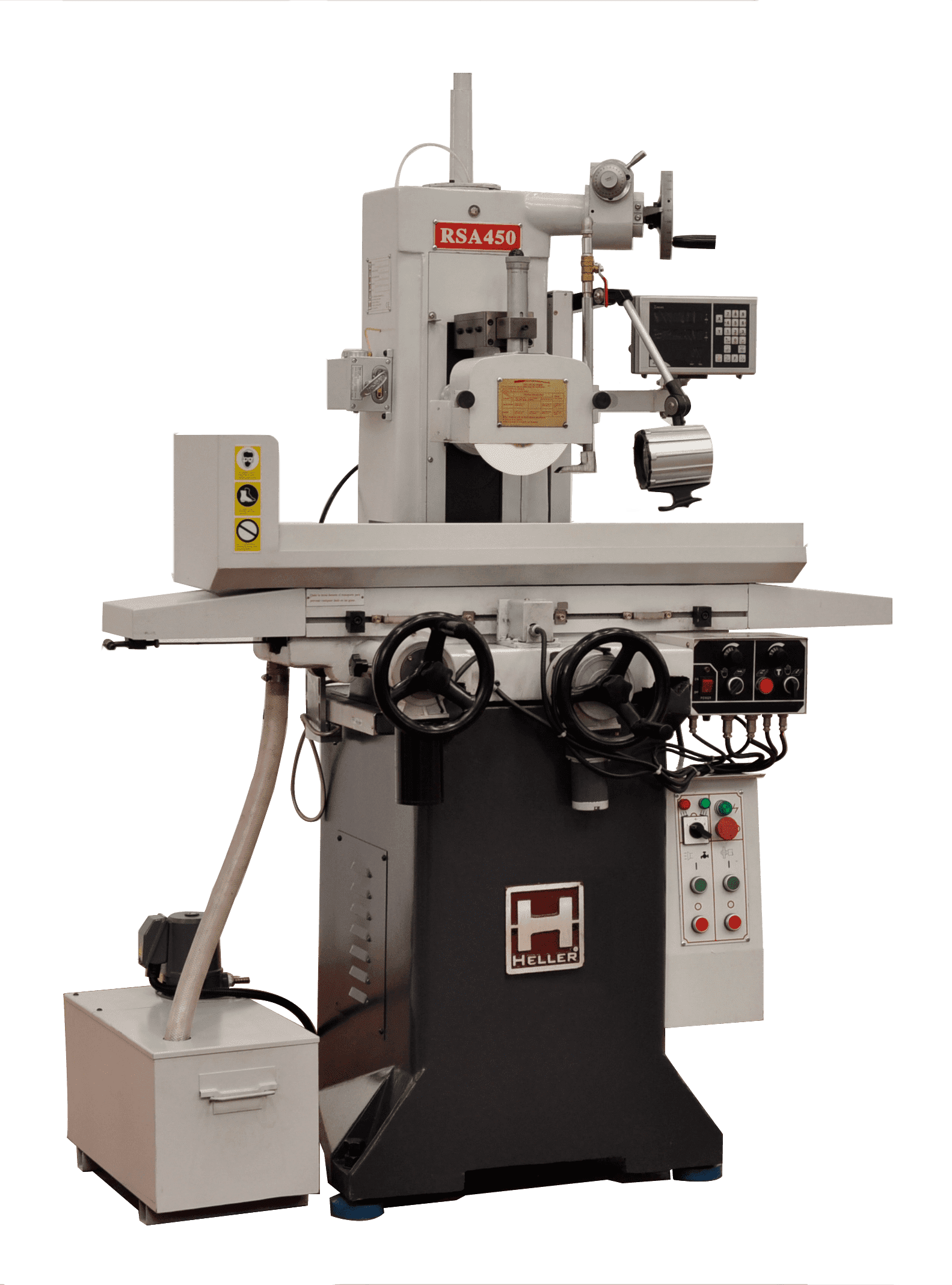
Im ready for war, just FYI, i used a machine like this one with my own hands (and glasses)
rectificadoras-heller.png


So, yeah... i know how are created that marks... i didnt even mentioned it because is obvious that scratches are not created by divine intervention

If you want to argument that surface finishing created by "abrasive" mechanical process is good enought... thats another matter and i think you have lowered your quality standards too much
For me is not good enought, a proof is the market of PC heatsinks manufacturers... all the good heatsinks have plane surfaces, the manufacturers spends money in it for a reason
 
Earlier Fat BC Models starting from A are not reliable because

1. Bad PSU which consumes more energy & produce more heat
2. Highest chance for YLOD
3. Poor quality Thermal paste under IHS (decayed within 3-4 years)
4. 90 nm architecture which produce more heat.

But this can be managed if you have the knowledge & expertise to fix these things.
 
I'll put this video over here and gonna leave sloooowly..


P/S: All fatties have NEC/Ts, so none of them are "reliable", but like @snkplkn said, if you fix this, and also delid, maybe change the PSU for the ones from CECHC or E, then you have a nice BC machine. In case you're aiming for one of them, and not the common ones since CECHG.
 
Another myth debunked, thank you, never thought of that to be honest [emoji23]

Sent from my G8141 using Tapatalk
Wow, this is like CNN, 2 guys agree and now everyone else is "debunked" LOL.

In the real world you guys dont get to decide what is or is not debunked... :D


Cmon guys...use some logic, Its not scratched so the paste sticks and wont "go everywhere". the reason people "key" a wall when plastering or key a surface before painting is because there is nothing else to hold it from gravity, abrasion etc. Its just on the surface with no protection.

The thermal paste will "stick" to a polished surface no problem, its not going to run off like a liquid, its paste so it wont move. especially when it is squashed in between 2 surfaces.

The reason for the scratches is so you get better cooling. If you have 2 polished surfaces with a layer of paste in between them, you will get no actual metal on metal contact, and it will take a massive amount of pressure to squeeze the paste.

This will explain it better than I can:

https://www.overclockers.com/why-heatsink-polishing-might-be-a-bad-idea/

Our conclusions were that the micro pits and valleys left behind after finishing with coarser grade carborundum left micro cavities within which the heatsink compound could fill, but the micro peaks of the aluminium would provide good physical contact to the quartz when the whole assembly was squeezed together under pressure; the micro peaks would flatten slightly providing millions of micro plateaus of contact surface.
On the polished blocks, there was nowhere for the heatsink compound to go,
other than out the sides of course, but you could never exert sufficient
pressure to squeeze ALL the heatsink compound out, so you got poor quality
thermal transfer through the HS compound sandwich.

It makes sense to me but not to everyone.
We found the results hard to believe at first, as we all believed somewhat
blindly that the polished surface would be best, yet the flat surfaced, but coarser finished heatsinks outperformed the polished ones significantly.

Further proof of this: CPUs do not come with perfectly mirror polished surfaces, they actually texture them.

To clarify, I do think the scratches are left over from the manufacturing process, but it costs money to remove them and the scratches actually help cooling a little especially if you are using low quality paste.
 
Last edited:
Not really but i can see why people do. I'm in Ireland. CNN just like to say stuff is debunked all the time but they never provide any information on why its debunked..for example the coronavirus.. they are saying it is debunked that it could be man made... how could anyone know that at this point (except cnn :) ). scientists are saying they are not sure where it came from..
 
What do you think @sandungas about polished vs brushed finish for best heat transfer? I can see both sides, I know full metal on metal contact on atomic level would be best... So in ideal world a 100% perfect polished finish would be best with NO paste. but in the real world it will never be perfect... and a sandwich of metal - paste - metal is not great either.

Some high end heatsinks do have a brushed finish, and CPUs are never polished mirror finishes afaik.. So I am leaning towards polished being worse... I guess it small "goldylocks" zone where the grooves are just big enough for the paste to get out of the way, but smooth enough that there is mostly metal on metal contact.
 
What do you think @sandungas about polished vs brushed finish for best heat transfer? I can see both sides, I know full metal on metal contact on atomic level would be best... So in ideal world a 100% perfect polished finish would be best with NO paste. but in the real world it will never be perfect... and a sandwich of metal - paste - metal is not great either.

Some high end heatsinks do have a brushed finish, and CPUs are never polished mirror finishes afaik.. So I am leaning towards polished being worse... I guess it small "goldylocks" zone where the grooves are just big enough for the paste to get out of the way, but smooth enough that there is mostly metal on metal contact.
What is discussed in the link in your previous post only applyes to surfaces that are already flat, is people that takes a heatsink from PC (that have a good flat surface from factory) and does a lapping to it
So.. the surface is flat before the lapping and is also flat after the lapping

In plain words... the surface finish is the difference in between a surface that look "shiny" and another that looks "matte" (but for our goal in both cases should be flat) https://en.wikipedia.org/wiki/Surface_finish
Incase you want to create a regular pattern of peaks the best way is if that peaks are well spreaded, not following any pattern... in the wikipedia link is represented by the image named "isotropic lay pattern"... and remember we are talking at atomic level (photos made with an electronic microscope)

Also... none of you mentioned the problem of air bubbles, but if we want to go technical is needed to talk about every detail, not only the details you consider important and ignoring the others
When you apply a paste over a surface with peaks and scratches there are little air bubbles trapped in between the peaks/scratches
In a "isotropic lay patter" there are less bubbles trapped, but if we are talking about an scratch (a long line) then it works like the colorado grand canyon, is a long depression and the air cant escape to the sides
And in a shiny surface (atomically perfect, like the surface of a glass or the DIE) there are no air bubbles posibles

Anyway... this doesnt applyes to some of the PS3 heatsinks because are not flat from factory, or/and the scratches have random deepths, as result the deviation from flatness is a lot more important than the surface finish

Just try the method i mentioned to meassure flatness with a razor blade the next time you have a PS3 heatsink in your hands (and remember to do it also in the IHS's, you are going to have a disgusting surprise)

-----------------
Is technically imposible to get a perfectly flat surface when doing a lapping at home, so incase you create a shiny surface by lapping is good to use some thermal paste, but it needs to be the minimal amount posible
 
Ok, let me show you an example with plain numbers, just for everyone to understand what im trying to say...

Lets imagine we have a prototype PS3 (manufactured specifically for this test) which CELL/RSX generates 60ºC exactly, at all times and permanently, without any variation of temperature
As i mentioned before, the flatness of the PS3 heatsink surfaces from factory is a bit like a lottery

If the surfaces are flat (of Heatsink and also IHS's), then you could do some different lapping methods at home trying to achieve a shiny surface... or a matte surface... and the temperature improvement is going to be around 3ºC max
So yeah, the surface finish matters, but only a bit, and only if the surface is flat

But if the surfaces are not flat from factory... when you do the lapping you are going to have an improvement of 10ºC or so... and the surface finish is just going to vary that amount only a bit
The reason for this is because when you do the lapping you are achiving 2 different things... you are recovering the flatness of the surface... and additionally you are giving the surface a finish

-----------
My point is... the goal when doing a lapping to a PS3 heatsink is to correct the surface deviations and make it flat, and is needed to do it only if you find the surface/s was not flat from factory (with the trick of the razor blade)

Otherway... if you do the trick of the razor blade and the surfaces passes the test satisfactory, then the surface finish doesnt matters much, you could try the lapping, but keep in mind the biggest reward you are going to achieve by lapping a surface that is already flat are 3ºC or so
 
Last edited:
@sandungas

I have a question. How effective will these flexible thermal silicon pads work on CELL & RSX? Will they more more effective than thermal paste?

https://www.amazon.in/Buyyart-Noteb...5&hvtargid=pla-835741101820&psc=1&ext_vrnc=hi

Has anyone tried these on PS3? Will these flexible pads make a better connection between heatsink & IHS?
Are going to work bad because is a material with a higher density than any paste, the point of the thermal paste is when you press it his atoms are going to flow a bit like a liquid to outside direction
In a idealistic world we would have a nice thermal transfer if we add a ton of pressure to "squeeze" the material in between the metal surfaces as most as posible, but we cant do that, lol
 
Back
Top