PS3 (Research/Experimental) - NEC/TOKIN Capacitors Replacement - YLOD

thats just what i ended up finding first at work to use lol, but they worked out for a 470x4 situation for each original cap replacement, i suppose :)

Thanks so much for the amazing share, so simple, so good. I feel it would be great to reference it at the beginning of this guide.

I'm looking forward to doing this on my 2nd Ps3, as soon as the caps arrive, all being well, sooooooon!! :onthego:

...i ordered some 2200uF 6.3V Nichicon caps. The next values up were either 3300uF, or 4700uF. I think 2 x 2200uF works nice with the space avaliable. I'm thinking of doing the same on the CELL too (if needs be).
 
Last edited:
The problem with those electrolytics is that squeept showed they have a very noisy pattern when compared to the nec or tantulums, but hey if it works then let that be the Guinea pig to see how it holds up over time.

True, on it's own the large electrolytic capacitor(s) would be very noisy, but in parallel with the NECs, it should be good, no?

And for testing if the NECs need changing to begin with, i think it's a real nice & easy way to do it, and could help alot before taking off the NECs.

Also, if people want to keep it like esc0rtd3w shows, then they could always add some small ceramic caps (like:- 10uF, 1uF, 0.1uF, 0.01uF, etc.) in parallel to each large electrolytic capacitor to help pass the high frequencies...

...but actually, that's what the NECs are doing, when looking at the NEC data-sheets, it can do both High + Low Frequencies. So keeping the NECs on the board + adding the large (example) 2200uF electrolytic capacitor(s) in parallel, is the same as if we had added some small ceramic caps (MLCCs) in parallel to the large capacitor.

See the NEC data-sheet #3 here:- (from web archive)
https://web.archive.org/web/2007121...-tokin.com/product/cap/proadlizer/test03.html

Also see the NEC data-sheet #2 here:- (from web archive)
https://web.archive.org/web/2007121...-tokin.com/product/cap/proadlizer/test02.html


What does @squeept say?
 
Last edited:
The problem with those electrolytics is that squeept showed they have a very noisy pattern when compared to the nec or tantulums, but hey if it works then let that be the Guinea pig to see how it holds up over time.
Thats what i was thinking while reading the last posts of the thread, he mentioned also that they could overheat

Is pretty much the same i was suggesting in this thread, using a "stripe" of electrolytic capacitors
https://www.psx-place.com/threads/ps3-cechk01-from-ylod-to-glod-to-shutdown.29428/

That "stripe" i suggested is working as a single capacitor.. if we reduce it to the minimal we just need 1 capacitor of 4800uf for CELL and another capacitor of 4800uf for RSX (this calculation is for the tokins rated as 1200uf)
And for the other tokins used in newer PS3 models rated 1000uf the total capacitance needs to be 4000uf each


Edit:
And btw, another of the tests made by squeept is he removed half of the capacitors (so at that point he had a total capacitance of 2400uf for CELL and another 2400uf for RSX)... and the PS3 was working and he was able to play gran turismo... is just the game crashed at some point because he was at the limits, and this was an extreme test, lol

But this gets us an idea of how much margin we have to reduce the total capacitance values... im not sugesting to reduce it so much... but you know... instead of the 4800uf from factory probably there is no problem in reducing it down to... lets say... 4500uf
This reduction should not be specially problematic, is just is going to make them a bit more prone to failure caused by wear in the long run
In plain words... reducing the total capacitance a bit could be worthy because using less capacitors simplifyes the work
...i ordered some 2200uF 6.3V Nichicon caps. The next values up were either 3300uF, or 4700uF. I think 2 x 2200uF works nice with the space avaliable. I'm thinking of doing the same on the CELL too (if needs be).
Actually, that ones with 4700uf are very close to the factory 4800uf ;)
 
Last edited:
Thats what i was thinking while reading the last posts of the thread, he mentioned also that they could overheat

Is pretty much the same i was suggesting in this thread, using a "stripe" of electrolytic capacitors
https://www.psx-place.com/threads/ps3-cechk01-from-ylod-to-glod-to-shutdown.29428/

That "stripe" i suggested is working as a single capacitor.. if we reduce it to the minimal we just need 1 capacitor of 4800uf for CELL and another capacitor of 4800uf for RSX (this calculation is for the tokins rated as 1200uf)
And for the other tokins used in newer PS3 models rated 1000uf the total capacitance needs to be 4000uf each


Edit:
And btw, another of the tests made by squeept is he removed half of the capacitors (so at that point he had a total capacitance of 2400uf for CELL and another 2400uf for RSX)... and the PS3 was working and he was able to play gran turismo... is just the game crashed at some point because he was at the limits, and this was an extreme test, lol

But this gets us an idea of how much margin we have to reduce the total capacitance values... im not sugesting to reduce it so much... but you know... instead of the 4800uf from factory probably there is no problem in reducing it down to... lets say... 4500uf
This reduction should not be specially problematic, is just is going to make them a bit more prone to failure caused by wear in the long run
In plain words... reducing the total capacitance a bit could be worthy because using less capacitors simplifyes the work

Actually, that ones with 4700uf are very close to the factory 4800uf ;)

Yeah, indeed, so i ordered some 4700uF 6.3V just now, to have some options to play around with. Wow that's interesting about taking off half the capacitors and still playing gran turismo. I think @ElGris had tested with only half the caps on a CECH-G also and it was working, and yet before it had Ylod. :encouragement:
 
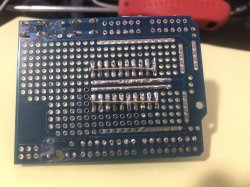
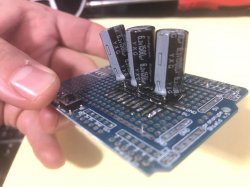
This is a prototype I was playing with early on. It's a bit janky looking, since it was just built with stuff I had laying around, but it did give me the ability to add more caps as needed. The idea was that i could add electrolytic caps through the vias, or surface mount tokins on the solder pads. I tested everything for continuity, etc, and it was fine in principle. It didn't actually get my ps3 working, but that's because I suspect my issues are elsewhere.
 

Attachments

  • 390A2CA0-F234-495C-ACAB-703C8F4FC7A5.jpeg
    390A2CA0-F234-495C-ACAB-703C8F4FC7A5.jpeg
    305.4 KB · Views: 138
  • 115A0B0E-1473-4295-A5F7-4CDFBE35830D.jpeg
    115A0B0E-1473-4295-A5F7-4CDFBE35830D.jpeg
    223.7 KB · Views: 142
@esc0rtd3w The external attachment is a really clever idea that people could do to make a quick test about this, it's pretty easy to make too. But I see a problem with that though, since in the mayority of cases I saw, the YLOD is related to NECs in bad shape, there're cases where you have a screwed one, that it's not giving enough capacitance and is probably in short, or definitely damaged. That was the case @Workz_777 was mentioning, my CECHG had YLOD, and it booted just once, and after I removed four or two (can't remember) from one side, the console booted, but I didn't test any games. This also could be a "NEC revival" by applying heat, and this is well known, so I wouldn't discard a short or something like that in any NEC, if the external caps test fails.

Also, for doing the test even easier, people could just use some tantalums, solder a couple of legs in both sides and use a protoboard to test them or change them for other kind.

https://i.imgur.com/tWXnLWK.jpg

P/S: How you people attached images?
 
As long as you are careful and pick a low impedance/low esr capacitor line you will be fine. Actually they last Very long time. If you want peace of mind try getting aluminium capacitors, i have never seen any of those to fail yet.

Στάλθηκε από το POCOPHONE F1 μου χρησιμοποιώντας Tapatalk
 
@esc0rtd3w The external attachment is a really clever idea that people could do to make a quick test about this, it's pretty easy to make too. But I see a problem with that though, since in the mayority of cases I saw, the YLOD is related to NECs in bad shape, there're cases where you have a screwed one, that it's not giving enough capacitance and is probably in short, or definitely damaged. That was the case @Workz_777 was mentioning, my CECHG had YLOD, and it booted just once, and after I removed four or two (can't remember) from one side, the console booted, but I didn't test any games. This also could be a "NEC revival" by applying heat, and this is well known, so I wouldn't discard a short or something like that in any NEC, if the external caps test fails.

Also, for doing the test even easier, people could just use some tantalums, solder a couple of legs in both sides and use a protoboard to test them or change them for other kind.

https://i.imgur.com/tWXnLWK.jpg

P/S: How you people attached images?

Hiya, yeah it's a nice way to test at the very beginning of the work, and it's cheap & quick too.

For attaching images, at the bottom of the dialogue box there should be the option: "Upload a File" (using browser on PC)
 
Last edited:
Was removal of the NEC caps necessary before soldering the new ones on?

Actually it seems for board revisions:-
DIA-001
DIA-002
VER-001
DYN-001

...the NEC's (+) and (-) contact strips don't have any hang-over like the previous boards have.

DIA-01.png


The previous boards (COK-001 to SEM-001) have a few millimeters after the NECs to solder the wires to. But for revisions that come after:- there is barely 1mm. So i guess in those cases, if we wanted to add the wires, we would need to scratch off the surface a little.

COK-01.png
 
Last edited:
Actually it seems for board revisions:-
DIA-001
DIA-002
VER-001
DYN-001

...the NEC's (+) and (-) contact strips don't have any hang-over like the previous boards have.

View attachment 25848


The previous boards (below COK-001) have a few millimeters after the NECs to solder to, but for the other revisions there is barely 1mm. So i guess in those cases, if we wanted to add the wires, we would need to scratch off the surface a little.

View attachment 25847

Lucky for me.

I have a CECH-C, COK-002. So these extra "feet" are present
 
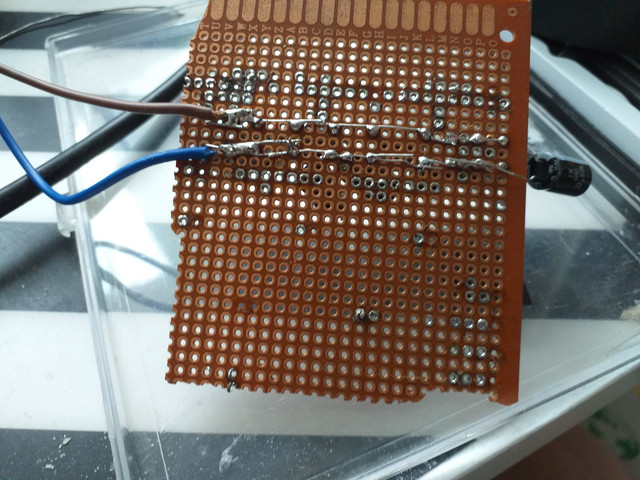
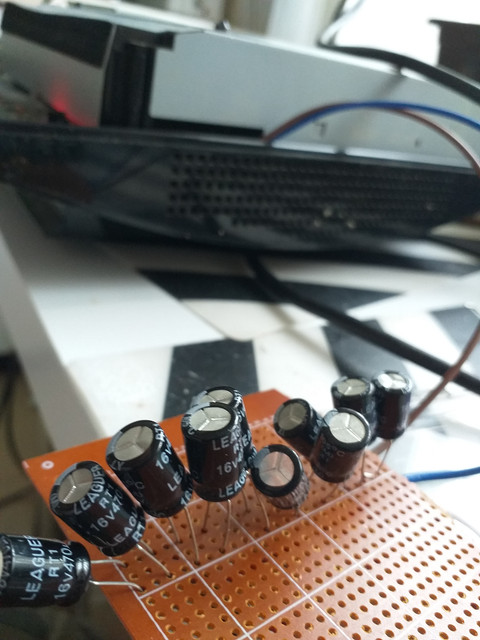
I have CECHG04. I tried to solve the YLOD problem the way colleagues did before - an electrolytic capacitor.
I used 10x470uF electrolytic capacitors on the outer plate and .... zero changes :(
What are you suggesting to do now? I thought the problem was the length of the wires, so I shortened them. I checked the connection and everything ok.
I gave too much capacity?
Please advise next steps.


I have CECHG04. I tried to solve the YLOD problem the way colleagues did before - an electrolytic capacitor.
I used 10x470uF electrolytic capacitors on the outer plate and .... zero changes :(
What are you suggesting to do now? I thought the problem was the length of the wires, so I shortened them. I checked the connection and everything ok.
I gave too much capacity?
Please advise next steps.


It's not a 100% guarantee that it will work, but it's a good test to see if that could be the issue. You might have to replace any actual defect caps that may cause issues.

That soldering job is a bit rough too

EDIT: It maybe the length of wire, or caps not the problem, something like a gpu issue or another bad component
 
Last edited:
I have CECHG04. I tried to solve the YLOD problem the way colleagues did before - an electrolytic capacitor.
I used 10x470uF electrolytic capacitors on the outer plate and .... zero changes :(
What are you suggesting to do now? I thought the problem was the length of the wires, so I shortened them. I checked the connection and everything ok.
I gave too much capacity?
Please advise next steps.


You could try with only 1 x 4700uF (6.3V) capacitor, with the wires directly on the capacitor's legs (no board). Or doing that with 2 x 2200uF (6.3V) capacitors (no board), just like esc0rtd3w, and see what you get.

Then you can compare "like for like" with esc0rtd3w's results.

Also, maybe try doing the same on the CELL too, see what happens.
 
Thanks for the answer.
today I will try to make a similar PCB for CELL.
How many 470uF capacitors (from my photos) do you suggest to use on the board to CELL and to RSX?
Maybe I installed too much or too few capacitors?

I know that my solder quality is not good enough (I'm just learning). I checked the connections with a multimeter and there is contact.

Are 6.3V capacitors required? I thought that the marking on the capacitors are the maximum values at which the capacitor can work and it does not affect the work.

EDIT: Capacitor 4700uF 6.3V and 2200uF 6.3V ordered. Today I receive and I will test on a shorter cable
 
Last edited:
Thanks for the answer.
today I will try to make a similar PCB for CELL.
How many 470uF capacitors (from my photos) do you suggest to use on the board to CELL and to RSX?
Maybe I installed too much or too few capacitors?

I know that my solder quality is not good enough (I'm just learning). I checked the connections with a multimeter and there is contact.

Are 6.3V capacitors required? I thought that the marking on the capacitors are the maximum values at which the capacitor can work and it does not affect the work.

EDIT: Capacitor 4700uF 6.3V and 2200uF 6.3V ordered. Today I receive and I will test on a shorter cable

Hiya, yeah let us know how you get on with those 2200uF and the 4700uF (6.3V).

Why these values? ...so the NEC/Tokin (0E128) capacitors are rated at 1200uF 2.5V each. So on your board, RSX = (4 x 1200uF) 4800uF - 2.5V. And we are trying to match as best as possible what was already there.

I like thinking of a capacitor like a water tank in the home:-
Capacitance = Litres of Water
Voltage = Water Pressure

...the larger the capacitance, the more water it can hold. Then think of the voltage as the "water pressure" (how fast the water comes out of the tap), the higher the voltage - the higher the "water pressure" coming out of the tap.

So in our case, more capacitance than is actually needed isn't a problem, like having a larger water-tank than is needed. However, if the water-pressure is too high then it can cause problems in the system.

Finding a large electrolytic capacitor (example 1 x 4700uF) with a low voltage like 2.5V might be hard. The closest, more common to find value = 6.3V.

P.S... also for the 1st test, i feel it's better to have the wires go directly to the capacitor's legs, that's why having 2 x 2200uF, or 1 x 4700uF cap is ideal for testing that way. Then if the test is successful, you could always make a small board with a customized set-up later.

At first for testing:- the fewer connection points = the better.
 
Last edited:
Back
Top